

Peanut Butter Keto Cookies
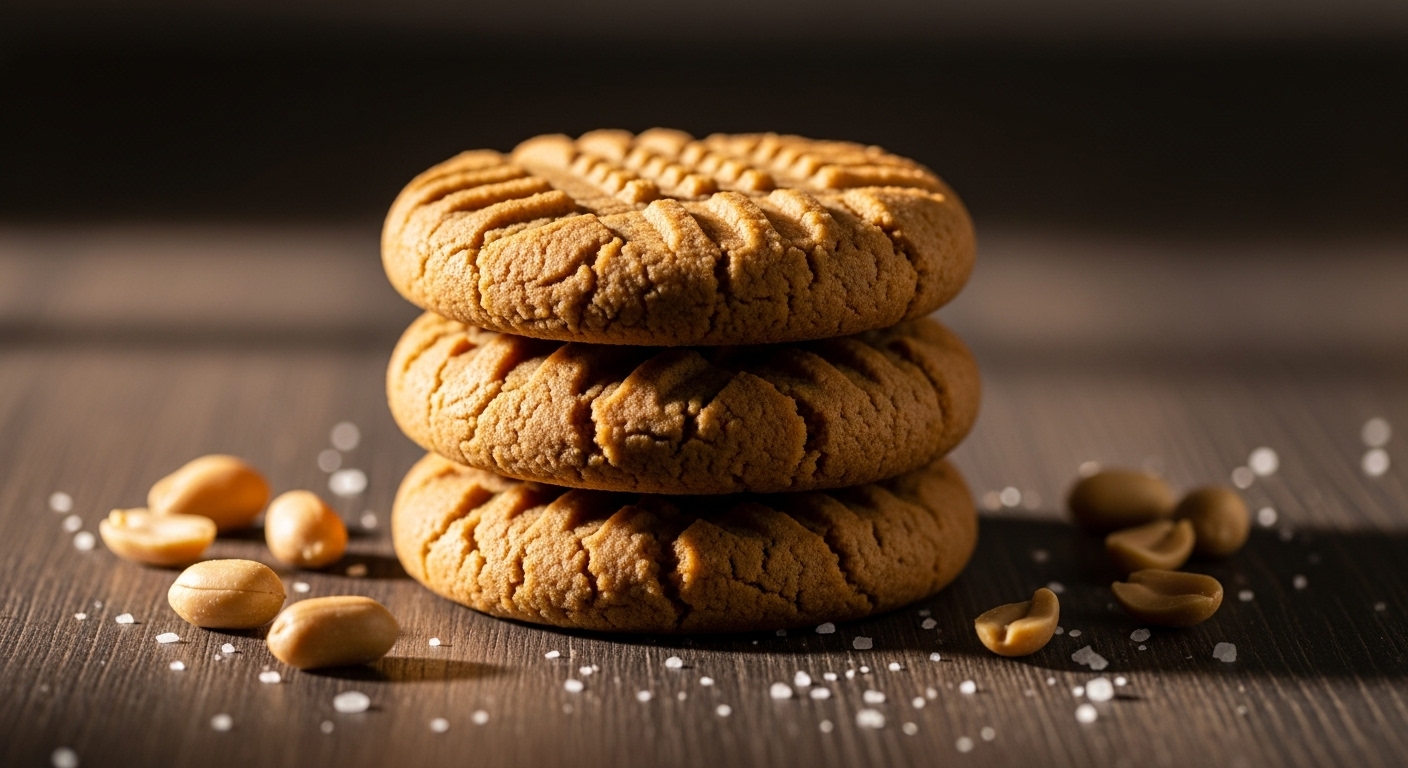
Giving up sugar doesn’t mean you have to give up joy. If you have been following a ketogenic lifestyle for any amount of time, you know the struggle: the sudden, intense craving for something sweet, salty, and comforting. Store-bought “keto” snacks are often expensive and filled with questionable ingredients. That is why you need this homemade peanut butter keto cookies recipe in your arsenal.
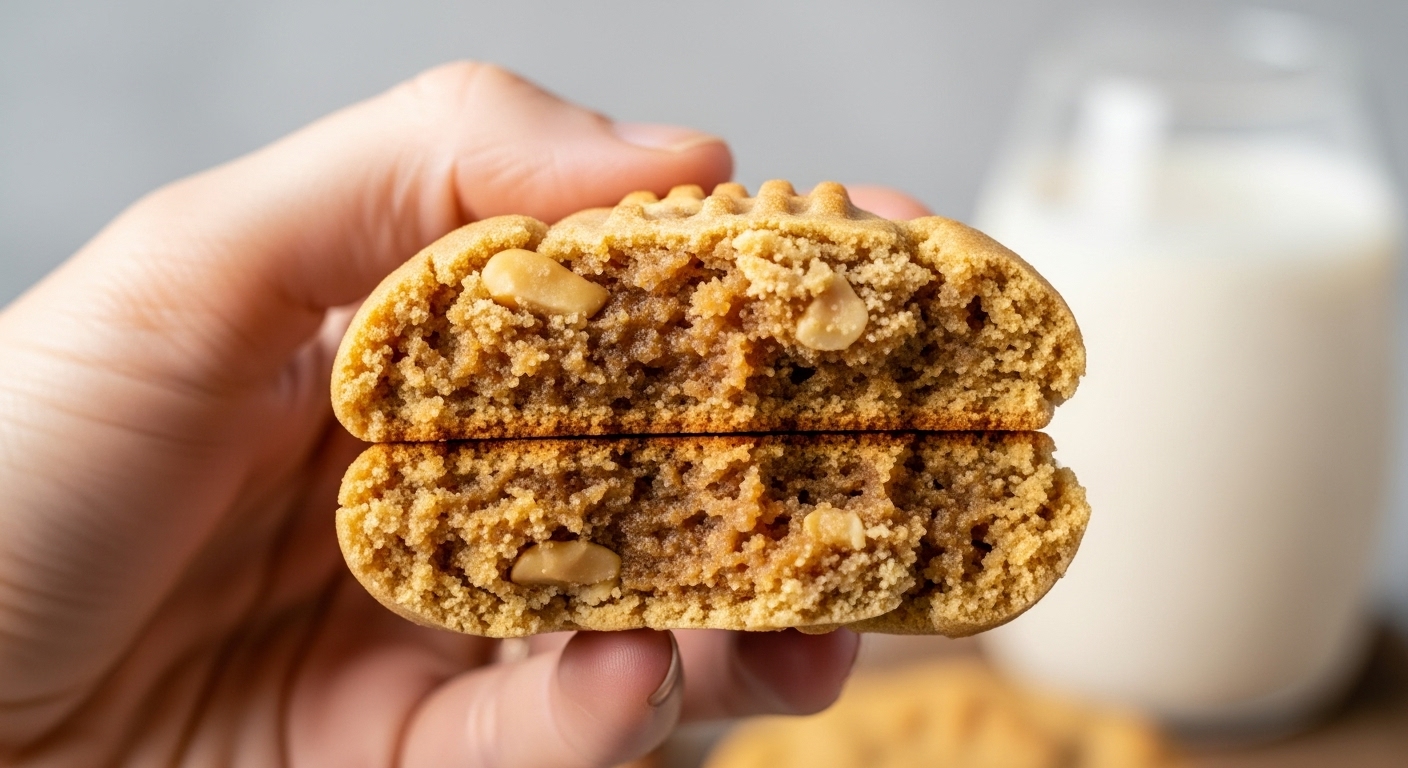
Imagine biting into a cookie that has crispy, golden edges and a soft, melt-in-your-mouth center. It bursts with rich roasted peanut flavor, perfectly balanced with a hint of sweetness and sea salt. The best part? It won’t kick you out of ketosis.
In this comprehensive guide, I am going to walk you through everything you need to know to make the ultimate peanut butter keto cookies. We will cover the science of keto baking, ingredient selection, and the secret techniques to ensure your cookies are never dry or crumbly. Whether you are a baking novice or a low-carb pro, this recipe is about to become your new obsession.
Why You Will Love This Recipe
Before we dive into the mixing bowl, let’s talk about why this specific peanut butter keto cookies recipe stands out from the thousands on the internet.
- Minimal Ingredients: You likely have everything you need in your pantry right now.
- Texture Perfection: Many low-carb cookies are either too crumbly or rubbery. We use a specific ratio of fat to binder to achieve that classic “chewy” texture.
- Macro-Friendly: With high healthy fats and minimal net carbs, these cookies actually fuel your body rather than weighing it down.
- Speed: From mixing bowl to oven in less than 15 minutes.
Keto-friendly ingredients for peanut butter cookies
To make the best peanut butter keto cookies, quality matters. In traditional baking, sugar and flour provide structure. In keto baking, we have to be smarter. Here is exactly what you need and why.
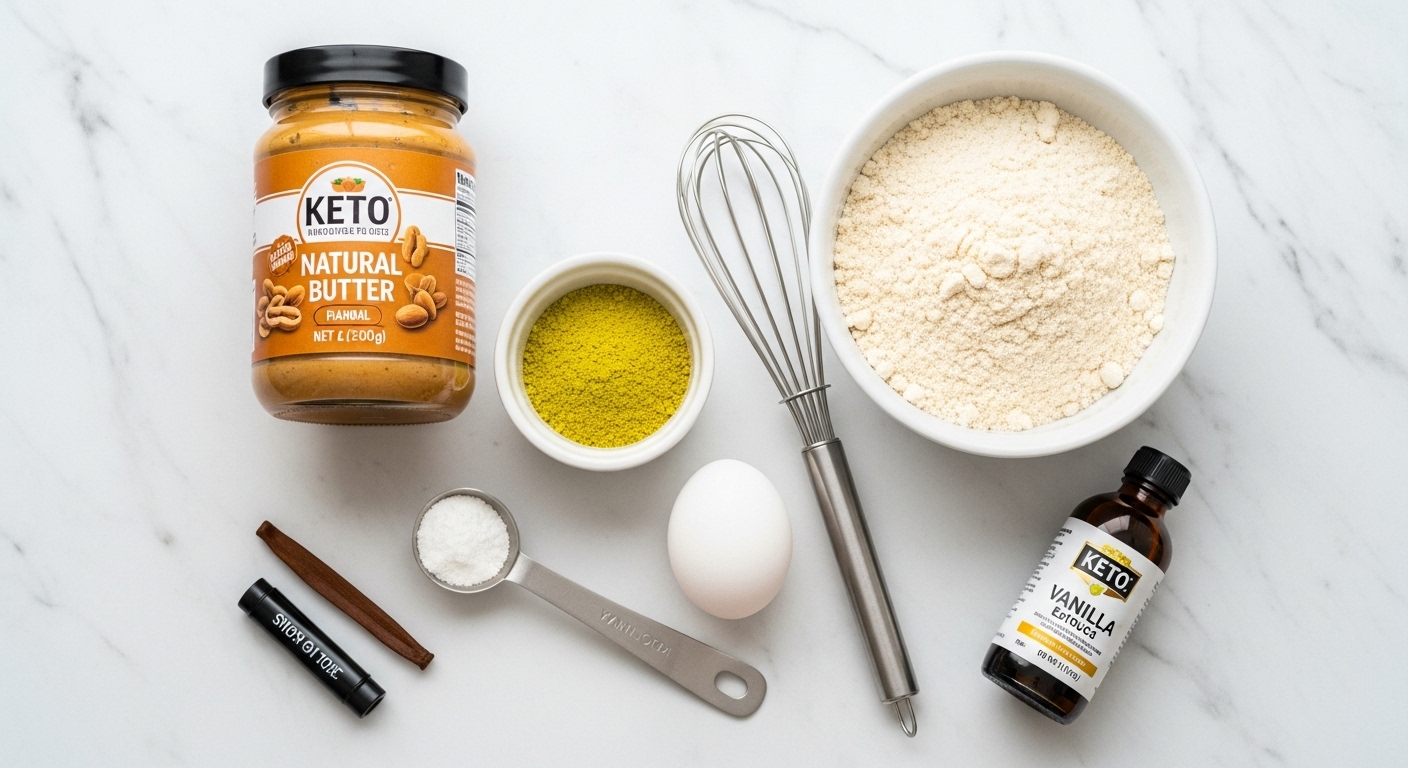
- The Star: Peanut Butter
Not all peanut butter is created equal. For keto, you must use natural, unsweetened peanut butter.
- Look for: The label should list only “Peanuts” and maybe “Salt.”
- Avoid: Added sugars (honey, molasses, cane sugar) and hydrogenated vegetable oils (palm oil, soybean oil).
- Texture: Creamy peanut butter works best for a smooth cookie, but chunky adds a nice crunch if you prefer texture.
Pro Tip: If your natural peanut butter has separated with oil on top, stir it thoroughly before measuring. Using just the dry bottom part will result in crumbly cookies.
- The Sweetener
To keep these peanut butter keto cookies sugar-free, we need a keto-approved sweetener.
- Erythritol (Granular): Brands like Swerve or Lakanto are excellent. They provide sweetness without the insulin spike.
- Allulose: This is a rare sugar that browns beautifully and makes for a softer, chewier cookie compared to Erythritol, which can sometimes have a cooling effect.
- Monk Fruit: Often blended with Erythritol, this is a great natural option.
- The Binders
Since we aren’t using gluten (wheat flour), we need ingredients to hold the cookie together.
- Almond Flour: Use “Super Fine” blanched almond flour, not almond meal. Almond meal can make the cookies gritty. Check out our guide on here for more details on keto flours.
- Egg: A large room-temperature egg acts as the glue.
- Flavor Enhancers
- Vanilla Extract: Adds depth and that “bakery” aroma.
- Salt: Essential to cut the richness of the peanut butter and sweetener.
The Science of Keto Baking: Why It’s Different
Understanding a bit of chemistry will help you master these peanut butter keto cookies.
No Gluten = Delicate Structure
Gluten is a protein that acts like a web, holding traditional cookies together. Without it, our keto cookies are more fragile when hot. This is why you must let them cool completely on the baking sheet. If you try to move them while warm, they will fall apart.
The Role of Fat
In a high-carb cookie, sugar caramelizes to create chewiness. In a keto cookie, the “chew” comes from the fat content in the peanut butter and the egg. Do not try to reduce the fat in this recipe, or you will end up with a dry puck.
Step-by-step method for mixing and baking
Ready to bake? Follow these steps closely. The order of operations ensures the sweetener dissolves properly and the dough hydrates.
Phase 1: Preparation
- Preheat: Set your oven to 350°F (175°C). Ensure the rack is in the middle position.
- Line the Tray: Line a large baking sheet with parchment paper or a silicone baking mat. Do not grease the pan directly; these cookies have enough oil, and greasing might cause them to spread too much.
Phase 2: Mixing the Dough
- Combine Wet Ingredients: In a large mixing bowl, combine the peanut butter, egg, and vanilla extract. Whisk vigorously until the egg is fully incorporated and the mixture thickens slightly.
- Add Sweetener: Add your granular sweetener. Mix again.
- Add Dry Ingredients: If using almond flour (recommended for structure), add it now along with a pinch of salt. Switch to a spatula and fold the mixture until a cohesive dough forms.
- Check consistency: The dough should be slightly sticky but moldable. If it’s too runny, add a tablespoon more of almond flour. If it’s too dry/crumbly, add a teaspoon of water or oil.
Phase 3: Shaping and Baking
- Scoop: Use a cookie scoop (about 1 tablespoon size) to portion out the dough. Roll them into smooth balls between your palms.
- Place: Arrange the balls on the baking sheet, leaving about 2 inches of space between them.
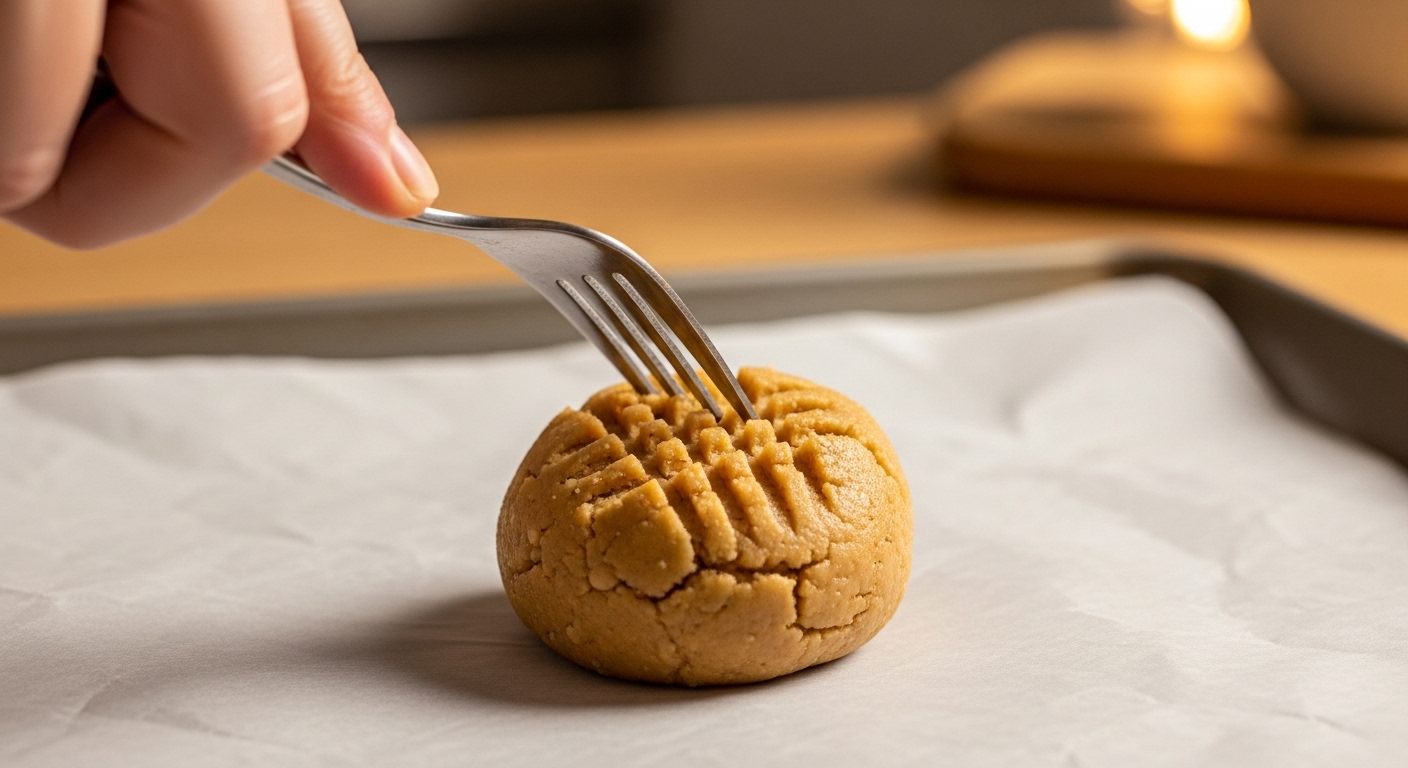
- The Signature Cross-Hatch: Peanut butter keto cookies generally do not spread much on their own. You need to flatten them. Dip a fork in a little granulated sweetener (to prevent sticking) and press down gently on the dough ball vertically, then horizontally, creating a crisscross pattern.
- Bake: Bake for 10–12 minutes.
- Visual Cue: The edges should be golden brown, but the center might look slightly underdone. That is perfect.
Phase 4: The Cooling Process
- Remove from Oven: Place the baking sheet on a wire rack.
- Wait: Do not touch the cookies for at least 15 minutes. As they cool, the erythritol will re-crystallize slightly, firming up the cookie and giving it that desired crunch.
Troubleshooting: Why did my cookies fail?
Even with the best recipes, things can go wrong. Here is a troubleshooting guide for your peanut butter keto cookies.
| Problem | Likely Cause | The Fix |
| Cookies Crumbled Apart | Dough was too dry or you moved them while hot. | Measure flour correctly; Let cool completely. |
| Cookies Spread Too Much | Peanut butter was too oily/runny. | Stir your PB jar thoroughly; chill dough for 15 mins before baking. |
| Bitter Aftertaste | Poor quality sweetener. | Switch to a Monk Fruit/Erythritol blend. |
| Too Soft/Mushy | Underbaked or not enough binder. | Bake 2 mins longer or add 1 tbsp coconut flour. |
For more tips on keto baking disasters, read our article on Here.
Variations to Spice Up Your Keto Cookies
Once you have mastered the base recipe, try these delicious variations to keep your low-carb diet exciting.
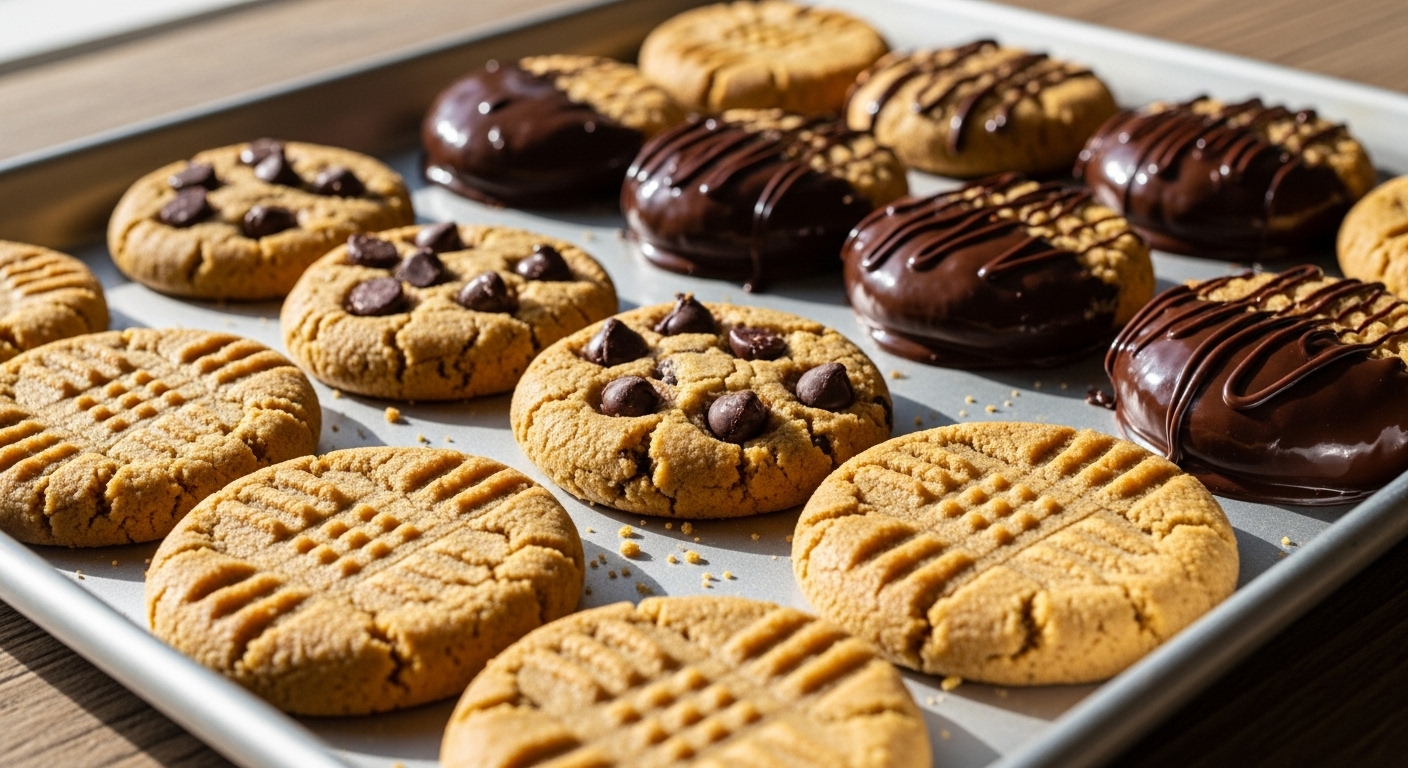
- Chocolate Chip Peanut Butter
Fold in 1/2 cup of sugar-free chocolate chips (like Lily’s brand) into the dough before shaping. The combination of chocolate and peanut butter is timeless.
- Salted Caramel
Add 1 teaspoon of caramel extract instead of vanilla. Sprinkle coarse sea salt on top immediately after taking them out of the oven.
- Chocolate Dipped
Once baked and cooled, dip half of each cookie into melted sugar-free dark chocolate. Place in the fridge to set. This makes them look incredibly professional.
- Pecan Sandies Style
Add 1/4 cup of chopped toasted pecans to the dough for extra crunch and a nutty flavor profile.
Macros and serving suggestions
Understanding the nutritional value is crucial for maintaining ketosis. Here is the estimated breakdown for one standard cookie (based on a recipe yielding 12 cookies):
- Calories: ~95 kcal
- Total Fat: 8g
- Total Carbs: 4g
- Fiber: 1.5g
- Sugar Alcohols: 1.5g
- Net Carbs: 1g
- Protein: 4g
Note: Macros will vary depending on the specific brand of peanut butter and sweetener you use.
Serving Ideas
These cookies are rich, so they pair perfectly with beverages that cut through the fat:
- Keto Coffee: Enjoy a cookie alongside your morning Bulletproof coffee.
- Almond Milk: A cold glass of unsweetened almond milk creates that classic “milk and cookies” experience.
- Ice Cream Sandwich: Smash a scoop of keto vanilla ice cream between two cookies for a decadent dessert.
Storage and Freezing Instructions
Because these peanut butter keto cookies don’t have preservatives, proper storage is key.
Room Temperature
Store in an airtight container on the counter for up to 3-4 days. Note that in humid climates, the sweetener might draw moisture from the air, making them softer over time.
Refrigerator
If you prefer a firmer, chewier cookie, store them in the fridge. They will last up to 2 weeks. I personally prefer them chilled!
Freezing
These cookies freeze beautifully.
- Freeze Baked: Place cooled cookies in a freezer bag with parchment paper between layers. Thaw on the counter for 10 minutes before eating.
- Freeze Dough: Roll the dough into balls and freeze them on a tray. Transfer to a bag. When cravings hit, bake from frozen (add 2-3 minutes to the baking time).
Is Peanut Butter Actually Keto?
This is a common question. Legumes are often avoided on strict Paleo diets, but on Keto, peanuts are generally accepted in moderation.
Peanuts are higher in carbs than macadamia nuts or pecans, but they are also high in fiber and fat. The danger lies in overconsumption.
- Portion Control: Stick to 1 or 2 cookies.
- Ingredients: Ensure NO added sugar or maltodextrin is in your peanut butter jar.
- Inflammation: If you are sensitive to legumes, consider swapping peanut butter for Almond Butter or Sunflower Seed Butter. The recipe works exactly the same way!
Frequently Asked Questions (FAQ)
Here are the most frequently asked questions about making peanut butter keto cookies.
- Can I make this recipe without eggs?
Yes, for a vegan keto version, you can use a “flax egg” (1 tbsp ground flaxseed meal mixed with 3 tbsp warm water, let sit for 5 minutes). The cookies will be slightly more fragile but still delicious.
- Can I use almond butter instead of peanut butter?
Absolutely. Almond butter is a fantastic 1:1 substitute. It has a milder flavor and is often lower in inflammation-causing properties. Cashew butter works too but is slightly higher in carbs.
- Why is my dough too crumbly to roll?
This usually happens if you use the dry bottom of a peanut butter jar or if you added too much almond flour. Add 1 teaspoon of melted coconut oil or water and mix again until it comes together.
- Can I use liquid stevia instead of granular sweetener?
I do not recommend it. Granular sweeteners (Erythritol/Monk Fruit) provide physical bulk and structure to the cookie. Liquid stevia will make the ratio of dry-to-wet ingredients incorrect, resulting in a different texture.
Conclusion: Satisfy Your Cravings the Healthy Way
Eating healthy doesn’t mean life has to be boring. These peanut butter keto cookies prove that you can enjoy the rich, comforting flavors you love while staying on track with your health goals.
They are easy to make, require minimal cleanup, and are arguably better than the sugar-loaded versions you grew up with. Next time the snack attack hits, skip the vending machine and whip up a batch of these low-carb wonders.
Ready to bake? Check your pantry for that jar of peanut butter, preheat your oven, and enjoy the smell of fresh cookies filling your kitchen.
Did you try this recipe? Leave a comment below and let us know how they turned out, or tag us in your photos!
