

Is Baking Powder Gluten Free?
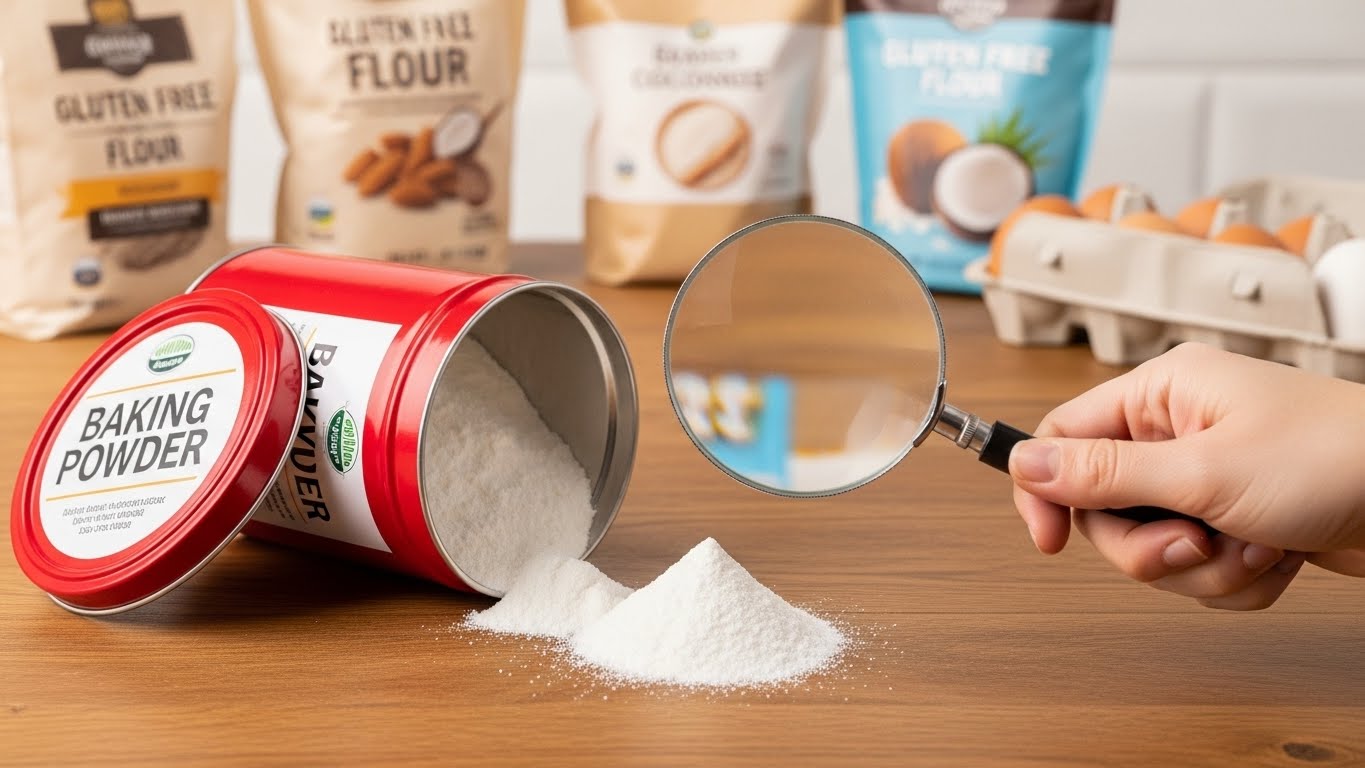
If you have recently been diagnosed with Celiac disease or gluten sensitivity, your first trip to the grocery store probably felt like navigating a minefield. You learned to avoid bread, pasta, and cookies. But then, you started looking at the smaller ingredients—the pantry staples you never thought twice about. Suddenly, a simple question stopped you in your tracks: Is baking powder gluten free?
It looks like white powder. It’s used in almost every cake and muffin recipe. Surely, it’s safe?
The short answer is: Usually, yes. Most commercially available baking powders are naturally gluten-free. However, the long answer is more complicated. Because baking powder contains a starch to prevent clumping, there is a risk that this starch could be derived from wheat. Furthermore, the risk of cross-contamination in manufacturing facilities is a real concern for those with severe allergies.
In this comprehensive guide, we are going to strip away the confusion. We will analyze the chemistry of leavening agents, identify exactly which ingredients you need to watch out for, and list the safest brands to buy. Whether you are baking a loaf of bread or a birthday cake, this guide ensures your kitchen stays safe.
What baking powder is made of
To understand the answer to “is baking powder gluten free,” we first need to understand what baking powder actually is. It is not a single ingredient found in nature; it is a chemical mixture designed to create carbon dioxide bubbles in your batter.
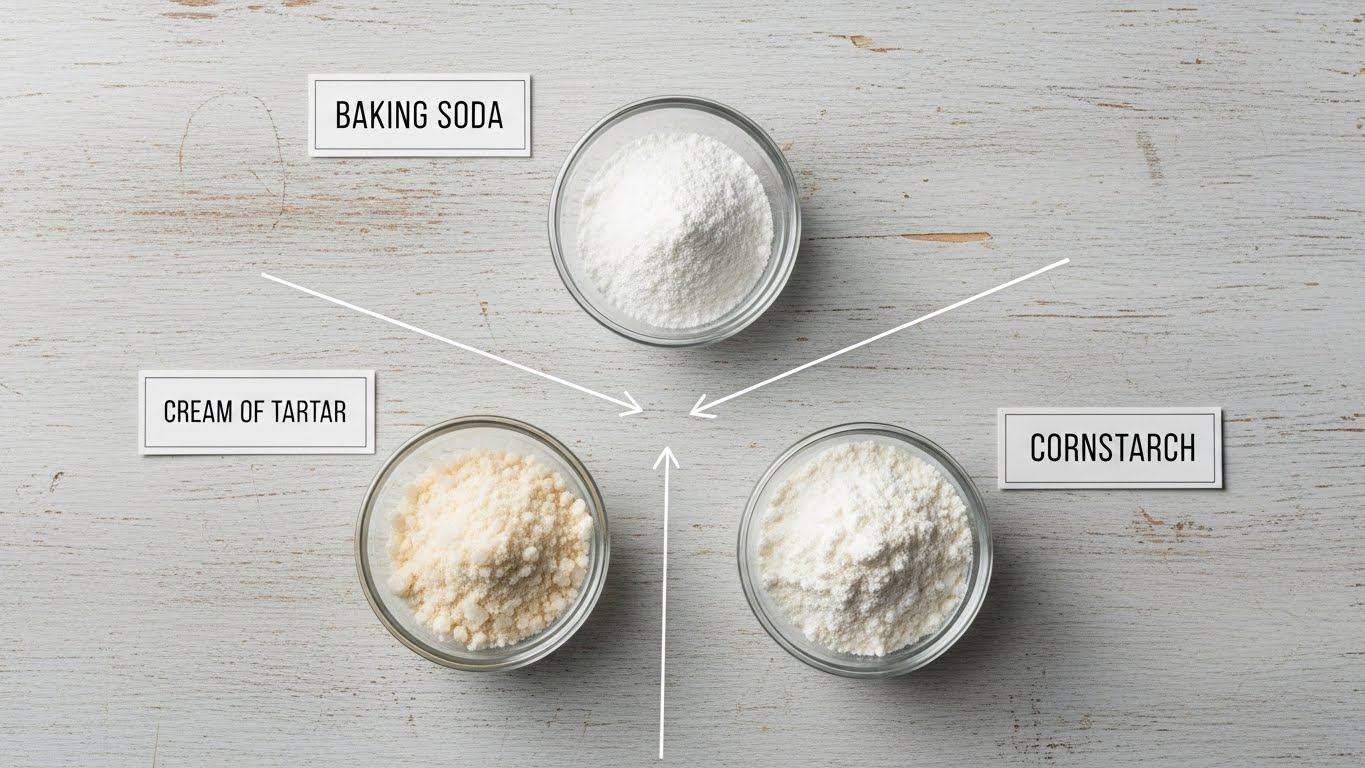
Standard baking powder consists of three main components:
- The Base (Alkaline)
This is almost always Sodium Bicarbonate, also known as baking soda. Baking soda is a naturally occurring mineral and is 100% gluten-free.
- The Acid
Baking soda needs an acid to react with to produce gas. In baking powder, dry acids are added. Common acids include:
- Cream of Tartar: A byproduct of wine making. Naturally gluten-free.
- Sodium Aluminum Sulfate: A common acidic salt. Naturally gluten-free.
- Monocalcium Phosphate: Another leavening acid. Naturally gluten-free.
- The Moisture Absorber (The Starch)
This is the critical component for us. If you put baking soda (base) and acid powder together in a jar, moisture from the air would cause them to react instantly, and your powder would lose its fizz before you ever used it.
To prevent this, manufacturers add a starch to keep the mixture dry and free-flowing.
- The Filler: This starch makes up about 5% to 15% of the total volume.
This starch is where the gluten question arises.
When baking powder may contain gluten
So, if the base and the acid are safe, the danger lies entirely in the starch. When asking “is baking powder gluten free,” you are really asking, “What starch did the manufacturer use?”
The Wheat Starch Danger
Historically, and in some parts of the world, wheat starch was used as the drying agent. Since wheat contains gluten, any baking powder using wheat starch is unsafe for Celiacs.
The Good News: In the United States and most of North America, the vast majority of baking powder brands use Cornstarch or Potato Starch. Both corn and potatoes are naturally gluten-free grains/tubers.
Cross-Contamination Risks in Manufacturing
Even if a brand uses cornstarch, there is the invisible threat of the factory environment.
- Shared Equipment: If a factory produces baking powder on the same lines where they package wheat flour or baking mixes, gluten dust can contaminate the baking powder.
- Airborne Gluten: Flour dust hangs in the air. If the facility is not strictly gluten-free, the product is at risk.
This is why reading the label is not enough; you need to understand certification.
How to choose gluten-free baking powder
Don’t leave your health to chance. When shopping for leavening agents, follow this three-step verification process to ensure the answer to “is baking powder gluten free” is a resounding yes.
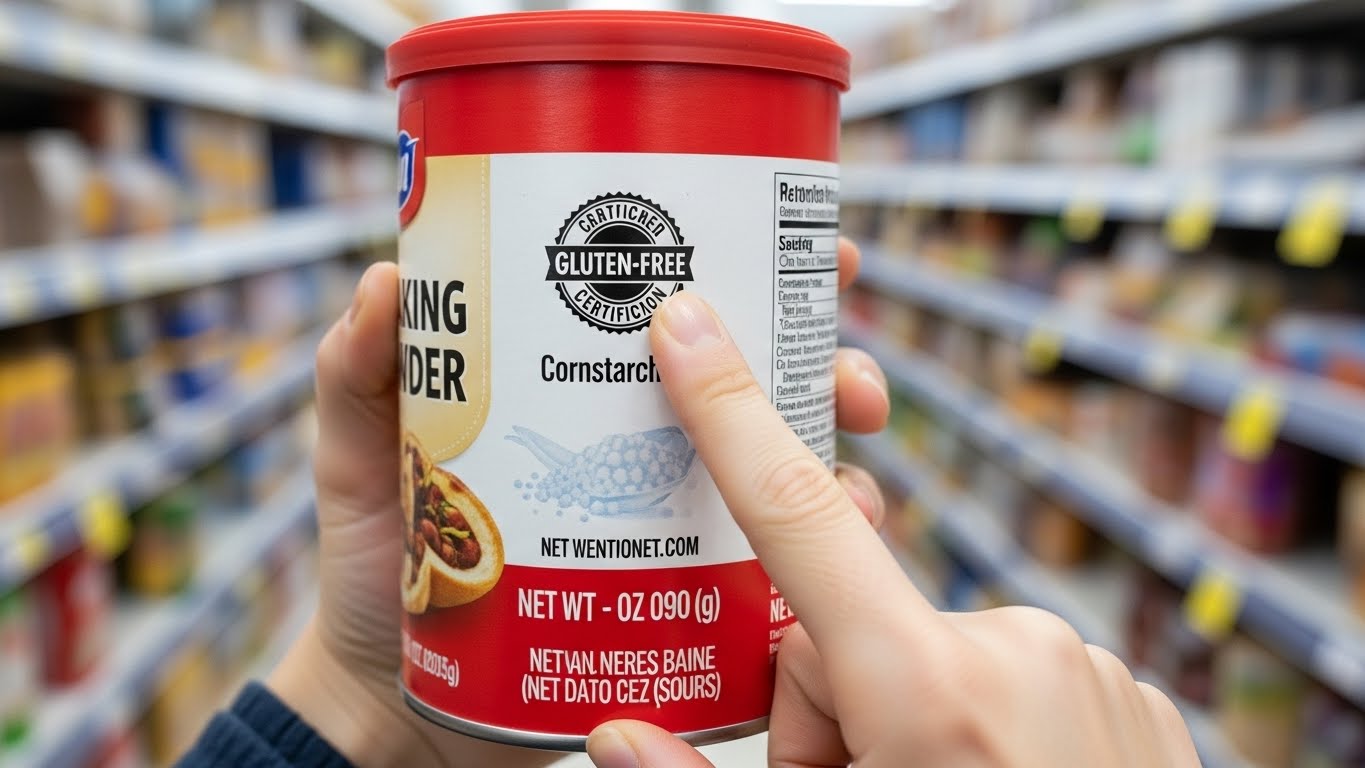
- Look for the “Gluten-Free” Label
This sounds obvious, but it is the most reliable indicator.
- “Gluten-Free”: The FDA requires products with this label to contain less than 20ppm (parts per million) of gluten. This is generally safe for most sensitivities.
- “Certified Gluten-Free”: This seal (usually from GFCO) means the product has been tested by a third party to contain less than 10ppm of gluten. This is the gold standard for Celiacs.
- Check the Ingredients List for “Starch”
Flip the can over. Look at the ingredient called “Starch.”
- Safe: Cornstarch, Potato Starch, Tapioca Starch, Rice Starch.
- Unsafe: Wheat Starch, Modified Wheat Starch (unless processed to be GF), or just “Starch” (if the source isn’t listed and you are in a country where wheat is common, be wary).
- Avoid Bulk Bins
Never buy baking powder from the bulk bins at a health food store if you have Celiac disease. Even if the bin says “Gluten-Free,” the risk of a customer using a scoop from the wheat flour bin in the baking powder bin is extremely high. Always buy sealed containers.
Top Gluten-Free Baking Powder Brands
To save you time in the aisle, here are the most trusted brands that have confirmed their status. When you are ready to bake our popular Gluten Free Banana Bread Recipe, these are the brands you should reach for.
- Clabber Girl
- Status: Gluten-Free.
- Starch Used: Cornstarch.
- Notes: One of the most common brands in the US. Reliable and affordable.
- Rumford (by Clabber Girl)
- Status: Gluten-Free and Non-GMO.
- Starch Used: Cornstarch.
- Notes: Rumford is also Aluminum-Free, which many bakers prefer to avoid a metallic aftertaste in delicate pastries.
- Bob’s Red Mill Double Acting Baking Powder
- Status: Certified Gluten-Free.
- Starch Used: Cornstarch.
- Notes: Produced in a dedicated gluten-free facility. This is one of the safest options for severe allergies.
- Argo
- Status: Gluten-Free.
- Starch Used: Cornstarch.
- Notes: Known for their cornstarch, their baking powder is also safe.
- Davis
- Status: Gluten-Free.
- Starch Used: Cornstarch.
- Notes: A classic brand often found in commercial kitchens.
Baking Powder vs. Baking Soda: Are Both Gluten-Free?
This is a common point of confusion.
- Baking Soda: Is always gluten-free. It is pure sodium bicarbonate. There is no starch added, so unless it was packaged in a dirty facility, it is safe.
- Baking Powder: Is usually gluten-free, but requires the checks we discussed above.
Can I swap them?
No. They are not interchangeable. Baking soda needs acid; baking powder has acid built-in. If you swap them, your Healthy Banana Bread Recipe won’t rise or will taste bitter.
Aluminum-Free vs. Regular: Does it Matter for Gluten?
While searching for “is baking powder gluten free,” you will often see “Aluminum-Free” on the label.
- The Difference: Some baking powders use sodium aluminum sulfate as the acid. Some people claim this leaves a metallic taste.
- The Gluten Connection: There is no direct connection. Both aluminum and aluminum-free baking powders can be gluten-free. However, brands that care enough to remove aluminum (like Rumford or Bob’s Red Mill) often care enough to be gluten-free as well. They tend to target the health-conscious consumer.
How to Test Your Baking Powder for Freshness
Gluten-free baking relies heavily on chemical leavening because we don’t have the gluten network to trap air as easily. Using old baking powder is a disaster.
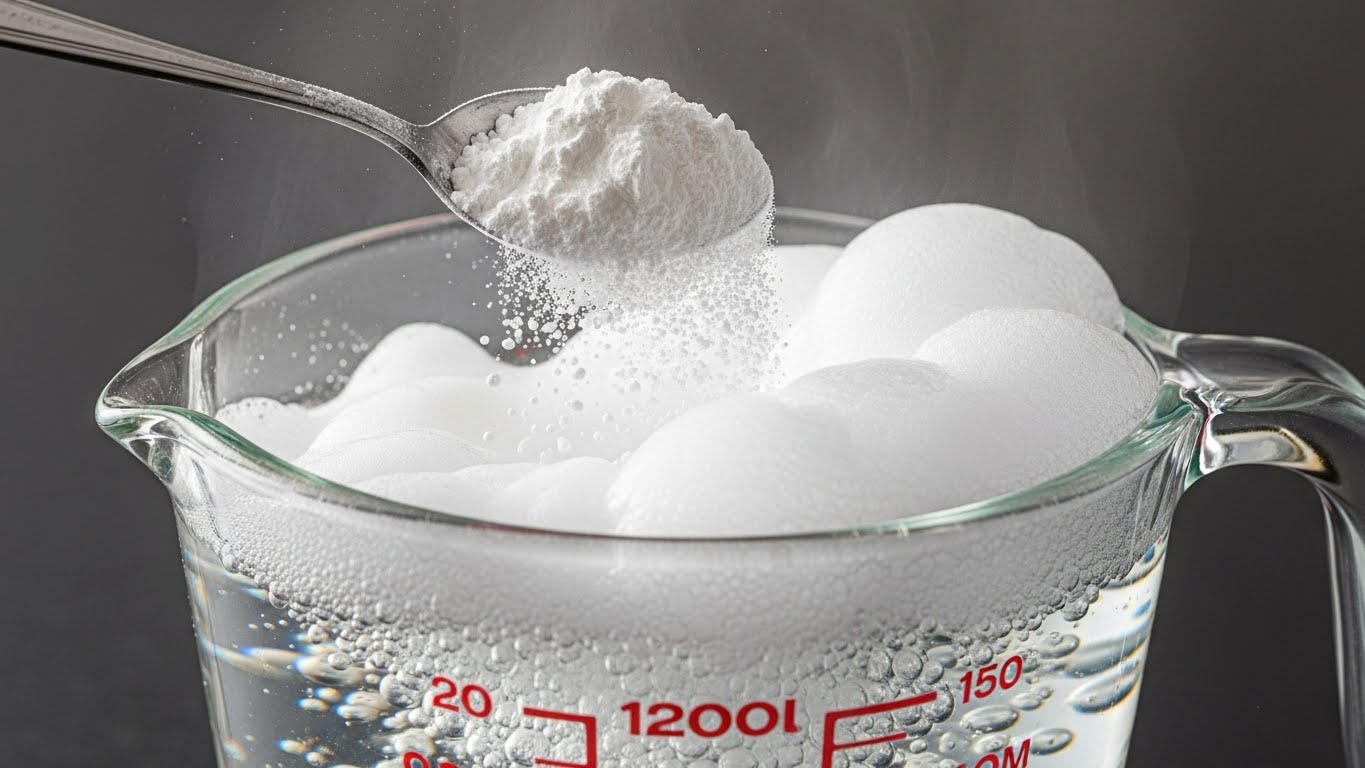
If your can has been sitting in the pantry for over 6 months, test it:
- Pour 1/2 cup of hot water into a cup.
- Add 1 teaspoon of baking powder.
- The Result: It should fizz and bubble aggressively immediately.
- No Fizz? Throw it out. It is dead.
DIY Gluten-Free Baking Powder Recipe
What if you are in the middle of a recipe and realize you don’t have safe baking powder? Or you are worried about the ingredients? You can make your own in 30 seconds.
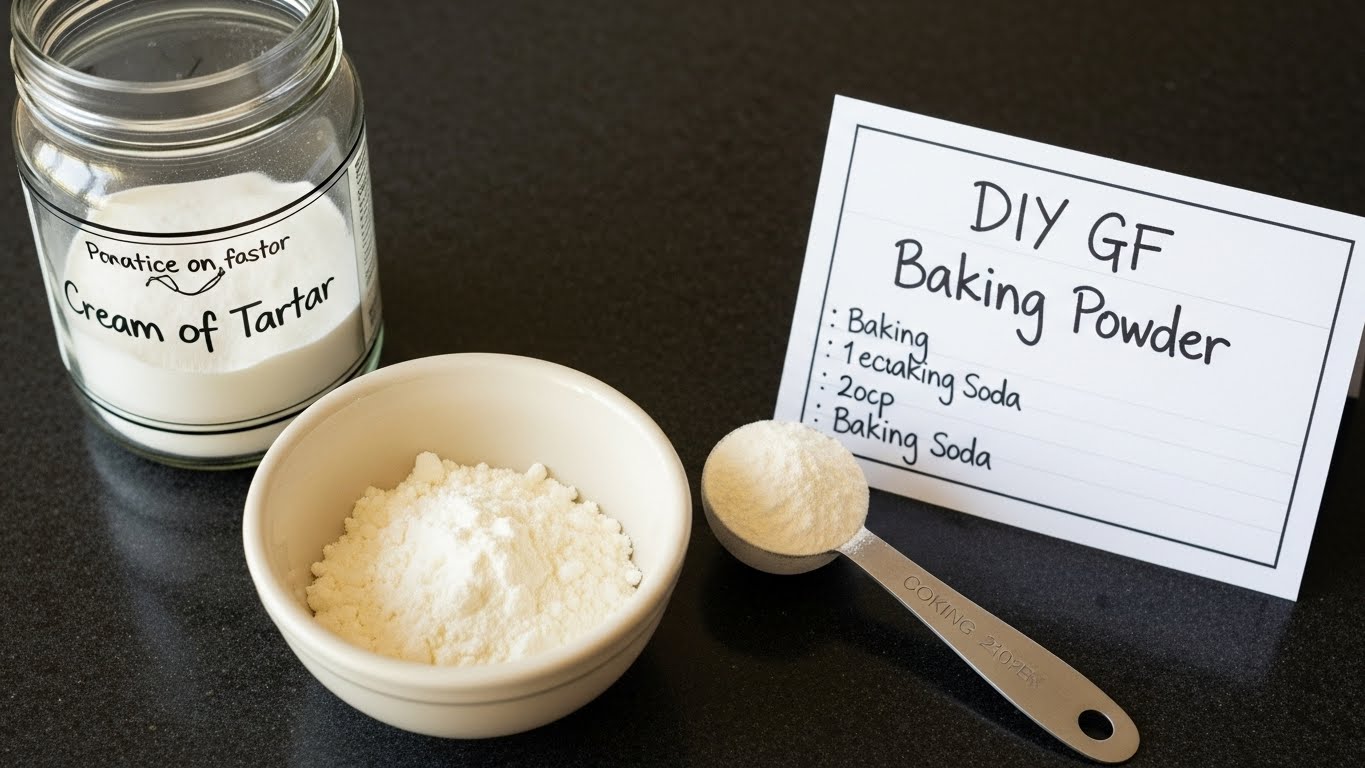
Yields: 1 Tablespoon
Ingredients:
- 1 teaspoon Baking Soda (naturally GF)
- 2 teaspoons Cream of Tartar (naturally GF)
- 1 teaspoon Cornstarch or Arrowroot Powder (optional, prevents clumping if storing)
Instructions:
- Mix the ingredients together in a small bowl.
- Use immediately in your recipe.
- Note: This is “Single Acting” baking powder. It reacts as soon as it hits the liquid. You must get your cake into the oven immediately! Commercial powders are “Double Acting” (reacting to moisture and heat), giving you more leniency.
Tips for Gluten-Free Baking Success
Knowing “is baking powder gluten free” is just the first step. Here is how to use it effectively in GF baking.
- Use Slightly More
Gluten-free flours (rice, almond, coconut) are heavier than wheat flour. Sometimes, GF recipes require slightly more leavening (about 25% more) to help lift that heavy batter.
- Mix the Dry Ingredients Well
Because GF flour doesn’t have gluten, you don’t have to worry about overmixing dry ingredients. Whisk your baking powder into your flour thoroughly to ensure an even rise. You don’t want a lopsided loaf.
- Check Dates
We mentioned freshness, but in GF baking it is double important. Without gluten structure, the gas bubbles are the only thing holding your bread up. If the gas is weak, the bread is a brick.
Troubleshooting: Why did my GF cake sink?
If you used gluten-free baking powder and your cake still fell, don’t blame the powder immediately.
| Problem | Likely Cause | The Fix |
| Cake Sunk in Middle | Opened oven too early or too much baking powder. | Don’t peek! Or reduce powder slightly. |
| Bitter Taste | Too much baking powder or used one with aluminum. | Measure accurately; switch to aluminum-free. |
| Didn’t Rise | Dead baking powder. | Perform the hot water test. |
| Chemical Smell | Too much leavener. | Follow the recipe precisely. |
Frequently Asked Questions (FAQ)
Here are the most common questions related to “is baking powder gluten free“.
- Does baking powder have corn?
Yes, most baking powders in the US use cornstarch as the drying agent. If you have a corn allergy and a gluten allergy, you need to look for a specific “corn-free” baking powder (usually made with potato starch or tapioca starch) or make your own using the DIY recipe above.
- Is cream of tartar gluten-free?
Yes. Cream of tartar is a byproduct of wine fermentation (tartaric acid). It is naturally gluten-free and safe for Celiacs.
- Can I use baking powder in Keto recipes?
Yes. Although baking powder contains a small amount of starch (cornstarch), the amount used in a whole recipe (e.g., 1 teaspoon for 12 muffins) yields a negligible amount of carbs per serving. It is considered Keto-friendly.
- Is Arm & Hammer Baking Soda gluten-free?
Yes. Arm & Hammer Baking Soda is pure sodium bicarbonate and is gluten-free. However, always check the box for cross-contamination warnings if you are extremely sensitive.
Conclusion: Bake with Confidence
So, is baking powder gluten free? The answer is a comforting yes—most of the time. By sticking to cornstarch-based brands and checking for the “Gluten-Free” certification label, you can bake without fear.
Whether you are whipping up a batch of pancakes or attempting a complex layer cake, that little tin of white powder is your ally. Just remember to check the expiration date!
Now that you know your leavening agent is safe, why not put it to the test? Preheat your oven and try our delicious Gluten Free Bread Recipe to see the magic of baking powder in action.
What is your favorite gluten-free brand? Let us know in the comments below!
