

Levain Cookie Recipe
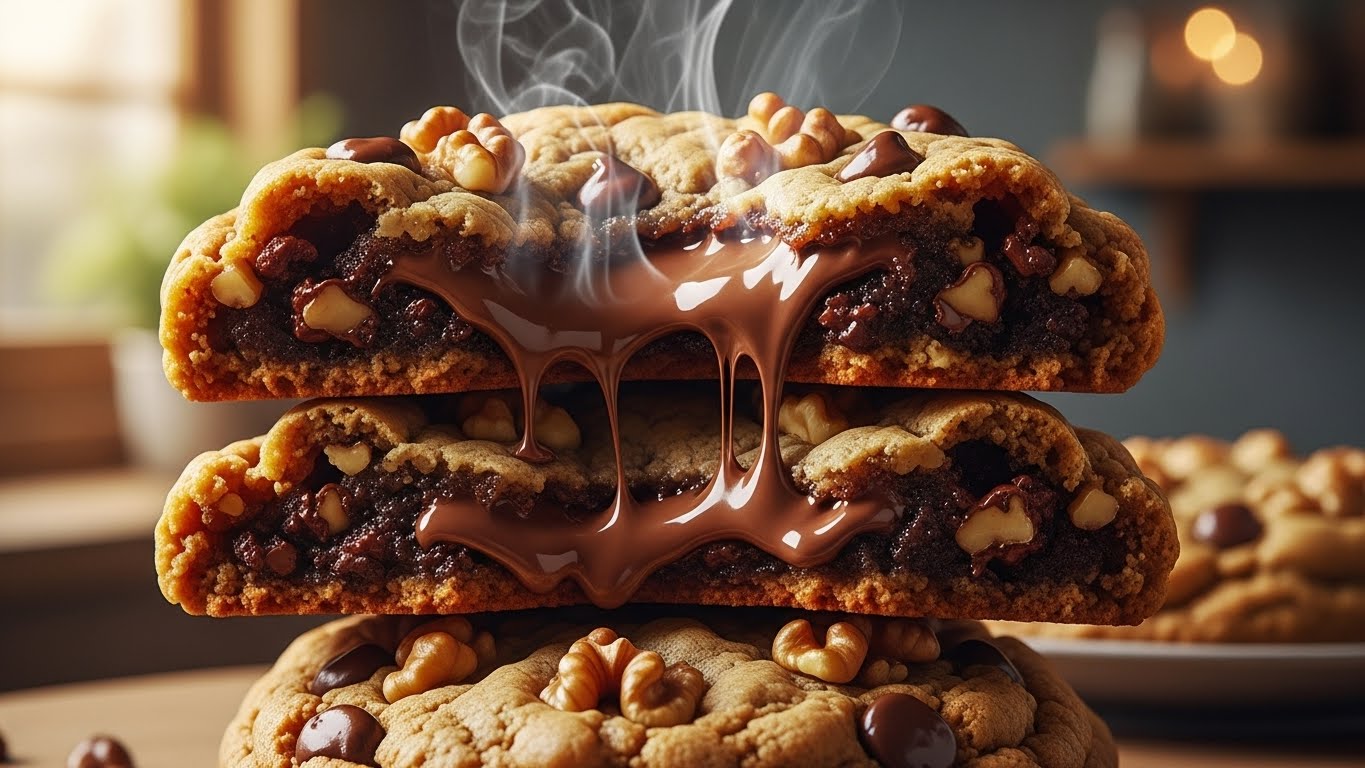
If you have ever walked down West 74th Street in New York City, you have likely seen the line. It wraps around the block, filled with locals and tourists alike, all waiting for one thing: a warm, six-ounce, mountain of a cookie from Levain Bakery. These aren’t just cookies; they are an experience. They are legendary. But let’s be honest, we can’t all hop on a plane to NYC whenever a craving strikes. That is why perfecting a homemade levain cookie recipe is the ultimate goal for any serious home baker.
I have spent years analyzing the texture, the flavor profile, and the structural integrity of these famous treats. I have tested batches with melted butter vs. cold butter, brown sugar vs. white sugar, and varying oven temperatures. Today, I am sharing the results of that labor.
In this ultimate guide, you won’t just get a list of ingredients. You are going to learn the science behind the “gooey inside, crispy outside” phenomenon. We are going to replicate that iconic height and density right in your own kitchen. Whether you are a baking novice or a seasoned pro, this levain cookie recipe will change the way you look at chocolate chip cookies forever. Get your glass of milk ready; we are about to bake something spectacular.
What makes Levain cookies unique?
To successfully replicate a levain cookie recipe, you first need to understand what makes them different from the standard Toll House recipe on the back of a chocolate chip bag. A Levain cookie breaks almost all the traditional rules of cookie baking.
The Sheer Size
First and foremost, it is the size. A standard cookie weighs about 1 to 1.5 ounces. A Levain cookie weighs a whopping 6 ounces (approx. 170 grams). This massive size isn’t just for show; it is functional. The large volume of dough ensures that while the outside gets golden and crispy in the high heat of the oven, the inside remains protected, resulting in that signature under-baked, molten center.
The “Mountain” Shape
Most cookies spread flat. Levain cookies do not. They stand tall, looking almost like a scone or a biscuit before you bite into them. This shape minimizes the surface area touching the baking sheet, preventing the cookie from drying out. When you follow this levain cookie recipe, you will learn that we intentionally avoid smoothing the dough balls. We want craggy, rough peaks that catch the heat and brown beautifully.
The Texture Contrast
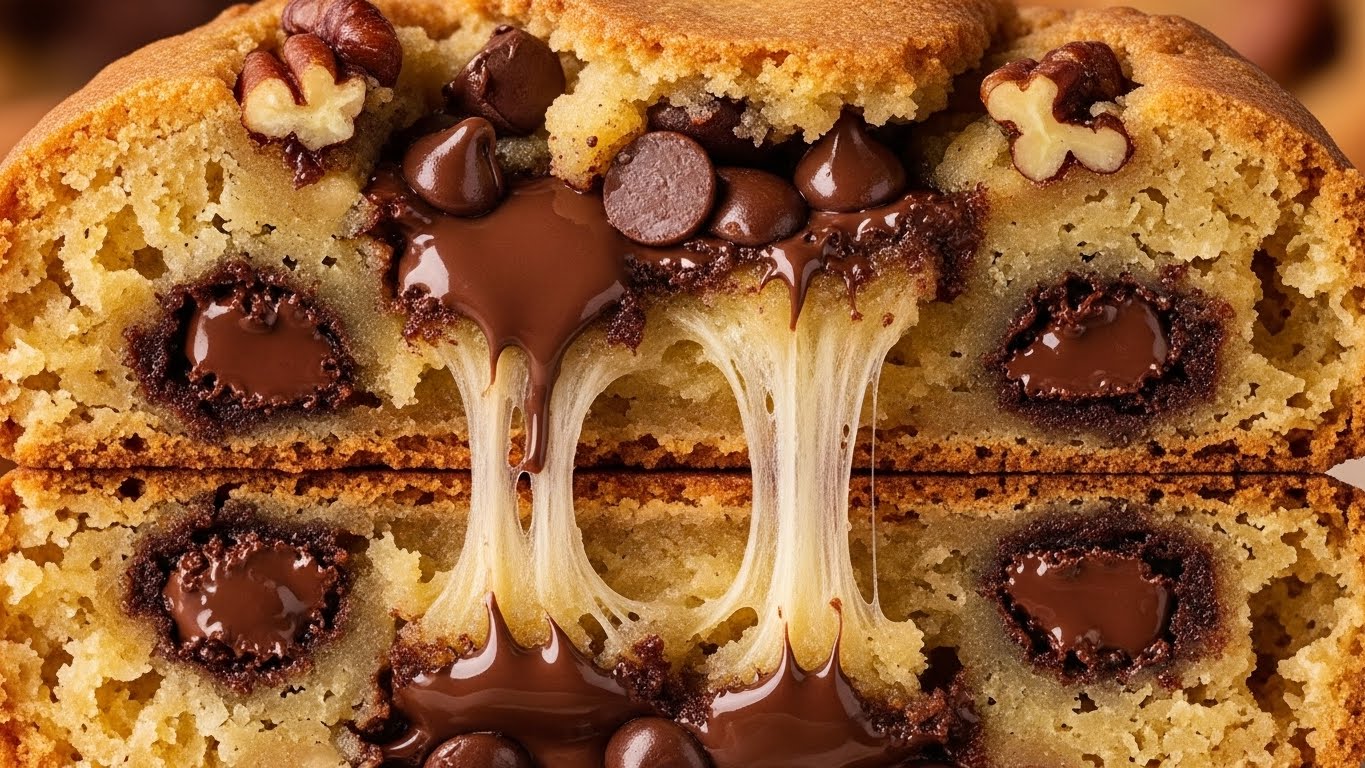
The magic lies in the contrast. The exterior is substantial—it has a “shell” that crunches when you bite it. The interior is soft, almost doughy, and packed with semi-sweet chocolate and walnuts. This isn’t a chewy, bendy cookie; it’s a dense, cakey-yet-gooey masterpiece.
Key ingredients for Levain-style dough
The secret to this levain cookie recipe isn’t magic; it’s chemistry. The specific combination of ingredients is what creates that unique structure. Do not make substitutions here if you want the authentic result.
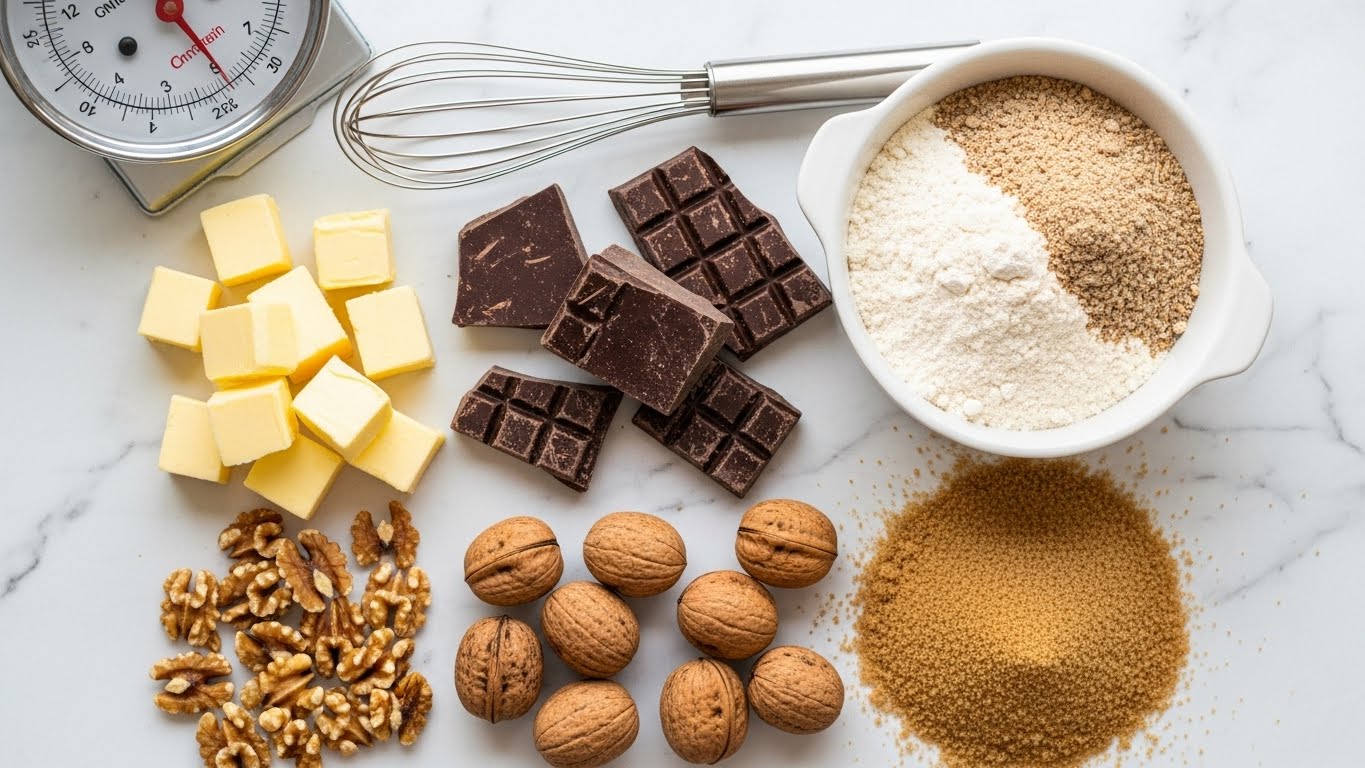
-
Cold, Cubed Butter
Most cookie recipes call for room-temperature butter to cream with sugar. Not this one. We use cold butter.
- Why? Cold butter takes longer to melt in the oven. This delays the spreading of the cookie. If you use warm butter, your cookies will flatten out into pancakes before the structure sets. We want them tall and proud.
-
A Mix of Flours: Cake and Bread Flour
This is the “secret sauce” of the copycat levain cookie recipe.
- Cake Flour: Low in protein, it makes the cookie tender and soft.
- Bread Flour (or All-Purpose): High in protein, it provides the gluten structure needed to hold up all those chocolate chips and nuts without collapsing.
- The Result: A cookie that is sturdy enough to hold its shape but melts in your mouth.
-
Cornstarch
A small amount of cornstarch is added to further soften the harsh proteins of the flour and thicken the dough, contributing to that gooey center we all love.
-
Walnuts (Do not skip these!)
Even if you aren’t a “nut person,” walnuts are crucial for the structure.
- Thermodynamics: The walnuts act as an aggregate (like gravel in concrete). They physically hold the dough up and absorb heat, helping the interior cook slightly without drying out. They also cut the intense sweetness of the chocolate.
-
High-Quality Chocolate
Levain uses semi-sweet chocolate chips, not chunks. However, I prefer a mix. You need a lot of chocolate—almost as much chocolate as there is flour!
Expert Tip: Use fresh baking powder and baking soda. Since this is a dense dough, you need active leavening agents to give it that slight lift in the oven.
Equipment You Need for Success
You don’t need a professional bakery kitchen, but a few tools will make this levain cookie recipe much easier to execute.
- Kitchen Scale: This is non-negotiable. “One cup” of flour can vary by 30% depending on how you scoop it. For these cookies, precision is key.
- Stand Mixer: You can use a hand mixer, but since we are using cold butter, a stand mixer with a paddle attachment saves your arm muscles.
- Large Baking Sheet: Use a light-colored aluminum sheet. Dark pans absorb too much heat and will burn the bottoms of your cookies before the center is done.
- Silicone Baking Mat or Parchment Paper: To prevent sticking and ensure even heat distribution.
Step-by-step method for giant cookies
Here is the step-by-step walkthrough to achieving cookie nirvana. Follow these instructions closely for the best levain cookie recipe results.
Step 1: Prep the Oven and Ingredients
Preheat your oven to 410°F (210°C). Yes, this is high. Most cookies bake at 350°F. The high heat shocks the butter, setting the outside crust immediately while keeping the inside raw.
- Cut your cold butter into small cubes.
- Measure your dry ingredients (Cake flour, Bread flour, Cornstarch, Baking soda, Baking powder, Salt) into a bowl and whisk to combine.
Step 2: Beat the Butter and Sugars
In your stand mixer bowl, add the cold cubed butter, brown sugar, and white sugar.
- Technique: Cream them together on medium speed for about 4 minutes. You aren’t looking for “light and fluffy” like a cake; you just want them well combined and the butter slightly broken down but still cool.
Step 3: Add Eggs
Add eggs one at a time, mixing well after each addition. Do not overbeat. We don’t want to incorporate too much air, or the cookies will deflate later.
Step 4: Add Dry Ingredients
Turn the mixer to the lowest speed. Slowly add the flour mixture.
- Crucial Point: Stop mixing as soon as you see no more white streaks of flour. Overmixing develops gluten, which makes the cookies tough. We want tender cookies.
Step 5: The Mix-ins
Pour in the chocolate chips and walnuts. Pulse the mixer just 2 or 3 times to incorporate. Ideally, finish mixing by hand with a sturdy spatula to ensure the heavy mix-ins are distributed evenly without overworking the dough.
Step 6: Portioning the Dough (The “Rough Scoop”)
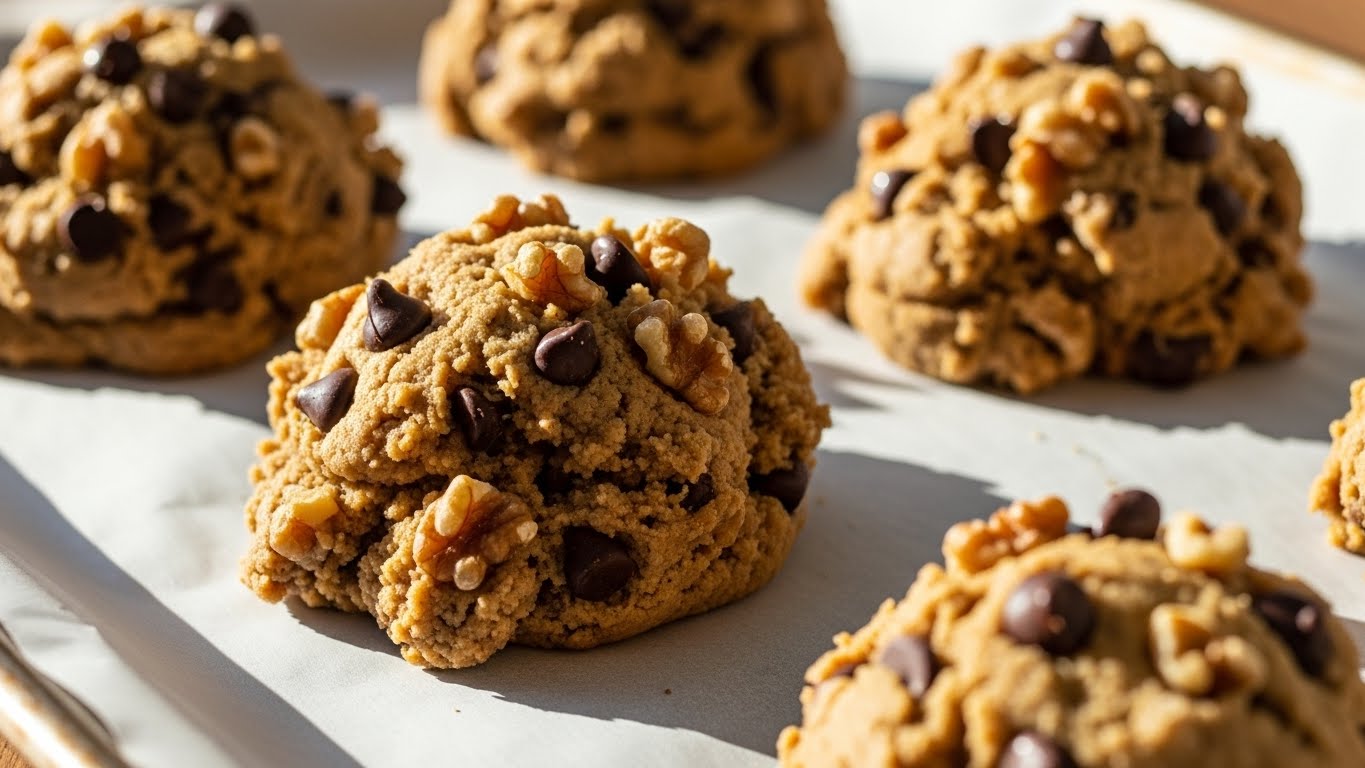
Divide the dough into 8 giant portions (approx. 6 ounces each).
- Do not roll them into smooth balls. I repeat, do not roll them.
- Pick up a chunk of dough, squeeze it lightly just so it holds together, and drop it onto the baking sheet. You want a jagged, rough, tall mound of dough. These craggy edges will become the best crispy parts.
Step 7: Baking
Place the baking sheet in the center of the oven. Bake for 9 to 12 minutes.
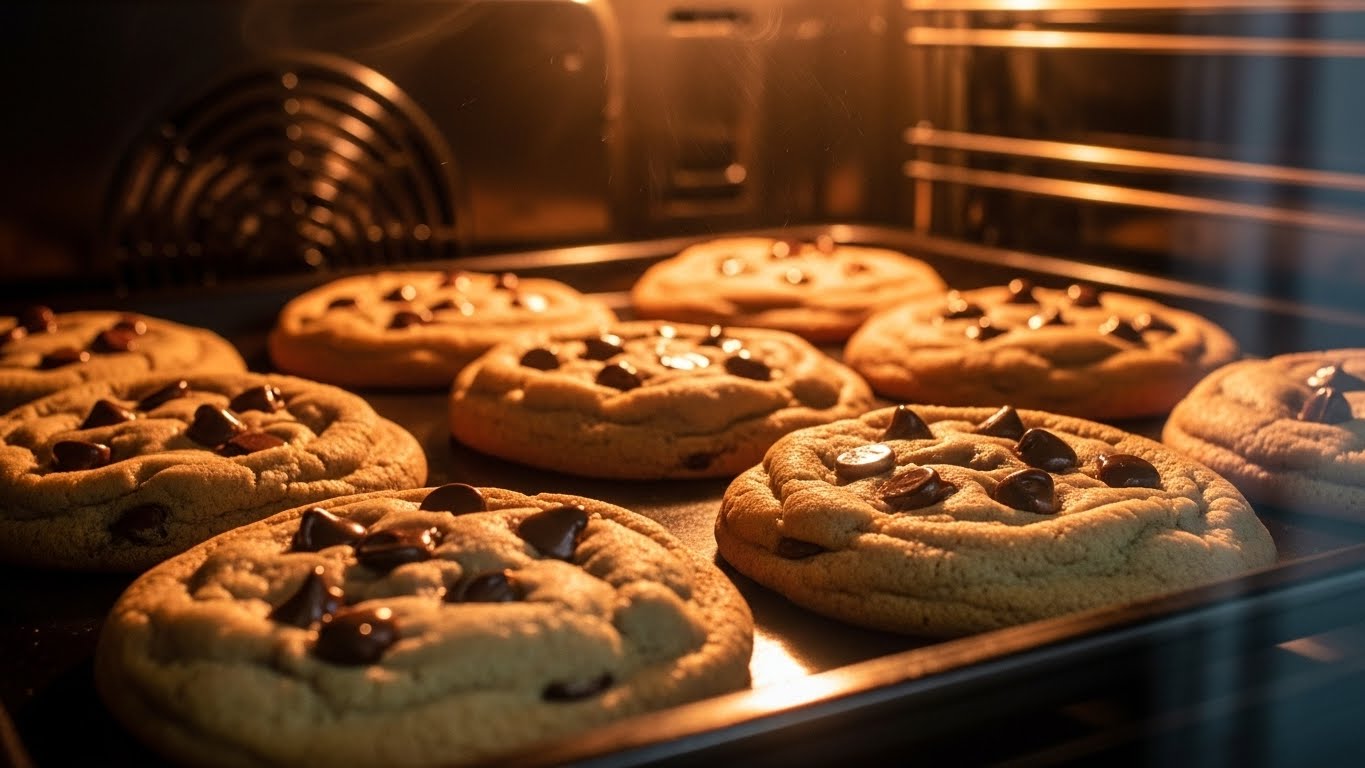
- Visual Cue: They are done when the outside is golden brown and the top looks dry, even if they feel very soft to the touch. Do not overbake.
Step 8: The Cooling Wait
Let them cool on the baking sheet for at least 15 minutes. They are too fragile to move when hot. During this time, the residual heat from the pan will finish setting the center of the cookie.
Why Chilling the Dough Matters (Or Does It?)
In traditional cookie theory, chilling the dough is essential to prevent spreading. However, in this levain cookie recipe, because we use cold butter and a massive amount of mix-ins, chilling is actually optional.
- Immediate Bake: If your butter was truly cold when you started, you can bake these immediately. This is great for when you need a cookie now.
- Chilled Bake: If your kitchen is hot or you overmixed the dough (heating up the butter), pop the shaped dough balls in the freezer for 20 minutes before baking. This ensures they hold that tall, mountain shape.
Troubleshooting Common Mistakes
Even the best bakers run into issues. Here is how to fix common problems with your levain cookie recipe.
“My Cookies Spread Too Much”
- Cause 1: Your butter was too warm.
- Cause 2: Your oven wasn’t hot enough. Make sure it hits 410°F.
- Cause 3: You overmixed the dough, warming it up.
- Fix: Chill the dough balls for 30 minutes before baking next time.
“The Center is Too Raw”
- Cause: The cookies were too large (over 6oz) or the oven was too hot, burning the outside too fast.
- Fix: Lower the temp to 375°F and bake for 4-5 minutes longer, or make the cookies slightly smaller (4oz).
“They Taste Dry”
- Cause: Too much flour. Did you scoop the flour with the cup?
- Fix: Always use a scale. If you scooped, you likely packed the flour down, adding 20% more than the recipe needed.
Variations on the Classic
Once you master the classic chocolate chip walnut levain cookie recipe, you can experiment with other flavors while keeping the same base dough ratios.
- Dark Chocolate Peanut Butter: Swap walnuts for peanut butter chips and use dark chocolate chunks.
- Two-Chip Delight: Use a mix of white chocolate and semi-sweet chocolate.
- Oatmeal Raisin: Substitute 100g of flour for rolled oats and add raisins (though this changes the texture slightly).
If you find these giant chocolate bombs are a bit too rich for your palate and you are looking for something lighter or fruitier to balance your baking repertoire, I highly recommend trying our 20 Best Lemon Cookie Recipes – Bright, Zesty, and Sweet. They offer a zesty, refreshing contrast to the heavy chocolate of Levain cookies.
Alternatively, if you love the idea of a dense, chewy treat but need to serve a larger crowd without shaping individual cookies, you should explore our guide to 20 Best Cookie Bar Recipes – Easy Desserts in One Pan Cookie bars offer a similar satisfaction with half the effort!
Comparison: Levain Style vs. Regular Cookies
To help you understand why we do what we do, here is a quick comparison table:
| Feature | Standard Cookie | Levain Style Cookie |
| Butter Temp | Room Temperature / Melted | Cold / Cubed |
| Flour | All-Purpose Flour | Cake Flour + Bread Flour Mix |
| Sugar | More Brown Sugar (Chewy) | Balance of White/Brown |
| Oven Temp | 350°F (175°C) | 410°F (210°C) |
| Weight | 1.5 oz | 6 oz |
| Nuts | Optional | Structural Necessity |
Storage and Reheating Instructions
Because these cookies are so large, you might not eat them all at once (though I wouldn’t judge you if you did).
- Room Temperature: Store in an airtight container for up to 3 days. Add a slice of white bread to the container to keep them soft.
- Freezing: These freeze beautifully. You can freeze the baked cookies or the raw dough balls. If freezing raw dough, bake from frozen but add 2-3 minutes to the baking time.
- Reheating: This is the most important part. Do not eat them cold. To revive that fresh-from-the-bakery experience, heat the cookie in a 350°F oven for 5 minutes. The chocolate will melt, and the outside will crisp up again. Avoid the microwave, as it makes them rubbery.
Frequently Asked Questions (FAQ)
- Can I make this Levain cookie recipe without nuts?
Yes, you can, but with a caveat. The walnuts in the original levain cookie recipe help prevent spreading and add bulk. If you remove them, replace them with extra chocolate chips or another mix-in to keep the volume the same. If you omit them entirely, your cookies will be flatter and slightly less “cakey.”
- Why do I need to use cake flour? Can I use only All-Purpose?
You can use only All-Purpose flour, but you will lose a bit of the authentic texture. The cake flour lowers the overall protein content, making the inside tender and gooey. If you only have AP flour, replace 2 tablespoons of flour with cornstarch to mimic the effect of cake flour.
- Can I make smaller cookies with this recipe?
Technically yes, but then they aren’t Levain cookies! If you make them normal size (1-2 oz), you must lower the oven temperature to 350°F and reduce baking time to 8-10 minutes. However, you will lose the signature “gooey center vs. crispy shell” contrast that the large size provides.
- Do I really need to bake at 410°F?
Yes. It sounds scary, but it is necessary. The high heat sets the outside crust almost instantly, trapping the steam inside. This is what keeps the cookie tall and creates the molten center. Lower temperatures will cause the butter to melt slowly, leading to a flatter, crispier cookie.
Conclusion
Baking is a journey, and mastering this levain cookie recipe is one of the most rewarding stops along the way. There is a profound satisfaction in pulling that tray out of the oven and seeing those massive, golden-brown mounds that look exactly like the ones sold for $5 a pop in New York City.
You have the science, the ingredients, and the technique. Now, the only thing left to do is bake. Whether you share them with friends or keep them all to yourself (I promise I won’t tell), these cookies are guaranteed to impress.
So, grab your cold butter, preheat that oven to 410°F, and get ready to experience the ultimate cookie indulgence.
Ready to start? Check your pantry for walnuts and chocolate chips right now. If you bake these this weekend, tag us in your photos—we love seeing your giant cookie creations!
