

Sourdough Discard Muffins
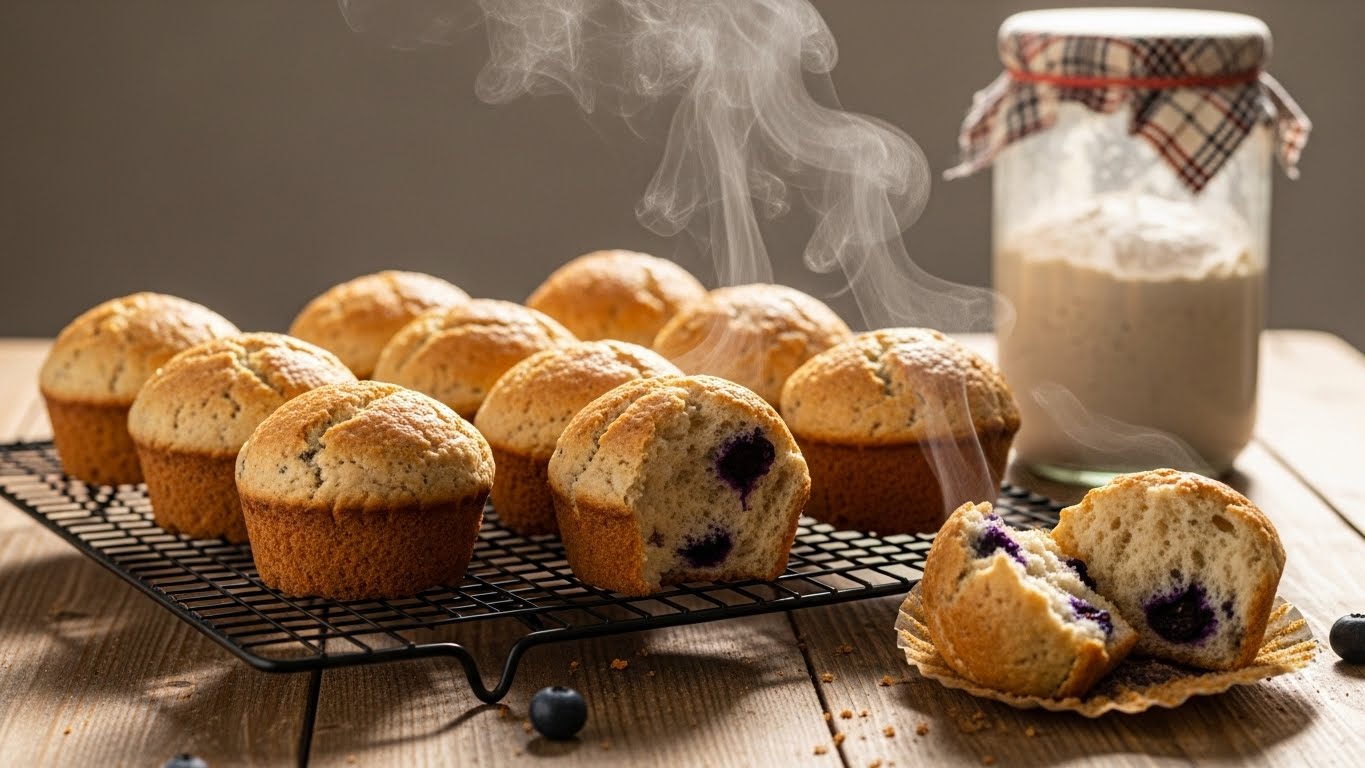
If you have ever embarked on the journey of maintaining a sourdough starter, you know the cycle well. You feed it, you watch it rise, and you feel a sense of accomplishment. But then comes the guilt. That moment when you have to remove half of your beloved culture—the “discard”—to make room for fresh flour and water.
Pouring that mixture down the drain feels wasteful. Throwing it in the compost feels like a defeat. But what if I told you that this “waste” product is actually the secret ingredient to the best breakfast treat you have ever baked?
Welcome to the wonderful world of sourdough discard muffins.
These aren’t just muffins made to use up leftovers; they are muffins that are superior because of them. The discard adds a depth of flavor—a subtle, creamy tang—that milk or buttermilk simply cannot replicate. Furthermore, the acidity in the starter tenderizes the gluten, resulting in a crumb so soft it practically melts in your mouth.
In this comprehensive guide, we are going to master the art of the sourdough discard muffins. We will move beyond specific flavor recipes and teach you the “Master Formula.” We will explore the science of acid-base reactions, how to customize your batter, and how to ensure your muffins rise high and proud every single time.
Stop feeling guilty about your discard. Let’s turn it into something delicious.
Why bake muffins with sourdough discard?
Before we get the mixing bowls out, it is important to understand why sourdough discard muffins are worth your time. It isn’t just about reducing waste; it is about baking science.
- The Flavor Complexity
Standard muffins rely on sugar and vanilla for flavor. They are sweet, but often one-dimensional. Sourdough discard introduces fermentation byproducts (lactic acid and acetic acid). This adds a savory note that balances the sweetness, creating a sophisticated, bakery-style profile. It is the same principle as using sour cream in a cake, but even better.
- The Texture Upgrade
The acid in the sourdough discard weakens the gluten strands in the flour. In bread, we want strong gluten for chew. In muffins, we want weak gluten for tenderness. By adding discard, you are chemically ensuring your muffins are soft, moist, and tender, never tough or rubbery.
- The “Lift” Factor
When the acidic starter meets the alkaline baking soda in your recipe, a vigorous chemical reaction occurs immediately. This produces carbon dioxide gas, giving your muffins an incredible initial lift (oven spring).
Ingredients for base discard muffins
To create the perfect canvas for any flavor, you need a solid base. Here are the essential components of sourdough discard muffins and the role they play.
The Fermentation Element
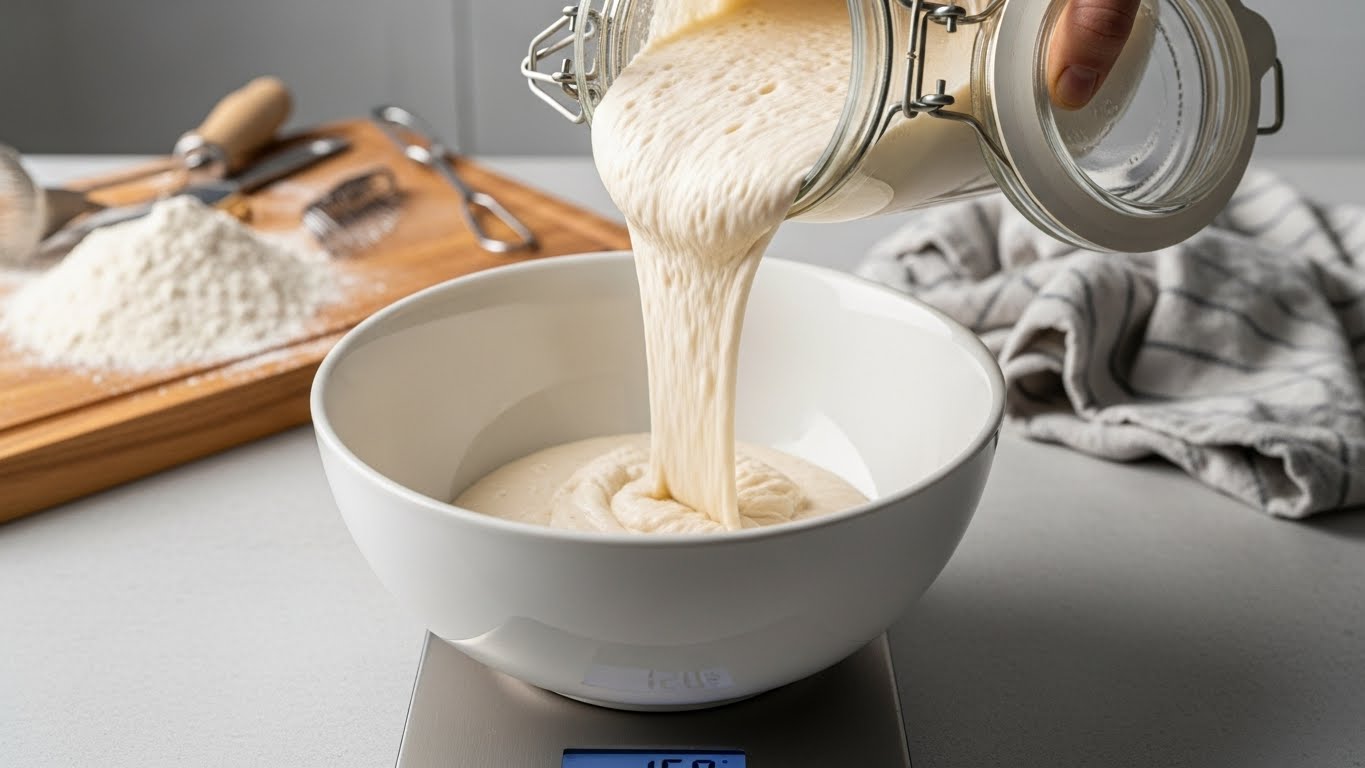
- Sourdough Discard: You need about 1/2 to 1 cup (depending on the recipe volume). This can be “unfed” discard straight from the fridge (more sour) or fresh discard from the counter (milder).
- Note: We assume a 100% hydration starter (equal parts flour and water by weight). If yours is stiffer or wetter, you may need to adjust the milk.
The Wet Team
- Fat (Butter or Oil):
- Butter: Provides the best flavor.
- Vegetable Oil: Provides the most moisture and keeps muffins soft for days. A blend of both is often the secret weapon.
- Eggs: Large eggs at room temperature. They provide structure and richness.
- Liquid: Whole milk, buttermilk, or a plant-based alternative. If your starter is very thick, you might need a splash more liquid.
- Vanilla Extract: Essential for rounding out the tangy flavor.
The Dry Team
- All-Purpose Flour: The standard choice. Since your starter contributes some flour, you will use slightly less flour than a non-sourdough recipe.
- Sugar: Granulated sugar for the base, or brown sugar for more moisture.
- Leavening Agents:
- Baking Soda: Crucial. It neutralizes the acid in the starter and creates the rise.
- Baking Powder: Provides a secondary lift during baking.
- Salt: Never skip it. It pops the flavors.
If you are interested in exploring specific flavor profiles, like blueberry or chocolate chip, we have a dedicated collection of recipes. You can find detailed measurements in our article on Sourdough Discard Muffin Recipes.
The Science: Active Starter vs. Discard
Can you use active starter for muffins? Yes. Should you? Not necessarily.
- Active Starter: Full of gas bubbles. It has consumed most of its food. It is milder in flavor. If you measure by volume (cups), you will get less actual mass because of the air bubbles.
- Discard (Unfed): Flat, runny, and acidic. It has a stronger flavor. This is actually better for muffins because the higher acidity reacts more vigorously with the baking soda. Plus, measuring by volume is more accurate as the bubbles have collapsed.
Verdict: Save your active starter for bread; use your old, flat, fridge discard for sourdough discard muffins.
Step-by-step mixing method
The technique for sourdough discard muffins is known as the “Muffin Method.” It is distinct from the “Creaming Method” used for cakes. The goal is to minimize gluten development.
Phase 1: Preparation
- Preheat: Set your oven to 425°F (220°C). Yes, this is hot! We will explain why later.
- Prep Tin: Line your muffin tin with paper liners or grease generously.
- Mise en Place: Measure all ingredients. If your discard is cold, let it sit out for 20 minutes to take the chill off so it mixes easily with the melted butter.
Phase 2: The Wet Mix
- Whisk: In a large bowl, whisk together the melted butter (or oil) and sugar until combined.
- Add Liquid: Whisk in the eggs, milk, vanilla, and the star of the show—the sourdough discard.
- Emulsify: Whisk until the mixture is smooth and uniform. The discard should be fully dissolved into the liquid.
Phase 3: The Dry Mix
- Combine: In a separate bowl, whisk the flour, baking powder, baking soda, and salt.
- Why Separate? You want to ensure the leavening agents are evenly distributed throughout the flour so you don’t get a bitter bite of baking soda in one muffin.
Phase 4: The Gentle Fold
- Pour: Pour the wet ingredients into the dry ingredients.
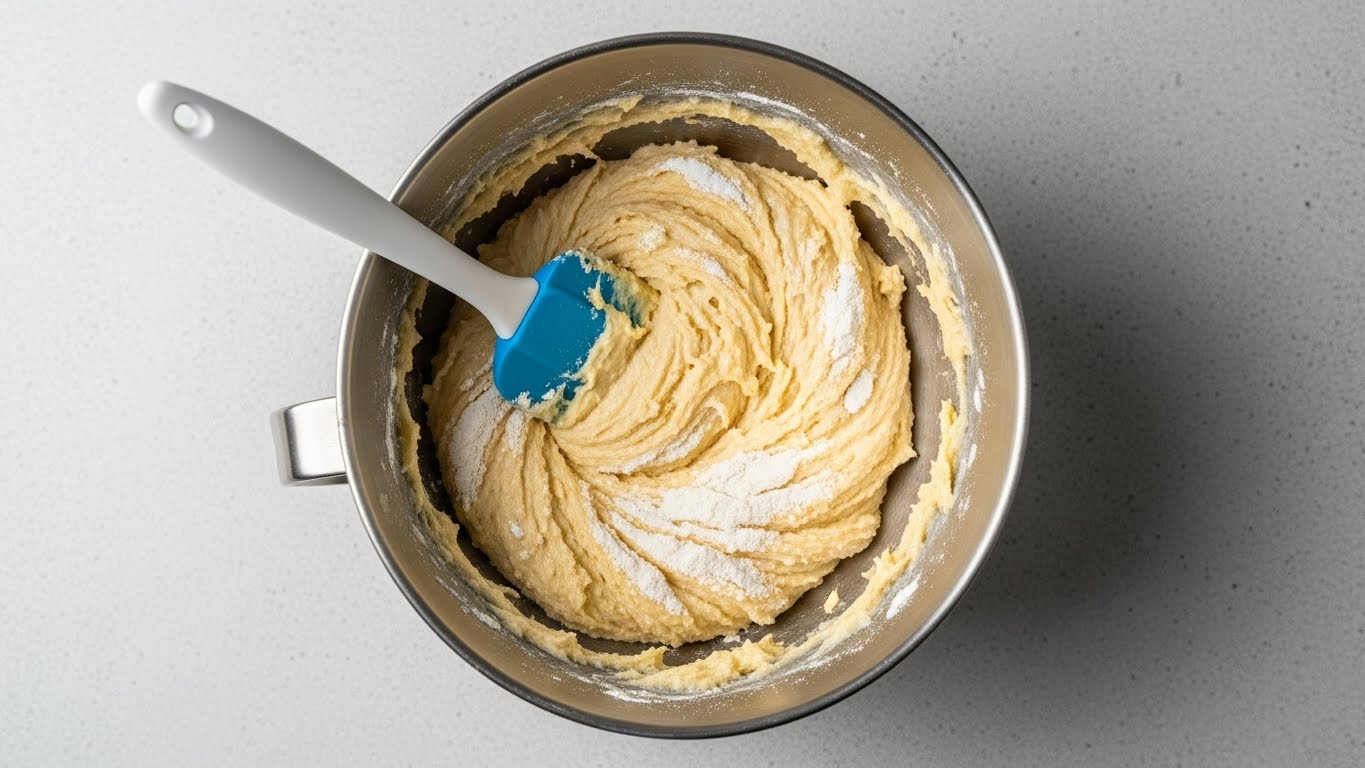
- Fold: Switch to a silicone spatula. Use a “cut and fold” motion.
- Stop: Stop mixing the second you no longer see dry streaks of flour.
- Crucial: The batter should look lumpy and ugly. That is perfect. If it looks smooth, you have overmixed, and your muffins will be tough.
Baking, cooling, and storage tips
You have mixed the perfect batter. Now, let’s ensure they bake perfectly.
The “High-Low” Baking Trick
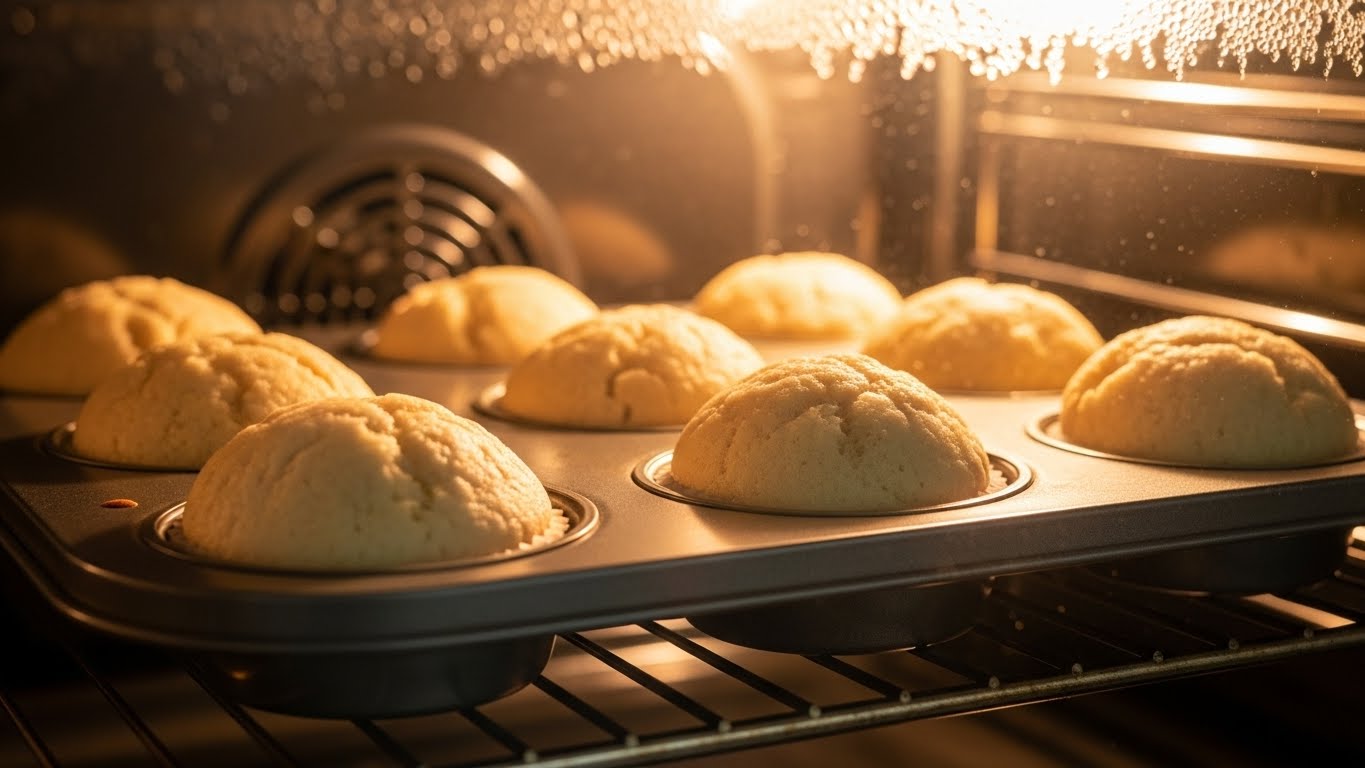
Professional bakeries use this trick to get those tall, domed “mushroom” tops on their muffins.
- Start Hot: Put the muffins in at 425°F (220°C). Bake for 5 minutes.
- Why? The intense heat causes the steam and gas to expand rapidly, shooting the muffin top upwards before the crust sets.
- Drop the Temp: Without opening the oven door, reduce the temperature to 350°F (175°C). Bake for another 13-16 minutes.
- Why? This lower temperature cooks the center of the muffin evenly without burning the outside.
Testing for Doneness
- The Touch: Gently press the top of a muffin. It should spring back. If it leaves a dent, it needs more time.
- The Toothpick: Insert into the center. It should come out clean or with a few moist crumbs. Wet batter means it needs 2-3 more minutes.
Cooling and Storage
- The 5-Minute Rule: Let muffins cool in the pan for exactly 5 minutes. Then, move them to a wire rack. If you leave them in the pan, the steam gets trapped, and the bottoms become soggy.
- Storage: Store in an airtight container at room temperature for up to 3 days.
- Pro Tip: Place a paper towel in the bottom of the container to absorb excess moisture and prevent stickiness.
Flavor Variations for Your Master Recipe
Once you have this base recipe down, you can add anything.
- Lemon Poppy Seed: Add lemon zest and poppy seeds. If you enjoy citrus baking, you might find inspiration in our 20 Best Lemon Cookie Recipes, where we discuss how to layer lemon flavor effectively.
- Savory: Reduce sugar to 1 tbsp. Add cheddar cheese, chives, and bacon bits.
- Morning Glory: Add grated carrots, raisins, walnuts, and coconut.
Troubleshooting Common Muffin Mistakes
Even with sourdough discard muffins, things can go wrong.
| Problem | Likely Cause | The Fix |
| Tunnels (Large holes inside) | Overmixing the batter. | Mix less! Leave lumps. |
| Flat Tops | Oven too cold or old baking soda. | Use the 425°F start; check expiration dates. |
| Soggy Bottoms | Left in the tin too long. | Remove to rack after 5 mins. |
| Gummy Texture | Underbaked or sliced too hot. | Bake fully; let cool completely. |
Dietary Adaptations
- Dairy-Free: Swap butter for oil and milk for oat milk. The discard usually contains no dairy (unless you feed it milk).
- Vegan: Use flax eggs. The acidity in the discard actually helps flax eggs bind better!
- Whole Wheat: You can substitute up to 50% of the flour with whole wheat flour. You may need an extra tablespoon of milk as whole wheat absorbs more liquid.
Comparison: Sourdough vs. Regular Muffins
Why switch? Here is the breakdown.
| Feature | Regular Muffin | Sourdough Discard Muffin |
| Flavor | Sweet, simple | Complex, slightly tangy |
| Texture | Cake-like | Tender, moist, soft |
| Rise | Standard | High (due to acidity) |
| Shelf Life | 2-3 days | 4-5 days (acidity preserves) |
| Waste | None | Uses up waste product |
Frequently Asked Questions (FAQ)
Here are the most common questions about sourdough discard muffins.
- How long can I keep sourdough discard in the fridge before using it?
You can use discard that has been in the fridge for up to 2 weeks. As it sits, it becomes more acidic (sour) and separates (liquid “hooch” on top). For muffins, pour off the hooch and stir well. If it smells like acetone or paint thinner, it’s fine (just hungry). If it has pink/orange mold, throw it out.
- Can I freeze sourdough discard muffins?
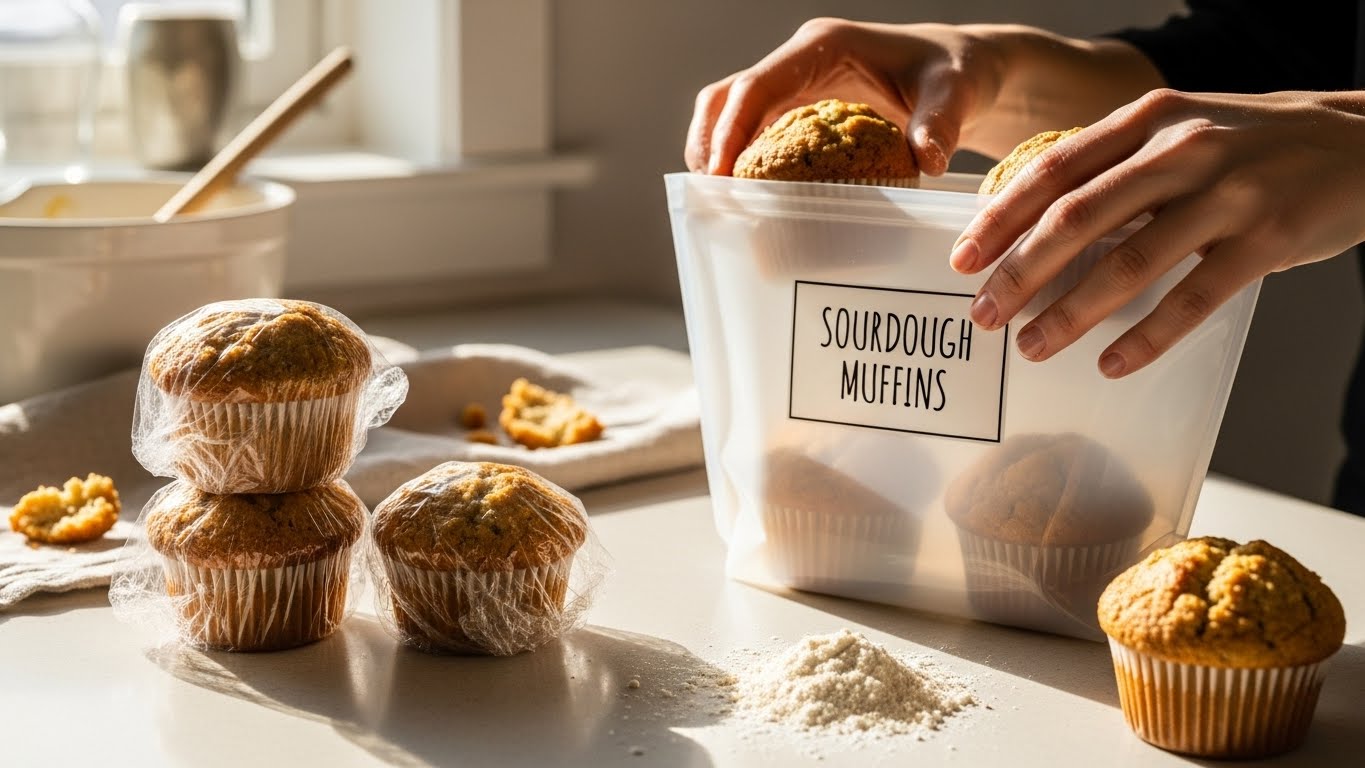
Yes! They freeze beautifully. Wrap each muffin individually in plastic wrap, then place them in a ziplock bag. They last for up to 3 months. Microwave for 30-45 seconds to thaw for a quick breakfast.
- My batter seems very thick. Is that normal?
Yes. Sourdough batter is often thicker than standard muffin batter. It should be scoopable, not pourable. However, if it looks like bread dough, your starter might be very dry. Add a tablespoon of milk to loosen it up.
- Why did my blueberries turn green in these muffins?
This is a chemical reaction between the antioxidants (anthocyanins) in blueberries and the alkaline baking soda. Because sourdough discard muffins rely on baking soda to neutralize the acid, this reaction is common. It is harmless! To prevent it, toss berries in flour or use slightly less soda.
Conclusion: A Sustainable Morning Routine
Baking sourdough discard muffins is more than just a recipe; it is a sustainable habit. It transforms a byproduct into a highlight. It turns a chore (cleaning your starter jar) into a reward (warm muffins).
Once you taste the difference—that impossibly tender crumb and subtle depth of flavor—you will find yourself feeding your starter just so you have enough extra to bake a batch.
So, don’t pour that liquid gold down the drain. Preheat your oven, grab your whisk, and treat yourself to the best version of a muffin you have ever had.
What mix-in are you going to try first? Let us know in the comments below!

Pingback: Easy Sourdough Discard Muffin Recipe – One Bowl, No Mixer - Daily Baker Hub