

Best Pound Cake Recipe
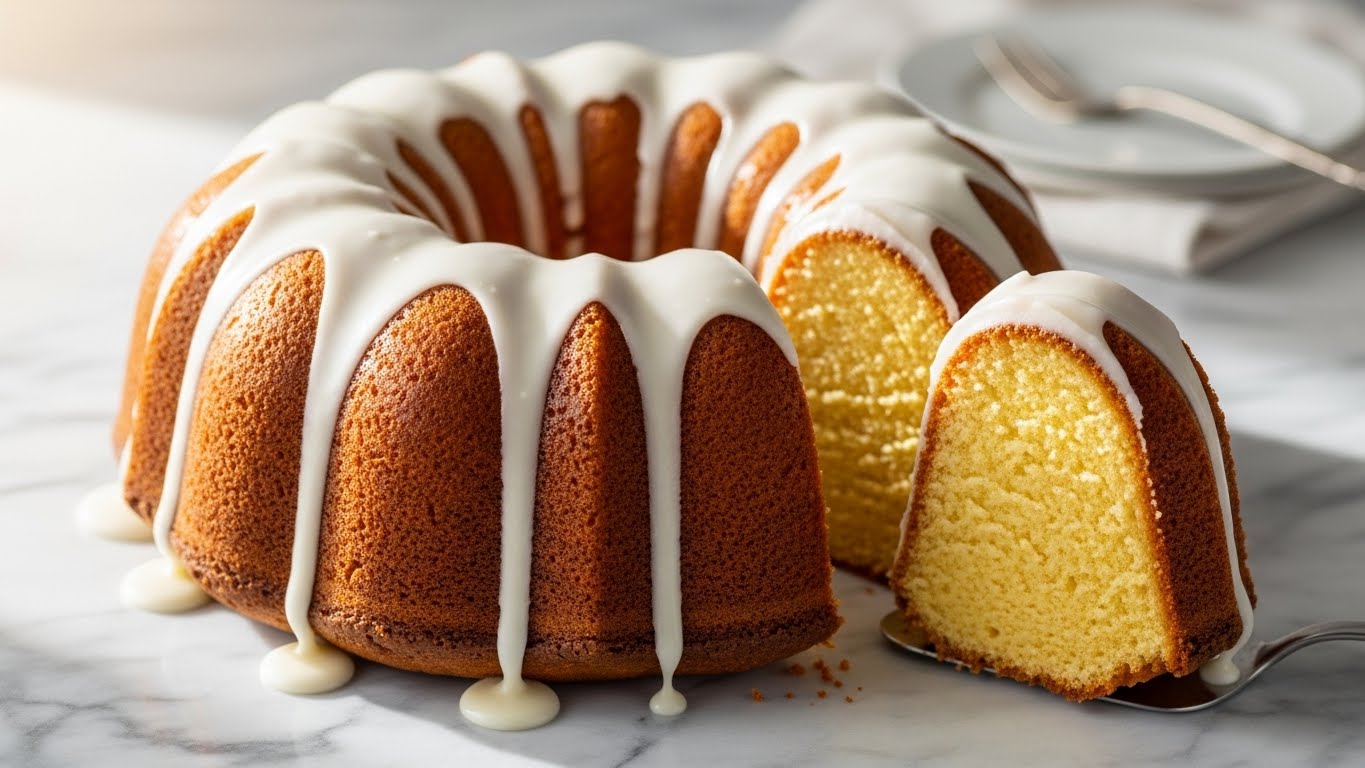
There is something undeniably regal about a pound cake. It doesn’t need layers of fondant, colorful sprinkles, or complex fillings to stand out. Its beauty lies in its simplicity: a dense, velvety crumb, a golden crust, and a rich, buttery flavor that melts in your mouth.
However, finding the best pound cake recipe can be a frustrating journey. We have all been there—baking a loaf that turns out too dry, too heavy, or (worst of all) raw in the middle while burnt on the outside. You want a cake that is sturdy enough to hold strawberries and cream, yet tender enough to eat plain with a cup of coffee.
The search ends here. After testing dozens of ratios and baking temperatures, I am sharing what I truly believe is the best pound cake recipe you will ever bake. It pays homage to the traditional “pound of ingredients” history while incorporating modern baking science to guarantee a moist result every single time.
In this comprehensive guide, we will break down the science of the “cold oven” start vs. traditional baking, the secret ingredient for moisture, and how to achieve that signature crack on top. Preheat your ovens (or don’t, we will get to that!)—it’s time to bake.
Why this is the best pound cake recipe you will ever make
You might be asking, “What makes this specific recipe better than the thousands of others online?” The answer lies in the technique and the balance of ingredients.
- The Texture: A true pound cake should have a “tight crumb.” This means no large air tunnels. It should be dense like a gold brick but soft like velvet.
- The Flavor: We use a high ratio of high-fat butter and pure vanilla extract. We don’t mask the flavor; we amplify it.
- Reliability: This recipe uses room-temperature ingredients to create a stable emulsion, preventing the dreaded “curdled batter” that leads to greasy cakes.
If you are new to the world of mixing and measuring, I highly recommend reviewing our guide on https://dailybakerhub.com/baking-for-beginners/ before you start. Mastering the basics is key to nailing this recipe.
Classic pound cake ingredients
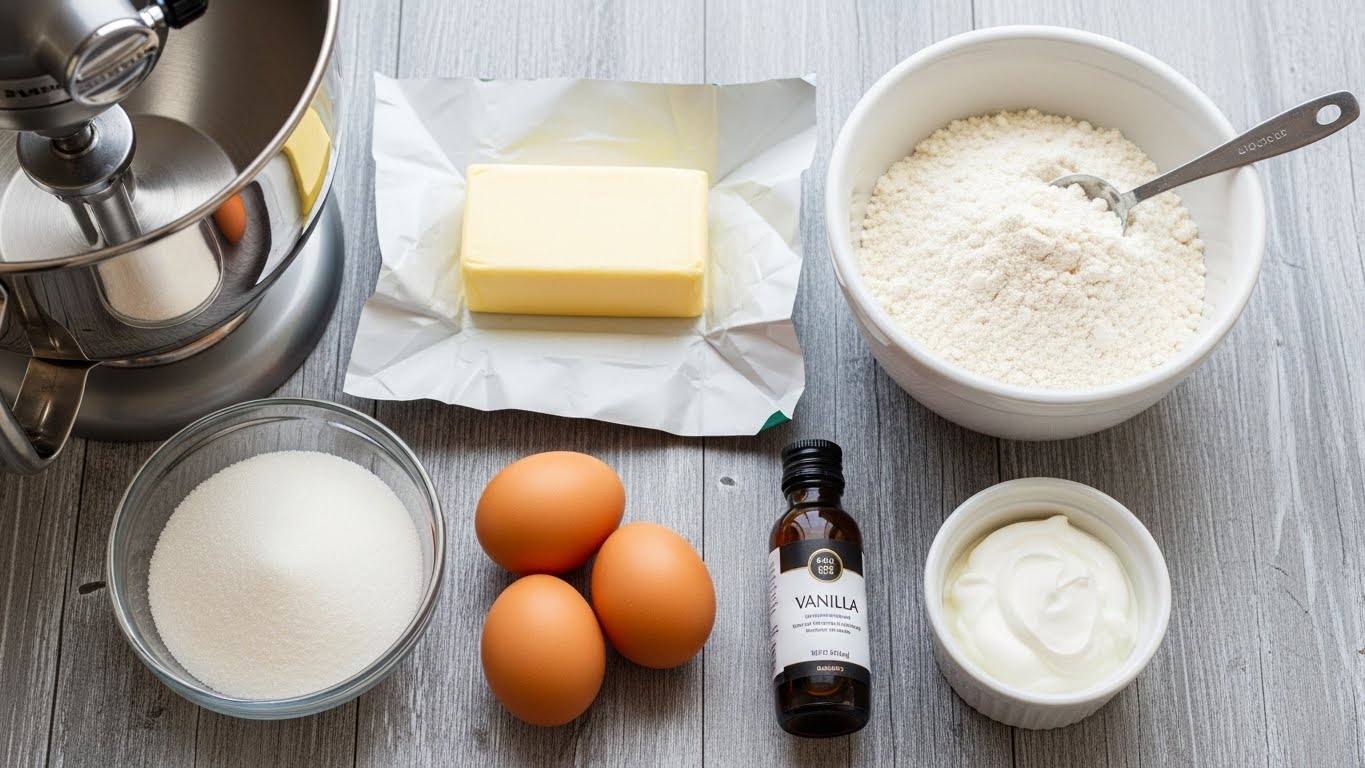
To create the best pound cake recipe, you must respect the ingredients. Since there are so few of them, quality is non-negotiable.
- The Butter (The Star)
Use unsalted butter. Why? Because different brands of salted butter have varying salt levels. Using unsalted gives you complete control. The butter must be softened to room temperature—soft enough to leave an indent with your finger, but not melting.
- The Sugar
We use standard granulated white sugar. This isn’t just for sweetness; the sharp crystals cut into the butter during the creaming process, creating millions of tiny air pockets that lift the cake.
- The Eggs
Large eggs, room temperature. Eggs provide structure (protein) and richness (yolks). Cold eggs will shock the butter and break your batter.
- The Flour
- Cake Flour vs. All-Purpose Flour: For the absolute best pound cake recipe, I recommend Cake Flour. It has less protein (gluten), which results in a more tender, melt-in-your-mouth texture.
- Substitutions: If you only have All-Purpose flour, remove 2 tablespoons of flour per cup and replace them with cornstarch.
- The Liquid (Moisture)
Traditional recipes didn’t use liquid, but modern palates prefer moist cakes. We use whole milk or sour cream. The acidity in sour cream tenderizes the gluten strands, ensuring the cake isn’t tough.
- Leavening & Flavor
- Baking Powder: Just a touch to help it rise.
- Salt: To balance the sugar.
- Vanilla Extract: Use pure vanilla, or better yet, vanilla bean paste for those beautiful black specks.
Note: If you are looking for a healthier alternative that fits a specific diet, this butter-rich cake might not be it. You might be interested in our https://dailybakerhub.com/low-carb-gluten-free-bread/ for a savory, diet-friendly option instead.
Equipment checklist for success
You don’t need a professional bakery kitchen, but you do need the right tools to execute the best pound cake recipe.
- Stand Mixer (Paddle Attachment): You need to beat the butter and sugar for a long time (5+ minutes). A hand mixer works, but your arm will get tired.
- Bundt Pan or Loaf Pans: This recipe works for both. A heavy-duty cast aluminum Bundt pan (like Nordic Ware) conducts heat best.
- Rubber Spatula: For scraping the bowl.
- Cooling Rack: Essential for air circulation after baking.
Step-by-step mixing and baking
The method is just as important as the ingredients. We use the “Creaming Method” to incorporate air. Follow these steps meticulously.
Phase 1: Preparation
- Prep the Pan: This is crucial. Grease your pan thoroughly with butter or non-stick spray, then dust it with flour. Tap out the excess. Even non-stick pans need this insurance.
- Oven Settings: Preheat your oven to 325°F (165°C). Note that this is lower than the standard 350°F. Pound cakes are dense; they need to cook slowly so the inside cooks before the outside burns.
Phase 2: The Creaming Process
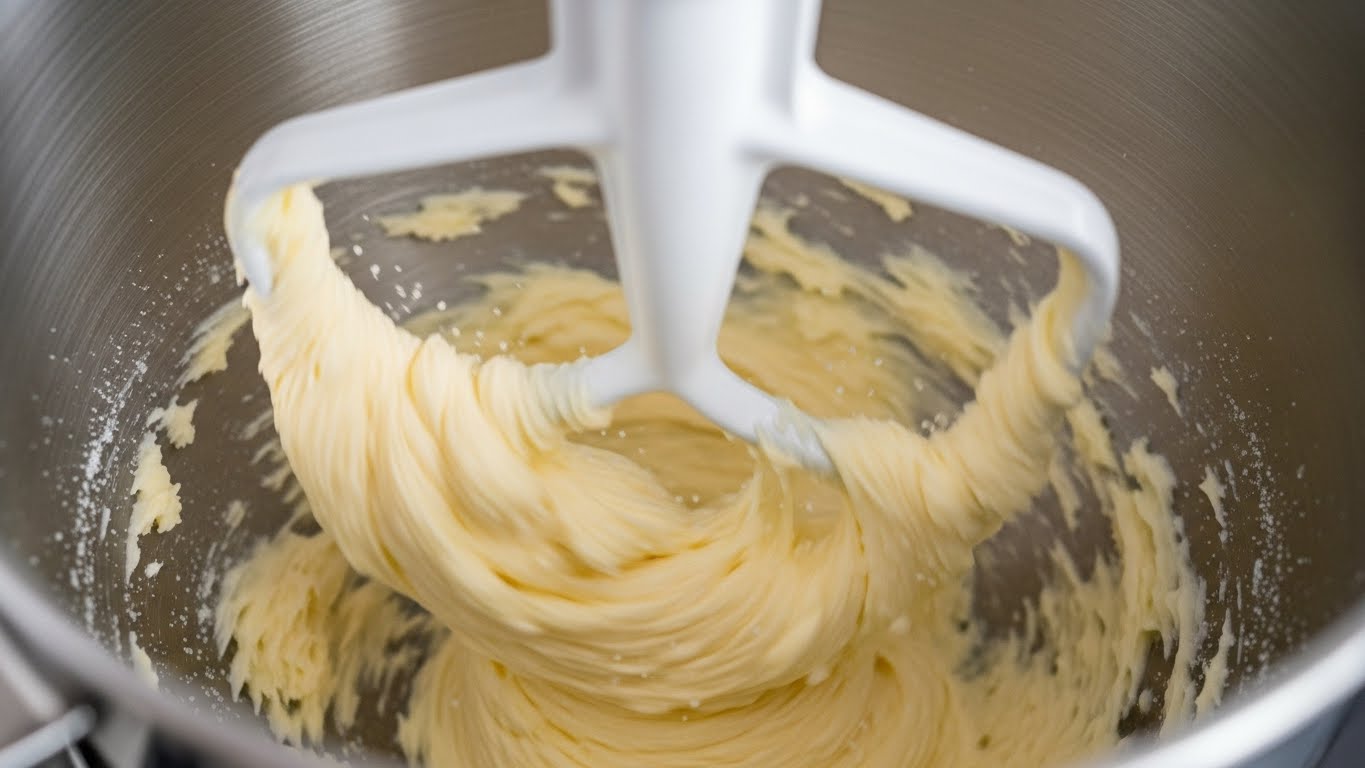
- Butter and Sugar: Place the softened butter and sugar in the mixer bowl. Beat on medium-high speed for 5 to 7 minutes.
- Visual Cue: The mixture should turn from yellow to very pale white and look fluffy like frosting. This is where you create the cake’s volume.
- Scrape Down: Stop the mixer and scrape the bottom and sides. Unmixed butter at the bottom leads to dense streaks.
Phase 3: Adding Eggs
- One at a Time: Add the eggs one by one, beating well after each addition.
- Emulsify: Ensure the batter looks smooth and velvety. If it looks curdled (like cottage cheese), your ingredients were too cold. Keep beating, or add a tablespoon of flour to help bring it back together.
Phase 4: Dry and Wet Alternation
- Dry Mix: Whisk flour, salt, and baking powder in a separate bowl.
- The Rotation: With the mixer on low speed (do not overmix!), add 1/3 of the flour mixture. Then add 1/2 of the milk/sour cream. Repeat, ending with the flour.
- Final Mix: Stop mixing as soon as the white flour streaks disappear. Overmixing develops gluten, which makes the cake tough.
Phase 5: Baking
- Pour: Pour the thick batter into your prepared pan. Smooth the top.
- Bang: Tap the pan on the counter 2-3 times to release large air bubbles.
- Bake: Bake for 60 to 75 minutes. Do not open the oven door for the first 50 minutes!
How to tell when pound cake is done
Pound cake is notorious for tricking bakers. It can look brown on top but be liquid in the middle. Determining doneness is a critical skill in mastering the best pound cake recipe.
The Visual Test
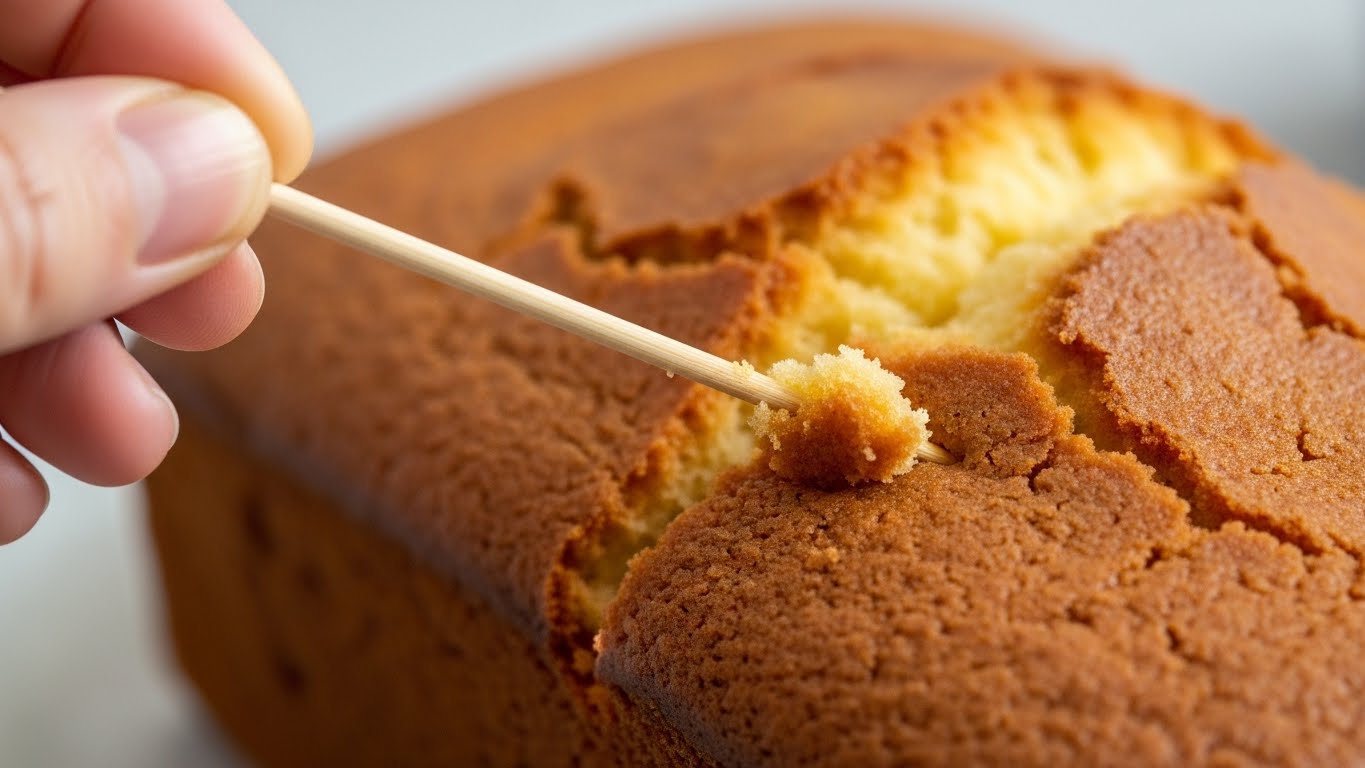
The cake should have risen significantly and, if using a loaf pan, will have a signature crack down the center. The edges should be pulling away slightly from the sides of the pan.
The Skewer Test (The Toothpick is too short)
A standard toothpick isn’t long enough for a Bundt cake. Use a long bamboo skewer.
- Insert the skewer into the thickest part of the cake.
- Pull it out.
- Wet batter: Needs more time.
- Clean: It might be slightly overbaked.
- Moist Crumbs: Perfect! If there are a few moist crumbs clinging to the skewer, take it out immediately. The residual heat will finish the baking.
Common pound cake mistakes (and how to fix them)
Even with the best pound cake recipe, things can go wrong. Here is a troubleshooting table to help you.
| Problem | Likely Cause | Solution |
| Cake is heavy/dense | Ingredients were cold or under-creaming. | Use room temp ingredients; beat butter/sugar for full 5 mins. |
| Overflowed the pan | Pan was too small or too much baking powder. | Fill pans only 2/3 full. |
| Burnt bottom/crust | Oven too hot or dark pan used. | Use an oven thermometer; reduce temp by 25°F for dark pans. |
| Stuck in the pan | Improper greasing or removed too hot. | Grease & flour well; let cool for 10 mins before flipping. |
| Sad streak (dense line) | Didn’t scrape the bowl. | Scrape the bottom of the mixer bowl frequently. |
Storage and freezing guidelines
One of the best features of pound cake is that it gets better with age. The flavors meld and the moisture distributes evenly after 24 hours.
- Room Temperature: Store in an airtight cake dome or wrapped in plastic wrap for 3-4 days.
- Refrigerator: Not recommended. The fridge dries out the butter-based crumb.
- Freezing: Pound cake freezes beautifully.
- Wrap the completely cooled cake in two layers of plastic wrap.
- Wrap again in aluminum foil.
- Freeze for up to 3 months. Thaw on the counter before serving.
Variations to elevate the best pound cake recipe
Once you master the vanilla classic, try these twists:
- Lemon Pound Cake
Add the zest of 2 lemons to the sugar before creaming. Rub the zest into the sugar with your fingers to release the oils. Add 2 tablespoons of lemon juice with the milk.
- Marble Pound Cake
Take 1/3 of the finished batter and mix it with 1/4 cup of cocoa powder and 2 tablespoons of milk. Swirl the chocolate batter into the vanilla batter in the pan.
- Cream Cheese Pound Cake
Replace half the butter with a block of full-fat cream cheese. This creates an ultra-dense, tangy, and moist cake that stays fresh longer.
Nutritional Breakdown (Estimated)
Let’s be honest: this is a “sometimes” food. It is rich, calorie-dense, and delicious.
- Serving Size: 1 Slice (1/12 of cake)
- Calories: ~350-400 kcal
- Fat: 20g
- Carbohydrates: 45g
- Protein: 5g
- Sugar: 25g
Frequently Asked Questions (FAQ)
Here are the most common questions regarding the best pound cake recipe.
- Why is it called “Pound Cake”?
Historically, the recipe originated in the 1700s and called for exactly one pound of each of the four ingredients: flour, butter, eggs, and sugar. While this ratio works, modern recipes (like this one) adjust the ratios slightly to add leaveners and liquids for a lighter, more palatable texture.
- Can I bake this in a tube pan vs. a Bundt pan?
Yes. A tube pan (angel food cake pan) has straight sides, while a Bundt pan has fluted sides. Both work because they have a center hole that helps heat distribute to the middle of the dense batter. However, do not bake this in a standard round cake pan unless you adjust the timing significantly.
- Why did my pound cake fall?
This usually happens if you open the oven door too early (releasing heat) or if the cake was underbaked in the middle. The structure wasn’t set enough to hold its own weight. Always wait until the skewer comes out clean.
- Should I start with a cold oven?
Some bakers swear by the “Cold Oven Method” (putting the cake in a cold oven, then turning it on). This creates a very dense, crusty cake. However, for the best pound cake recipe with a reliable rise and texture, I prefer the preheated method. It yields more consistent results for home bakers.
Conclusion: The Slice of Perfection
There is no aroma quite like butter and vanilla baking in the oven. Mastering the best pound cake recipe is a rite of passage for any baker. It teaches patience, precision, and respect for ingredients.
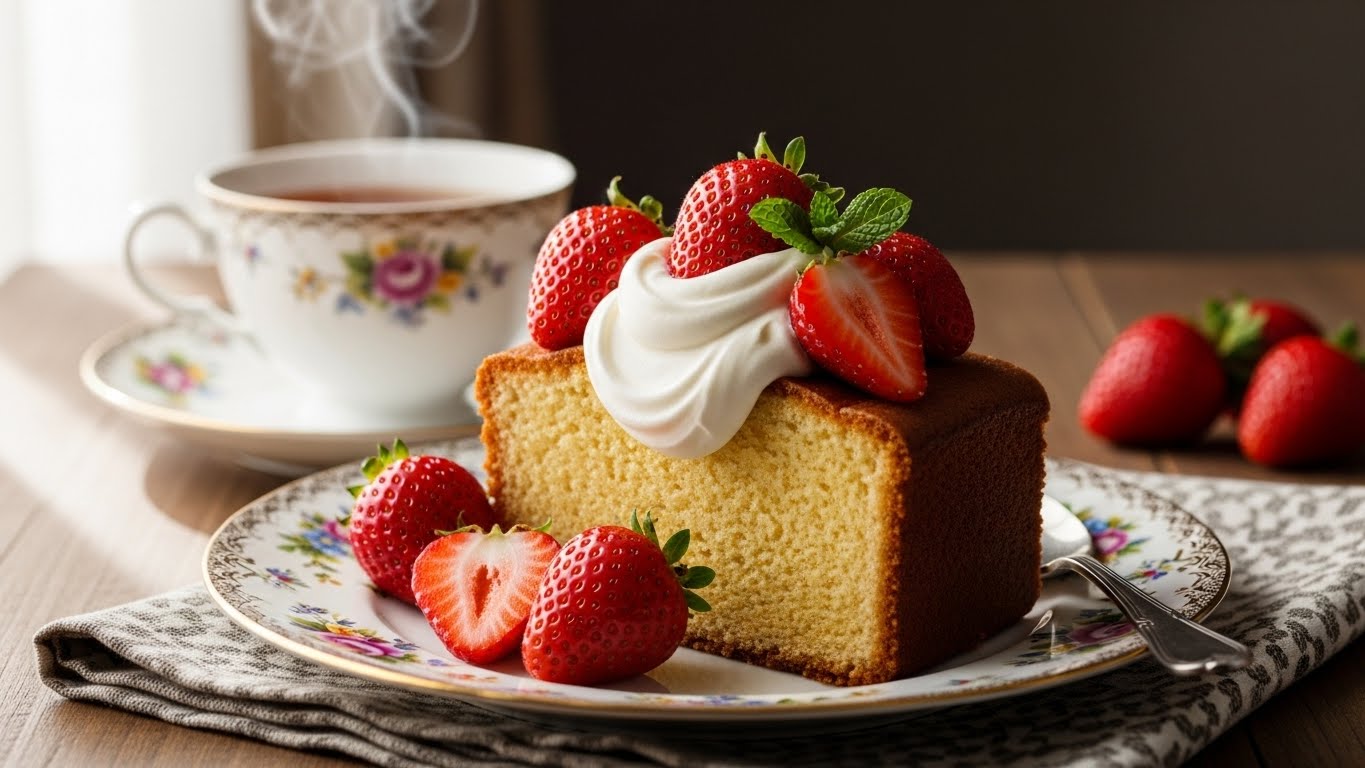
Whether you serve it plain, toasted with butter, or topped with macerated strawberries and whipped cream, this cake is guaranteed to be a crowd-pleaser. It is comfort food at its finest.
Ready to bake? Grab your butter from the fridge now (so it warms up!) and get ready to create something delicious.
If you try this recipe, please leave a comment below sharing your results. Did you add a glaze? Did you eat it warm? We love to hear from you!

Fascinating blog! Is your theme custom made or did you download
it from somewhere? A theme like yours with a few simple tweeks would really make my blog stand out.
Please let me know where you got your design. Cheers
I use theme Flashsome!
Pingback: Easy Crab Cake Recipe – Crispy Outside, Tender Inside - Daily Baker Hub