

Baking 101 – The Ultimate Beginner’s Guide to Baking
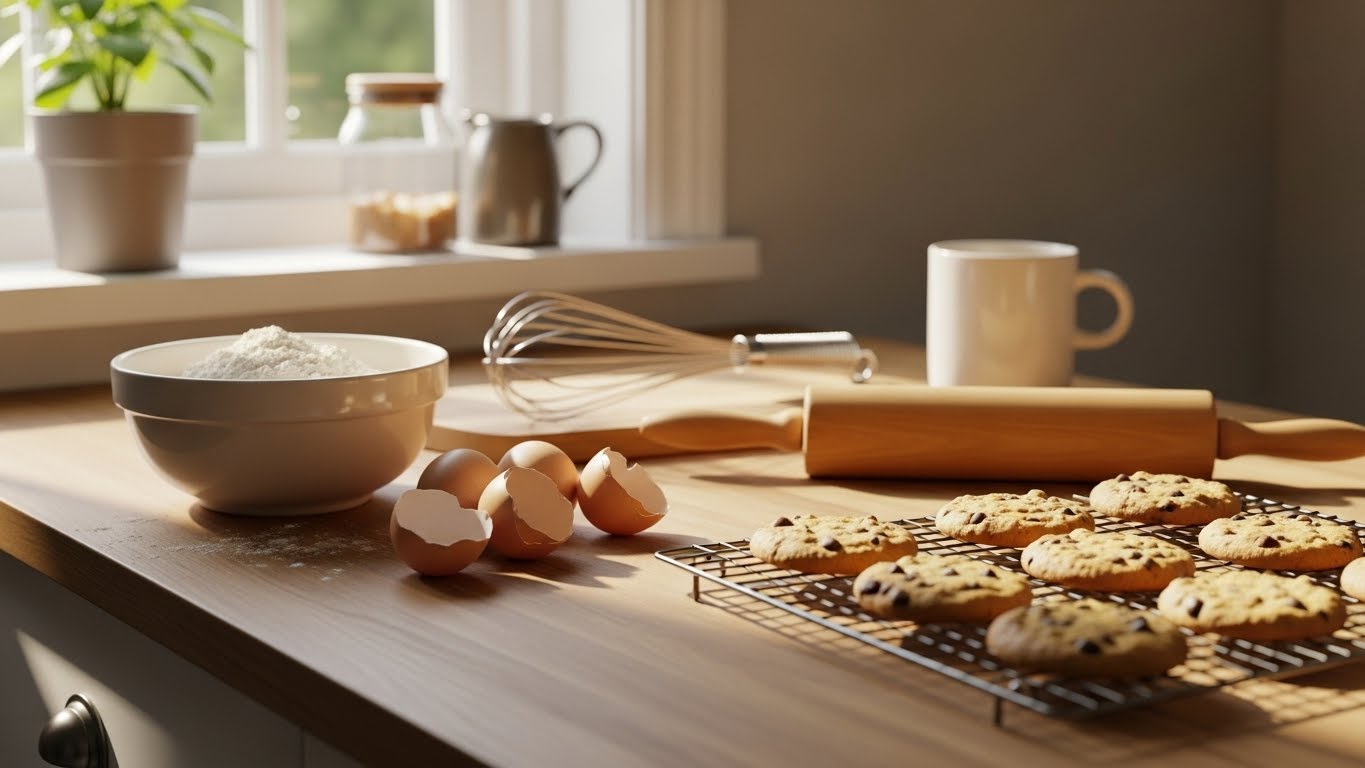
There is a specific kind of magic that happens inside an oven. You take simple, humble ingredients like flour, water, and yeast, and through the application of heat and time, they transform into something crusty, airy, and deeply satisfying. If you have ever wanted to harness that magic but felt intimidated by the precision it requires, welcome to Baking 101.
Many home cooks are confident throwing spices into a soup pot but freeze up when asked to bake a cake. Why? Because while cooking is an art where you can improvise, baking is a science. It is chemistry in action. A teaspoon of baking soda can be the difference between a towering masterpiece and a sunken disaster.
But here is the secret: You don’t need a degree in chemistry to be a great baker. You just need to understand the fundamental rules.
In this comprehensive Baking 101 guide, we are going to strip away the confusion. We will walk you through the essential tools (and tell you which ones you don’t need), decode the ingredients in your pantry, and master the techniques that ensure success every time. Whether you want to make a birthday cake or a simple loaf of bread, this is your starting line.
What “Baking 101” really means
When we talk about Baking 101, we are talking about building a foundation. It is about understanding why a recipe asks you to do something, not just blindly following instructions.
Cooking vs. Baking: The Mindset Shift
In cooking, you can taste as you go. Needs more salt? Add it. Too thick? Add water. In baking, once that pan goes into the oven, there is no turning back. You cannot open the door and add more sugar to a baking cake.
- Precision is Key: Baking 101 teaches us that “close enough” isn’t good enough. Measurements must be exact.
- Patience is Mandatory: You cannot rush a rising dough or cool a cake faster without ruining the texture.
The Chemical Reactions
At its core, baking is about controlling reactions:
- Structure: Proteins in flour (gluten) and eggs create the frame.
- Aeration: Leaveners (yeast, baking powder) create gas to fill that frame.
- Stability: Heat sets the structure so it doesn’t collapse.
Essential tools and pantry ingredients
You do not need a kitchen full of expensive gadgets to start baking. In fact, clutter often makes the process harder. For this Baking 101 toolkit, we are focusing on the absolute essentials.
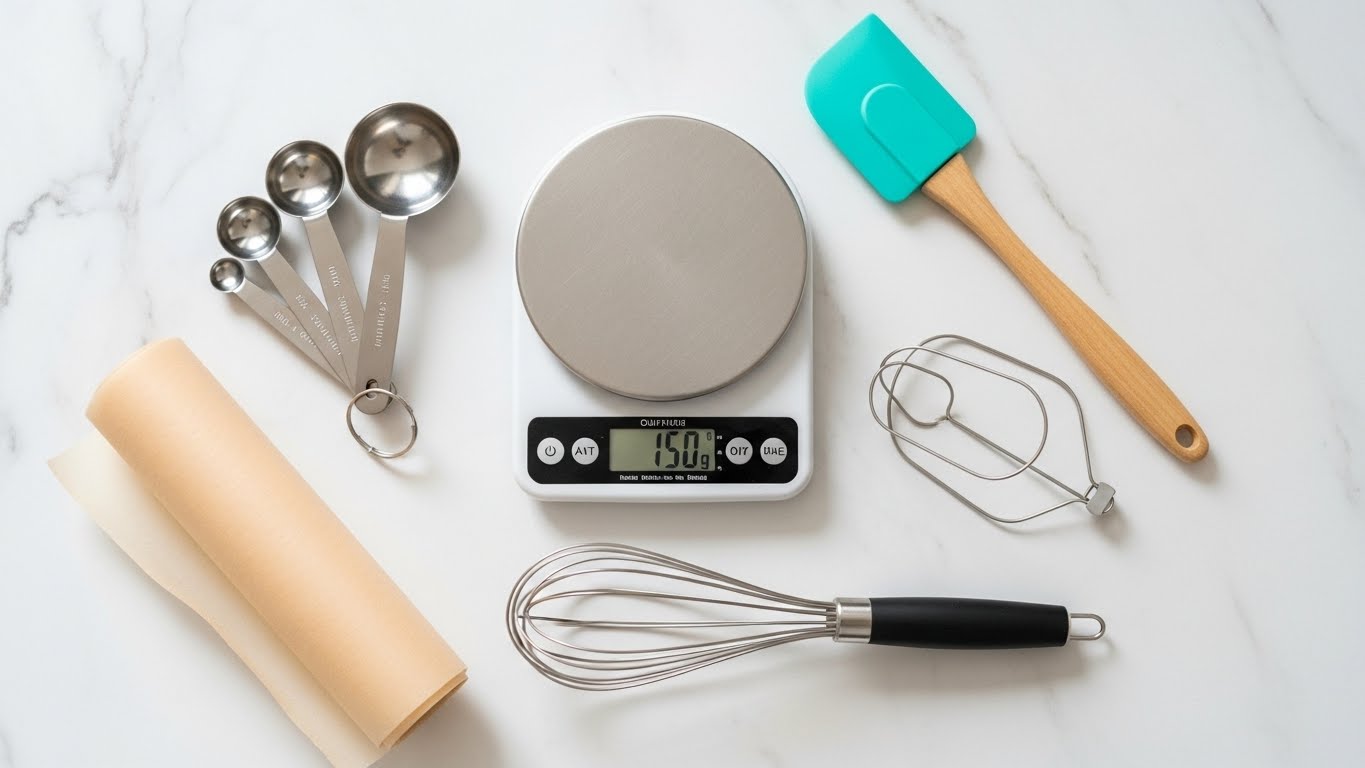
The “Must-Have” Equipment
If you are setting up your kitchen for the first time, prioritize these items:
- Digital Kitchen Scale: This is the most critical tool in Baking 101. A cup of flour can weigh anywhere from 120g to 150g depending on how you scoop it. A scale removes this variable.
- Oven Thermometer: Most ovens lie. Your dial might say 350°F, but it could be 325°F or 375°F inside. An inexpensive hanging thermometer ensures you are baking at the right temperature.
- Mixing Bowls: Get a set of stainless steel or glass bowls. You need at least one large (for dry mix) and one medium (for wet mix).
- Silicone Spatula: Essential for “scraping the bowl” to ensure all ingredients are incorporated.
- Baking Pans: Start with a light-colored metal 9×13 inch pan (for cakes/brownies) and a large baking sheet (for cookies). Dark pans absorb too much heat and can burn bottoms.
For a more detailed breakdown of beginner equipment, check out our dedicated guide on https://dailybakerhub.com/baking-for-beginners/.
The Pantry Staples
You can bake hundreds of recipes with just these core ingredients:
- All-Purpose Flour: The MVP of baking. It has a moderate protein content suitable for almost everything.
- Sugar: Granulated white sugar for structure and crispness; brown sugar for moisture and chewiness.
- Butter: Always buy unsalted butter. This gives you control over the salt level.
- Eggs: Use large eggs (approx. 50g without shell).
- Leaveners: Baking Powder and Baking Soda (more on these below!).
- Salt: Never skip salt. It makes sweet things taste sweeter and adds depth.
Understanding Leavening: The Rise
In Baking 101, nothing causes more confusion than baking soda vs. baking powder. Using the wrong one is a recipe for disaster.
Baking Soda (Sodium Bicarbonate)
- Needs Acid: It requires an acidic ingredient (lemon juice, buttermilk, yogurt, vinegar) to activate.
- Reaction: It creates carbon dioxide bubbles instantly upon mixing.
- Effect: Helps with spreading (cookies) and browning.
Baking Powder
- Contains Acid: It is baking soda mixed with a dry acid (like cream of tartar).
- Double Acting: It activates once when wet, and again when heated in the oven.
- Effect: Provides the primary “lift” for cakes and muffins.
Pro Tip: They are NOT interchangeable 1:1. If a recipe calls for soda and you use powder, your cake won’t rise. If it calls for powder and you use soda, it will taste metallic and soapy.
Mastering the Oven: Temperature and Position
You have mixed the perfect batter. Now, don’t let the oven ruin it.
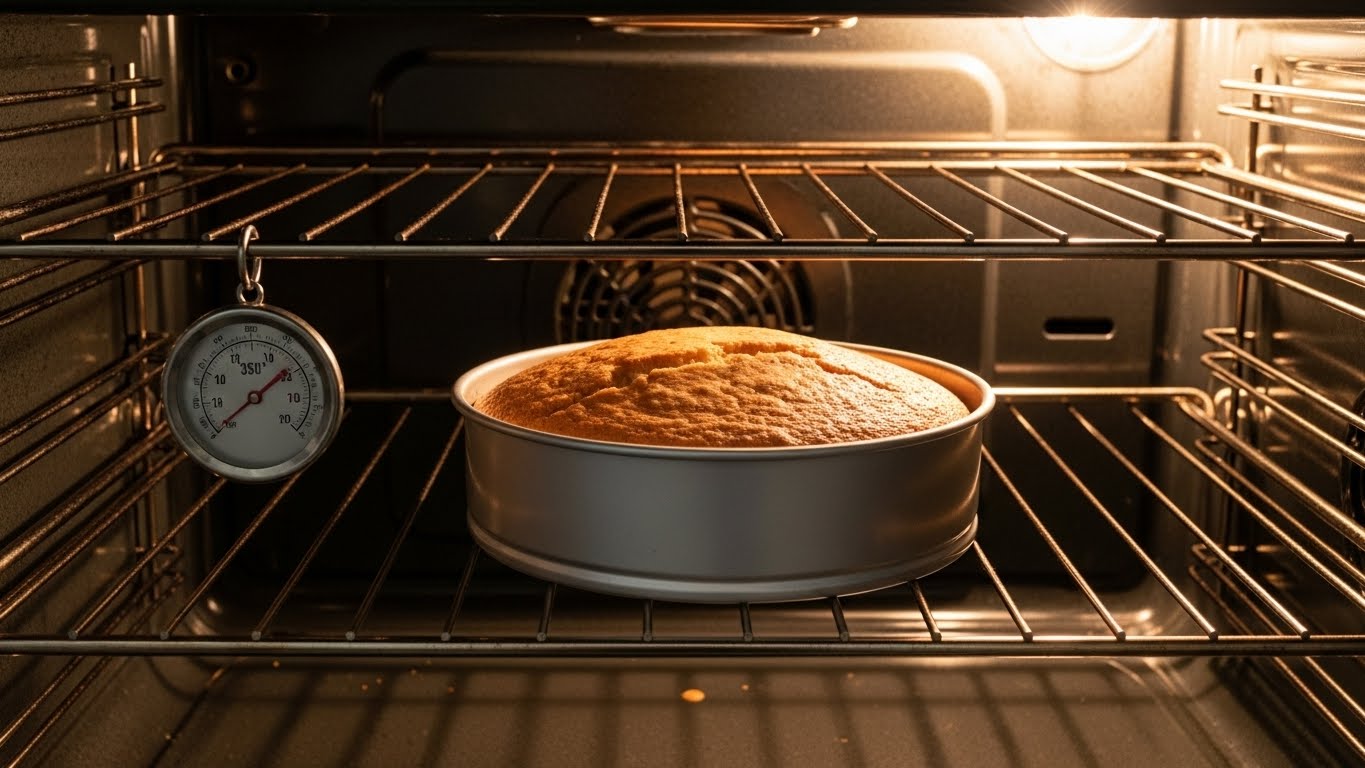
Preheat Properly
Turning the oven on 5 minutes before baking isn’t enough. It takes about 15-20 minutes for the oven walls to absorb heat and stabilize. Putting a cake in a cold oven will result in a dense, heavy brick.
Rack Position Matters
- Middle Rack: The sweet spot. Use this for 90% of your baking (cakes, cookies, muffins) for even heat distribution.
- Bottom Rack: Good for pizzas or pies where you want the bottom crust to crisp up.
- Top Rack: The hottest spot. Use this only for browning the top of a casserole or toasting garlic bread.
The Most Important Technique: Measuring Flour
If you take only one thing away from this Baking 101 guide, let it be this: Don’t scoop your flour.
When you dip a measuring cup directly into the flour bag, you pack the flour down. You might end up with 20-30% more flour than the recipe intends. This leads to dry cakes and hard cookies.
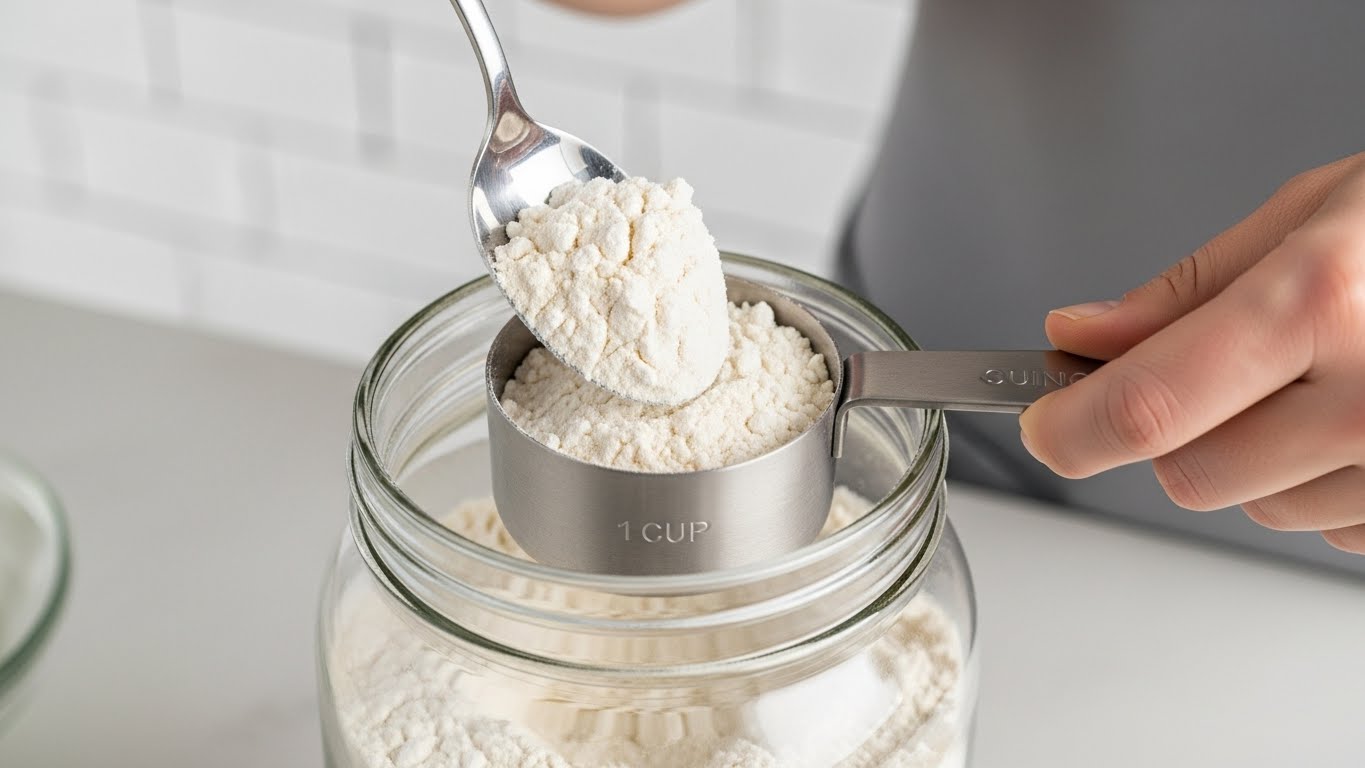
The Solution:
- Ideally: Use a scale and weigh it in grams.
- Alternatively: Use the “Spoon and Level” method. Fluff the flour with a spoon, gently spoon it into the cup until it overflows, and then level it off with a flat knife. Do not tap or shake the cup.
First easy recipes to practice your skills
The best way to learn Baking 101 is by doing. Start with forgiving recipes that build your confidence.
- Cookies (The “Drop” Method)
Cookies are quick and satisfying. They teach you about “creaming” butter and sugar (mixing them until fluffy) and allow you to see how dough spreads in the oven.
- Skill learned: Creaming method and timing.
- Quick Breads (The “Muffin” Method)
Banana bread or muffins are “quick breads” because they use baking soda/powder instead of yeast. The rule here is do not overmix. You mix wet and dry ingredients separately, then combine them gently.
- Skill learned: Folding and moisture control.
- Basic Loaf Cake (Pound Cake)
A simple loaf cake teaches you about structure. It requires patience to ensure the center is cooked without burning the outside.
If you are looking for specific recipes to start, you might want to try modifying a basic recipe to fit a diet. For example, once you master the basics, you can explore advanced territory like our Low Carb Gluten Free Bread, which applies these same principles but with alternative ingredients.
Troubleshooting Common Baking Disasters
Every baker, from Baking 101 students to French pastry chefs, has failures. Here is how to diagnose them.
| Problem | Likely Cause | The Fix |
| Cake sunk in the middle | Underbaked or opened oven door too early. | Check oven temp; don’t peek until 80% done. |
| Cookies are flat & greasy | Butter was too warm (melted). | Use room temp butter; chill dough before baking. |
| Bread is tough/hard | Overmixed the batter (too much gluten). | Mix until just combined. Lumps are okay! |
| Burnt bottoms | Dark pan or rack too low. | Use light pans; move to center rack. |
| Uneven browning | Oven has “hot spots.” | Rotate your pan 180 degrees halfway through baking. |
Moving Beyond Basics: Temperature Ingredients
One subtle nuance in Baking 101 is the temperature of ingredients.
- Room Temperature: Unless a recipe says “cold butter” (like for pie crusts), assume everything should be room temp (70°F/21°C).
- Why? Cold eggs and butter don’t mix. They curdle. Room temp ingredients emulsify into a smooth, velvety batter that traps air bubbles effectively.
- The Hack: If you forgot to take eggs out, put them in a bowl of warm (not hot) water for 5 minutes.
Frequently Asked Questions (FAQ)
Here are the most common questions I receive from students starting their Baking 101 journey.
- Can I substitute oil for butter?
In many cakes and muffins, yes. Oil makes baked goods moister than butter because it stays liquid at room temperature. However, you will lose the rich buttery flavor. For cookies, sticking to butter is usually best for structure.
- Why do I need to sift flour?
Sifting does two things: it removes lumps (crucial for cocoa powder) and it aerates the flour, making it easier to mix. For delicate sponges, sifting is non-negotiable. For chewy cookies, you can often skip it.
- What is the difference between parchment paper and wax paper?
Huge difference! Parchment paper is heat-resistant and non-stick. Wax paper has a wax coating that will melt and smoke in the oven. Never put wax paper in the oven.
- Can I open the oven to check on my cake?
Try to avoid it until the very end. Opening the door releases a blast of heat, causing the oven temperature to drop. This sudden change can cause a rising cake to collapse (deflate). Use the oven window and light instead.
Conclusion: Your Apron is Waiting
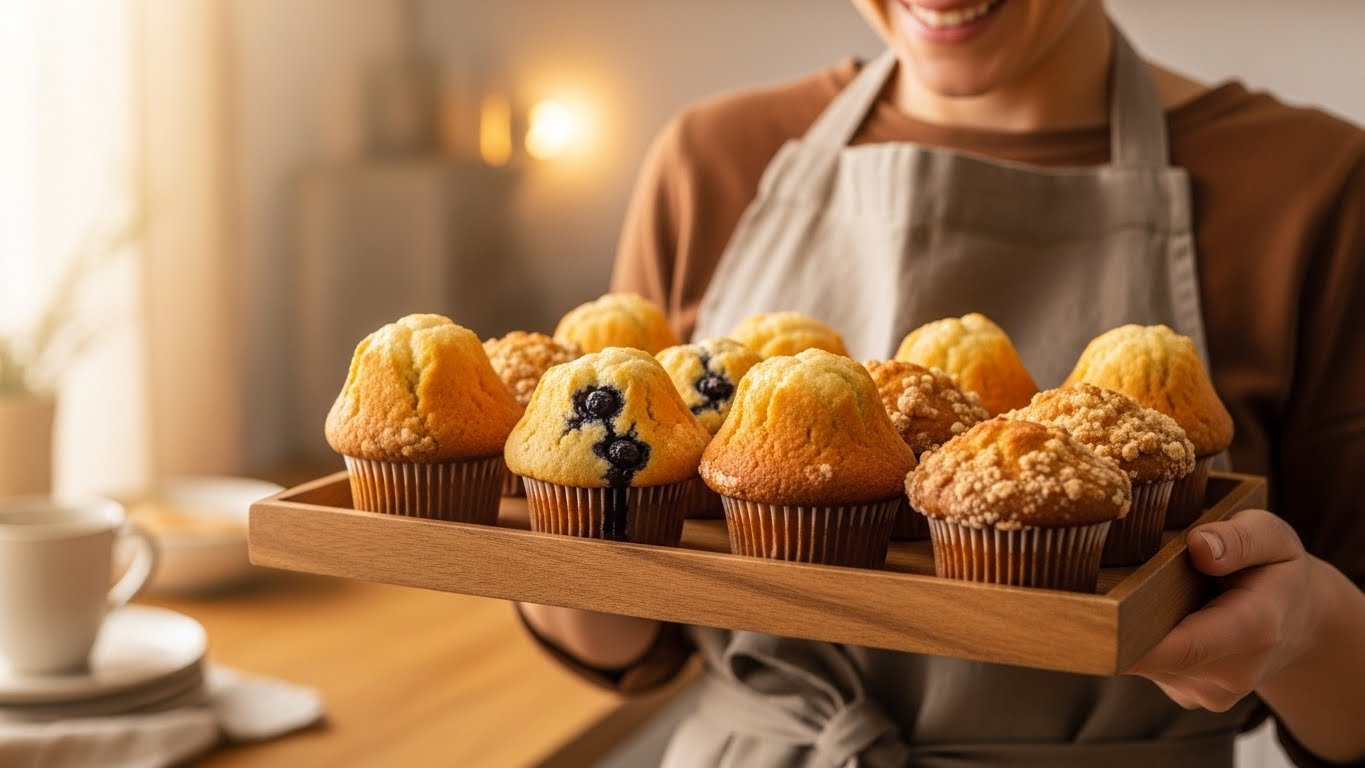
Baking is a journey of delicious experiments. You will burn a batch of cookies. You will forget the sugar once. It happens to the best of us. But don’t let the fear of failure stop you.
Baking 101 isn’t about perfection; it is about progress. It is about the joy of pulling a warm, fragrant loaf of bread out of the oven and knowing you made that. It is about sharing a homemade brownie with a friend.
So, go buy that digital scale. Check your pantry for fresh baking powder. And preheat that oven. You are ready to bake.

Pingback: How to Bake Better – Simple Changes for Big Results - Bestbaking Recipes
Pingback: Classic Quaker Oats Oatmeal Cookie Recipe – Just Like the Box - Bestbaking Recipes
Pingback: Low Carb Sourdough Bread – Tangy Flavor, Fewer Carbs - Bestbaking Recipes
Pingback: How to Bake Better – Simple Changes for Big Results - Bestbaking Recipes
Pingback: Sourdough Discard Muffin Recipes – Easy Ways to Use Your Starter - Bestbaking Recipes
Pingback: How Long to Bake Lasagna – Time, Temperature, and Doneness - Bestbaking Recipes