

Basic Baking Ingredients
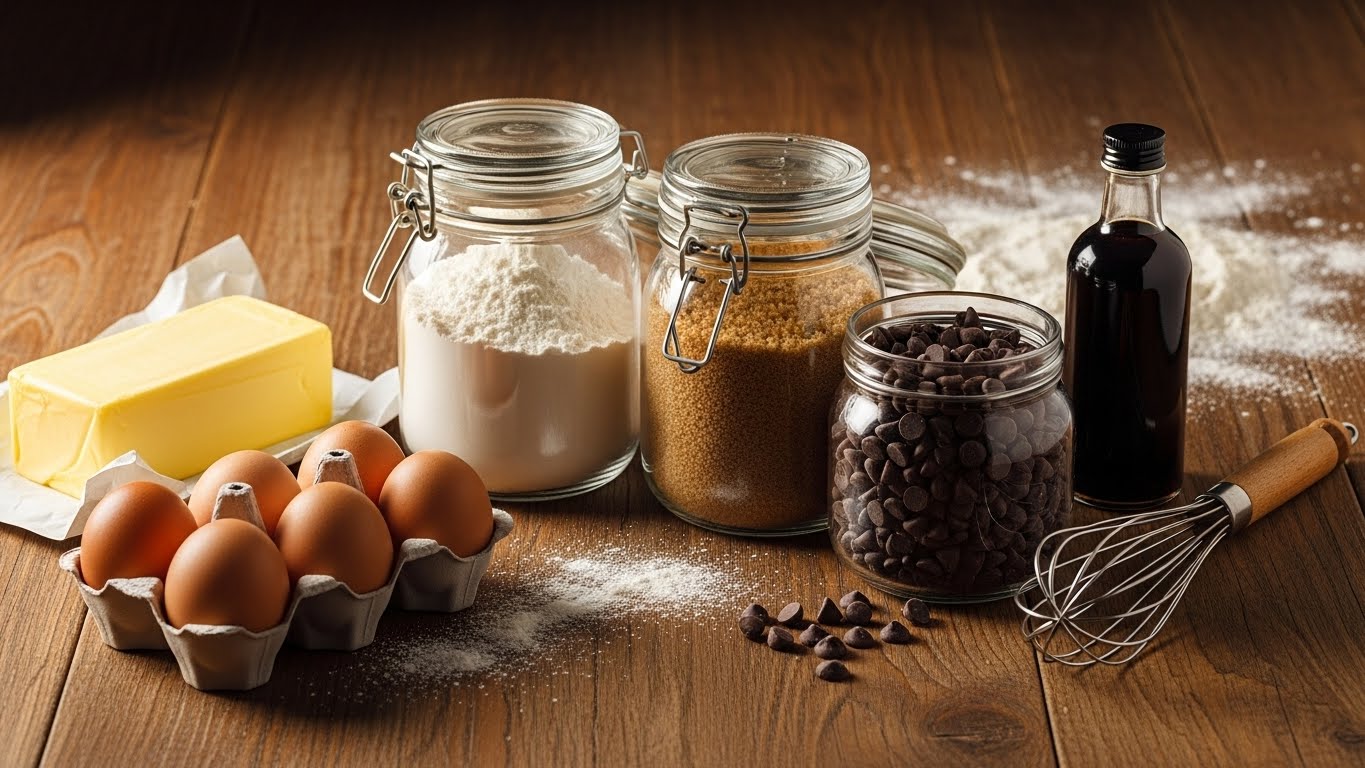
Walking down the baking aisle of a grocery store can be intimidating. You see ten different types of flour, an array of sugars ranging from white to dark brown, and shelves of extracts that cost more than your weekly coffee budget. It is easy to feel overwhelmed and think you need a professional kitchen to bake a simple batch of cookies.
But here is the secret professional bakers won’t tell you: you don’t need it all. In fact, 90% of the delicious treats you see on Instagram can be made with a surprisingly short list of basic baking ingredients. Baking is indeed a science, but the “chemicals” required for your laboratory are simple pantry staples.
Whether you are looking to bake your first birthday cake or just want to have the essentials on hand for a rainy day brownie craving, this guide is your roadmap. We will strip away the clutter and focus on the basic baking ingredients that actually matter, helping you build a versatile pantry without breaking the bank. Let’s get your kitchen ready for success.
Core ingredients for most recipes
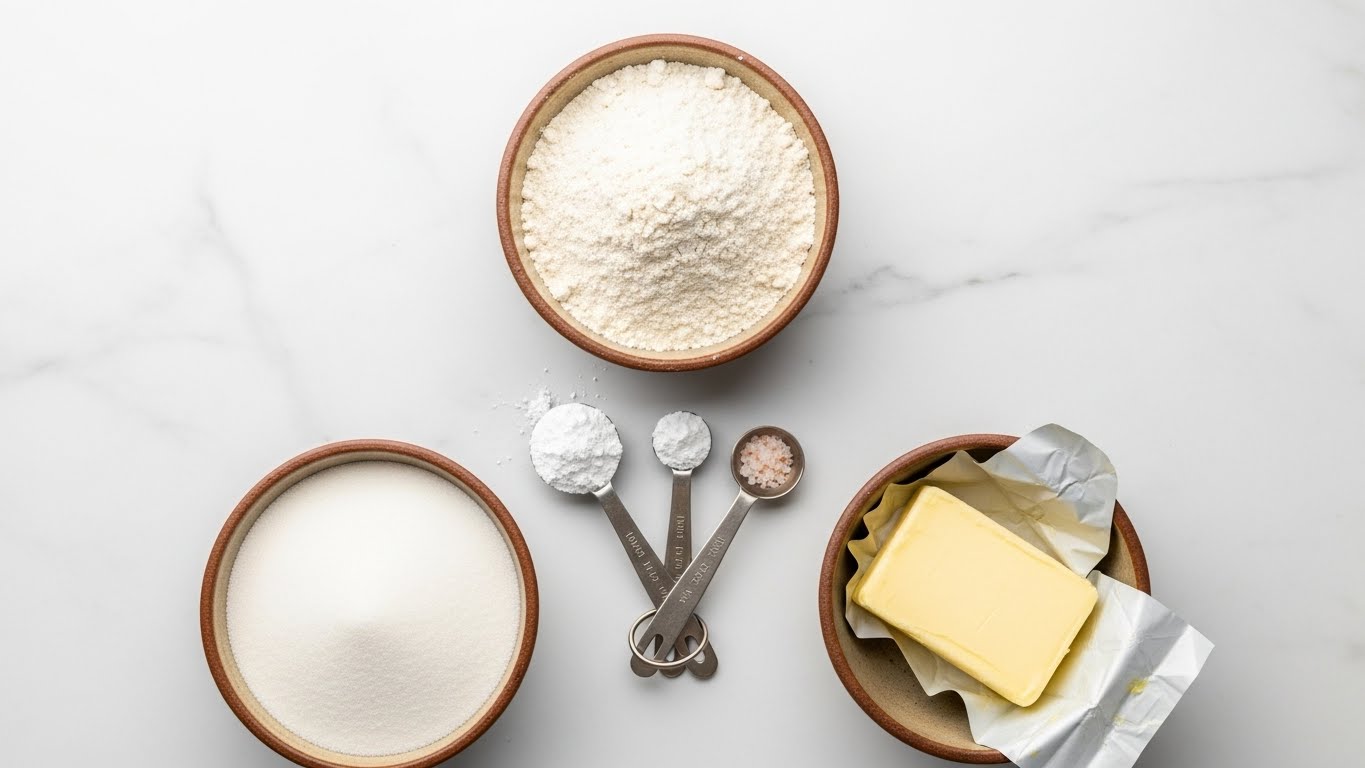
When you look at recipes for cookies, cakes, muffins, or breads, you will notice a pattern. They all rely on the same foundation. These are the non-negotiables—the items that should always be in your cupboard.
-
Flour: The Structure Builder
Flour is the skeleton of your baked goods. While there are cake flours, bread flours, and pastry flours, you only really need one to start: All-Purpose Flour (AP Flour).
- Why AP Flour? It has a moderate protein content (usually 10-12%), which creates the perfect balance between tenderness (for cakes) and chewiness (for cookies).
- Bleached vs. Unbleached: For beginners, I recommend unbleached all-purpose flour. It provides slightly more structure and a better flavor profile.
Pro Tip: If you want to dive deeper into specialty flours like almond or coconut for specific diets, check out our comprehensive guide on baking ingredients for advanced textures.
-
Sugar: The Tenderizer
Sugar does more than sweeten; it keeps baked goods soft and moist (a property called hygroscopy) and helps with browning.
- Granulated White Sugar: The standard sweetener. It creates crisp edges on cookies and aerates butter for fluffy cakes.
- Brown Sugar (Light or Dark): This is white sugar with molasses added back in. It adds moisture and a caramel flavor. Tip: If a recipe calls for light brown sugar and you only have dark, you can swap them!
- Confectioners’ Sugar (Powdered Sugar): Essential for frostings and glazes because it dissolves instantly without grit.
-
Leavening Agents: The Risers
These are the magic powders that make your batter rise. Without them, you are baking bricks.
- Baking Soda: Needs an acid (like lemon juice, buttermilk, or brown sugar) to activate. It is 3-4 times stronger than baking powder.
- Baking Powder: Contains baking soda plus an acid (usually cream of tartar). It works in recipes that don’t have natural acids.
| Leavening Agent | Requires Acid? | Best For | Shelf Life |
| Baking Soda | YES | Chewy cookies, quick breads | 6-12 Months |
| Baking Powder | NO | Fluffy cakes, biscuits | 6-12 Months |
-
Salt: The Flavor Awakening
Never skip the salt. Salt is not there to make your cake taste salty; it is there to suppress bitterness and make the sugar taste sweeter. Fine sea salt or standard table salt is best for baking because the small grains dissolve easily in batter.
Pantry vs fridge ingredients
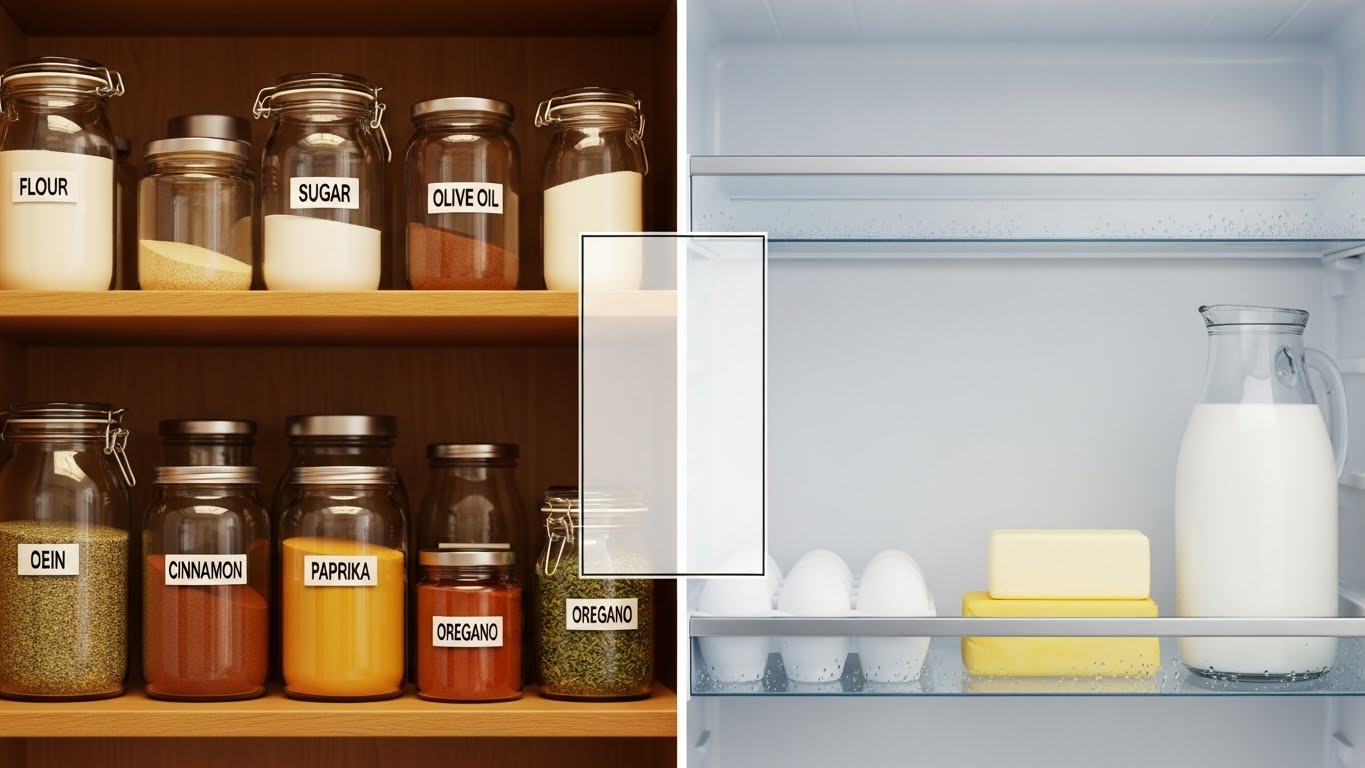
A well-stocked kitchen is divided into two zones: the dry pantry (shelf-stable) and the refrigerator (perishables). Understanding how to manage these two zones is key to maintaining your supply of basic baking ingredients.
The Pantry Fats: Oils and Shortening
- Vegetable or Canola Oil: These neutral oils remain liquid at room temperature. They are crucial for making cakes that stay moist for days (like carrot cake) because the fat doesn’t solidify when cool.
- Shortening: While less popular now, vegetable shortening has a higher melting point than butter, meaning cookies made with it hold their shape better.
The Fridge Essentials: Dairy and Eggs
These items have a shorter shelf life, so buy them as needed or learn how to store them.
- Butter: The holy grail of flavor. Always buy unsalted butter. This allows you to control the salt level in your recipe. If you only have salted butter, reduce the added salt in the recipe by 1/4 teaspoon per stick.
- Storage Hack: Butter freezes beautifully. Buy it on sale and keep it in the freezer for up to 6 months.
- Large Eggs: Most recipes are standardized for “Large” eggs (approx. 50g without shell). Using extra-large or medium eggs can throw off your liquid ratios.
- Milk: Whole milk adds the most richness, but 2% is a fine substitute in most cakes.
Flavor Extract: The Vanilla Factor
Pure Vanilla Extract is the “salt” of sweet flavors—it enhances everything. While imitation vanilla is cheaper, pure vanilla offers a complexity that is worth the extra few dollars. It is a shelf-stable ingredient that belongs in your pantry, away from direct sunlight.
Spices and Mix-ins: The Customizers
Once you have the flour, sugar, and butter, you have a dough. But to turn that dough into something special, you need flavor agents. These basic baking ingredients take up very little space but add immense value.
- Ground Cinnamon: The most versatile spice. Essential for snickerdoodles, apple pies, and coffee cakes.
- Cocoa Powder: Look for “Unsweetened Cocoa Powder.” This allows you to make chocolate cakes and brownies from scratch.
- Chocolate Chips: Semi-sweet is the standard baking chip. They balance sweetness and bitterness perfectly.
- Rolled Oats: Not just for breakfast! They add chewiness to cookies and texture to fruit crisps.
Understanding Temperature: The Hidden Ingredient
You might have all the right basic baking ingredients, but if you use them at the wrong temperature, your recipe can fail. This is a concept beginners often overlook.
Why Room Temperature Matters
When a recipe calls for “room temperature butter and eggs,” it is not a suggestion—it is a chemical requirement.
- Emulsification: Room temp butter blends smoothly with sugar, trapping air bubbles. Cold butter stays chunky.
- The Shock Factor: If you add cold eggs to warm batter, the fat can curdle (look separated), leading to a greasy or dense final product.
Quick Fix: Forgot to take your ingredients out?
- Eggs: Place them in a bowl of warm (not hot) water for 5 minutes.
- Butter: Cut into small cubes and let sit for 10 minutes, or microwave on 10% power in 10-second bursts (be careful not to melt it!).
Tools That Partner With Your Ingredients
You have the best basic baking ingredients, but you need the right vessels to cook them. You don’t need a lot, but quality matters.
Using the wrong pan can ruin good ingredients. Dark metal pans absorb heat too fast (burning cookies), while glass pans conduct heat slowly. For a detailed breakdown on choosing the right equipment, refer to our guide on best baking pans. Generally, light-colored aluminum pans are your best friend for evenly baked goods.
How to Store Your Baking Ingredients
A huge part of baking success is ensuring your ingredients are fresh.
Flour and Grains
Flour can attract pests (weevils) and absorb odors.
- Best Practice: Store flour in airtight plastic or glass containers. If you don’t bake often, store whole wheat flour in the freezer to prevent the natural oils from going rancid.
Leavening Agents
Moisture is the enemy of baking powder.
- Best Practice: Keep the lids screwed on tight. Write the date you opened the can on the lid with a sharpie. Replace every 6 months, regardless of the expiration date, to ensure maximum lift.
Brown Sugar
We have all faced the “brick” of hard brown sugar.
- Best Practice: Keep it in an airtight bag with all the air squeezed out. If it hardens, toss a slice of bread or a marshmallow into the bag for overnight softening.
Budget tips for stocking up
Baking can get expensive if you buy everything at once. Here is how to build your collection of basic baking ingredients without emptying your wallet.
-
Where to Splurge vs. Save
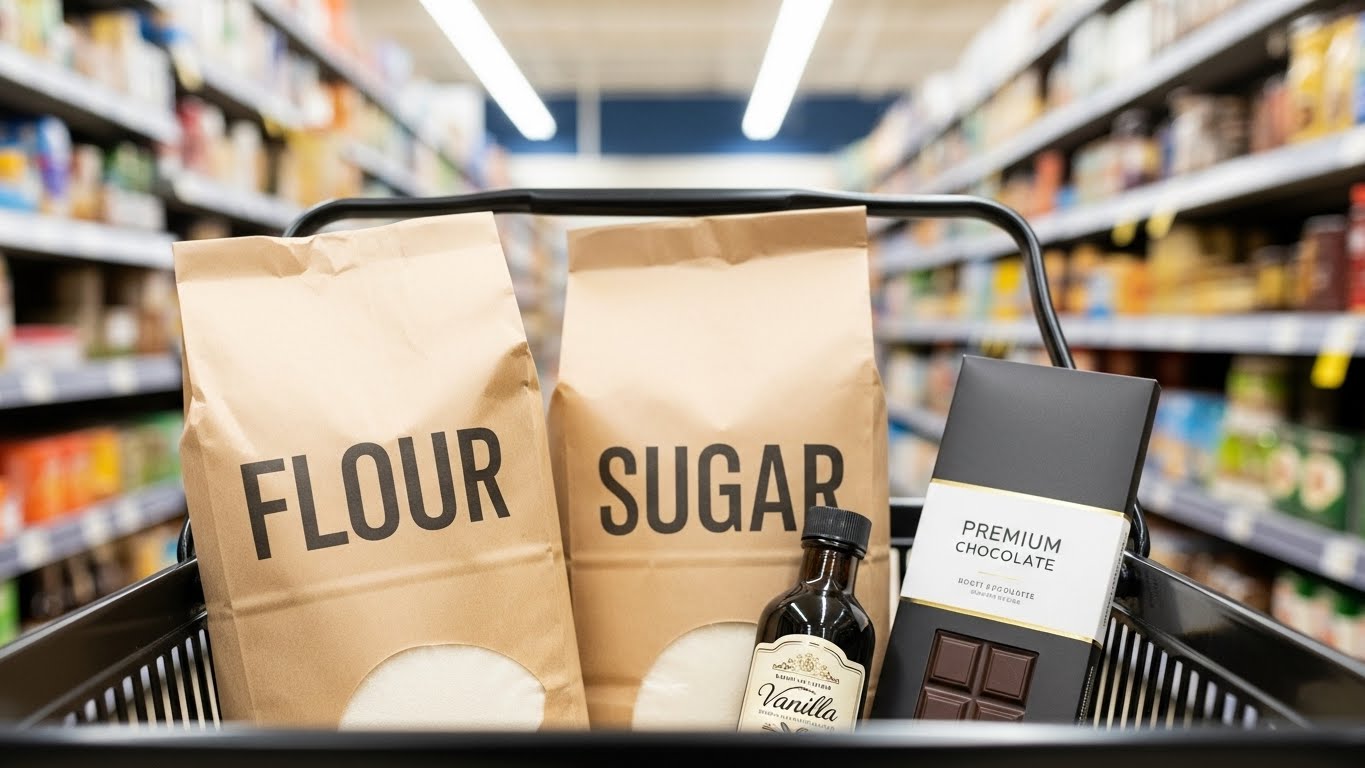
You do not need premium brands for everything.
- SAVE on: Sugar and Flour. The store-brand granulated sugar is chemically identical to the name brand. The same goes for standard AP flour.
- SPLURGE on: Vanilla Extract and Chocolate. Since these provide the primary flavors, the quality difference is noticeable. Cheap chocolate tastes waxy; good chocolate tastes divine.
-
Buying in Bulk
Items like oats, flour, and sugar are significantly cheaper in the bulk bins.
- Tip: Only buy spices in small quantities. Spices lose potency after 6-12 months. Buying a giant jar of cinnamon is a waste of money if you only bake once a month.
-
The “One Recipe” Rule
Don’t try to stock the whole pantry in one day. Pick one recipe you want to make (e.g., Chocolate Chip Cookies). Buy only the ingredients for that. Next week, pick a different recipe (e.g., Banana Bread). You will likely already have the flour and sugar, so you just need to buy the mix-ins. Over time, your pantry builds itself.
-
Freezer is Your Friend
Butter and nuts are expensive. When butter goes on sale during the holidays, buy 4-5 boxes and freeze them. Nuts (walnuts, pecans) should always be stored in the freezer to prevent them from tasting bitter/rancid, meaning you throw away less food.
Checklist: The Ultimate Beginner’s Pantry
If you are heading to the store right now, here is your rapid-fire shopping list for basic baking ingredients:
- Dry Goods:
- [ ] All-Purpose Flour (5lb bag)
- [ ] Granulated Sugar
- [ ] Light Brown Sugar
- [ ] Baking Soda
- [ ] Baking Powder
- [ ] Fine Sea Salt
- [ ] Rolled Oats
- Wet/Fats:
- [ ] Unsalted Butter (2 lbs)
- [ ] Vegetable Oil
- [ ] Large Eggs
- [ ] Vanilla Extract
- [ ] Milk
- Flavor/Mix-ins:
- [ ] Cocoa Powder
- [ ] Semi-sweet Chocolate Chips
- [ ] Ground Cinnamon
Frequently Asked Questions (FAQ)
- Can I use self-rising flour instead of all-purpose flour?
Self-rising flour is simply all-purpose flour with baking powder and salt already added. While it is convenient for specific recipes (like biscuits), I do not recommend it as one of your basic baking ingredients. It limits control. If a recipe calls for AP flour and you use self-rising, you might end up with a metallic-tasting cake that collapses because it has too much leavening.
- Is there a difference between cane sugar and beet sugar?
Chemically, they are both sucrose. However, for professional bakers, cane sugar is slightly preferred. Beet sugar has a slightly different melting point and can sometimes lead to a different texture in delicate recipes like crème brûlée. For general cookies and cakes, store-brand sugar (often beet) is perfectly fine.
- Why did my baking powder stop working?
Baking powder is sensitive to humidity. Once opened, it absorbs moisture from the air, which causes the chemical reaction to happen slowly in the can rather than in your oven. To test if your powder is still active, mix 1 teaspoon into a cup of hot water. If it bubbles aggressively, it’s good. If not, toss it.
- Can I substitute oil for butter?
Sometimes. Butter adds flavor and structure (crispiness), while oil adds moisture.
- In Cakes: You can often swap melted butter for oil for a moister cake, but you lose the buttery taste.
- In Cookies: Do not swap oil for butter unless the recipe is designed for it. Cookies rely on solid fat to hold their shape; oil will make them spread into flat, greasy puddles.
Conclusion
Building a baking pantry doesn’t have to be a stressful or expensive endeavor. By focusing on these basic baking ingredients, you equip yourself to handle thousands of recipes. You don’t need truffle oil or gold leaf to make people happy; you just need flour, sugar, butter, and a little bit of patience.
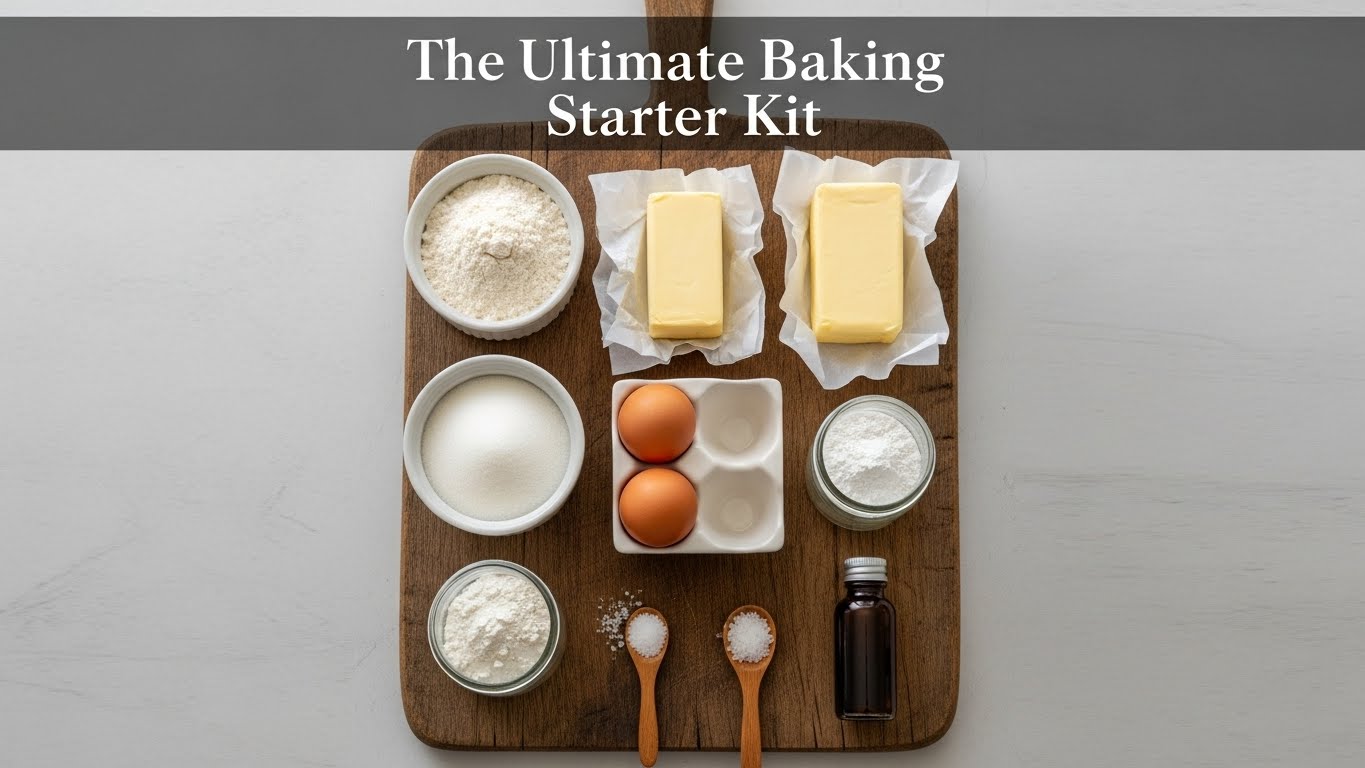
The magic of baking lies in transformation. With these simple items, you can turn a bad day into a celebration or a quiet Sunday morning into a memory. So, check your cupboards, make your list, and get ready to fill your home with the smell of fresh-baked possibilities.
Ready to start your first batch? I recommend starting with a simple sugar cookie to test your oven and get a feel for measuring flour. Happy baking!
