

Best Sourdough Discard Muffins
There is a distinct difference between a homemade muffin and a bakery muffin. We have all stood in line at a high-end cafe, staring at those towering, golden-domed treats that look almost too good to eat. They are tall, structurally sound yet incredibly tender, and bursting with flavor. In contrast, homemade muffins often come out flat, dense, or underwhelming.
If you are a sourdough baker, you hold the secret ingredient to bridging this gap in your hand: your discard.
Many bakers view their sourdough discard as waste, or at best, an ingredient for pancakes. But when treated correctly, it is the key to creating the best sourdough discard muffins you have ever tasted. The acidity in the starter tenderizes the gluten, creating a velvety crumb, while the fermentation adds a complex depth of flavor that baking powder alone simply cannot achieve.
In this ultimate guide, we are going to unlock the science behind bakery-style muffins. We will move beyond basic recipes and explore how to manipulate hydration, heat, and fat to achieve that coveted high-rise top. Whether you want to make a classic blueberry muffin or a rich chocolate chip version, this master method will ensure you never bake a flat muffin again. Let’s stop wasting that starter and start baking the best.
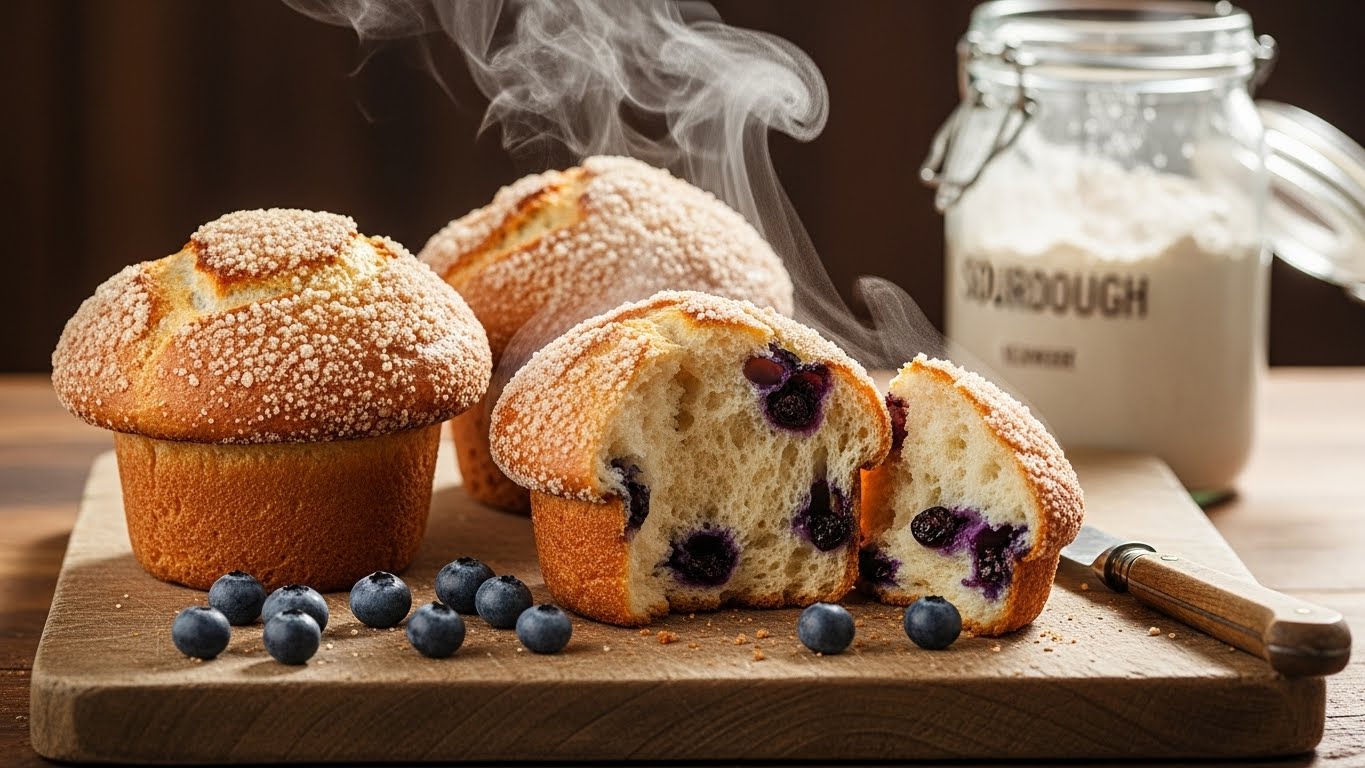
What makes a “bakery-style” muffin?
When we search for the best sourdough discard muffins, we aren’t just looking for flavor. We are looking for a specific architecture. A “bakery-style” muffin is defined by three key characteristics: The Dome, The Crumb, and The Lift.
The Iconic “Muffin Top”
The most desirable part of the muffin is the domed top (often called the crown). In professional bakeries, muffins rise high above the paper liner. This isn’t accidental. It creates a contrast in texture: a slightly crisp, caramelized edge on the “overhang” and a soft, steaming interior. Achieving this at home requires a specific balance of leavening agents and oven temperature, which we will detail later.
The Tender, Open Crumb
While a cupcake is fine-grained and cakey, the best sourdough discard muffins should have a slightly coarser, more rustic crumb that is sturdy enough to hold heavy mix-ins (like berries or nuts) without them sinking to the bottom, yet tender enough to melt in your mouth. This is where your sourdough discard shines. The acid in the discard breaks down the flour proteins, preventing the muffin from becoming tough.
Moisture Retention
A bakery muffin stays moist for days. This is achieved through a high fat-to-flour ratio and the inclusion of cultured dairy (like buttermilk, yogurt, or in our case, sourdough discard). The fermented flour holds onto moisture better than raw flour, ensuring your Tuesday morning muffin is just as good as your Sunday baking batch.
Balancing discard, flour, and fat
This is the technical heart of the recipe. Unlike a standard muffin recipe where you just add milk, incorporating sourdough discard requires understanding hydration. Your starter is a mixture of flour and water (usually 50/50). If you simply dump it into a recipe without adjusting, you will end up with a gummy, dense brick.
The Hydration Equation
To make the best sourdough discard muffins, we treat the discard as both a liquid and a flour source.
- The Rule: For every cup (approx. 240g) of discard you use, you are adding about 120g of flour and 120g of water to the batter.
- The Adjustment: You must reduce the added milk/liquid and the added flour in the recipe to compensate. This is why following a dedicated discard recipe is safer than trying to adapt a regular one.
Fat Source: Butter vs. Oil
This is a constant debate in the baking world.
- Butter: Provides superior flavor. It creates a rich, milky taste that pairs perfectly with the tang of the sourdough.
- Oil: Provides superior texture. Oil is 100% fat (butter is only 80% fat, 20% water). Oil keeps muffins moist longer because it remains liquid at room temperature.
- The Verdict: For the absolute best sourdough discard muffins, I recommend a blend. Use melted butter for flavor and a splash of neutral oil (or full-fat sour cream) to guarantee moistness.
The Role of Sugar
Sugar does more than sweeten. It creates the crust. In sourdough baking, we often use slightly more sugar to balance the acidity of the discard. Additionally, sprinkling coarse sugar (turbinado) on top before baking is a bakery trick that draws moisture to the surface, creating a crunchy, professional-looking lid.
Related Guide: If you are short on time and need a simpler, less technical approach, check out our easy sourdough discard muffin recipe. It’s a great starting point for beginners!
Key Ingredients Checklist
To achieve that premium texture, ensure your pantry is stocked with the right components.
- Sourdough Discard: It can be room temperature or cold from the fridge. Unfed is fine.
- All-Purpose Flour: Avoid bread flour (too chewy) or cake flour (too weak).
- Leavening: Baking Powder AND Baking Soda. The soda neutralizes the starter’s acid; the powder provides the physical lift.
- Fat: Unsalted butter and a neutral oil (avocado or canola).
- Dairy: Thick Greek yogurt or sour cream (adds richness).
- Extracts: High-quality vanilla is non-negotiable.
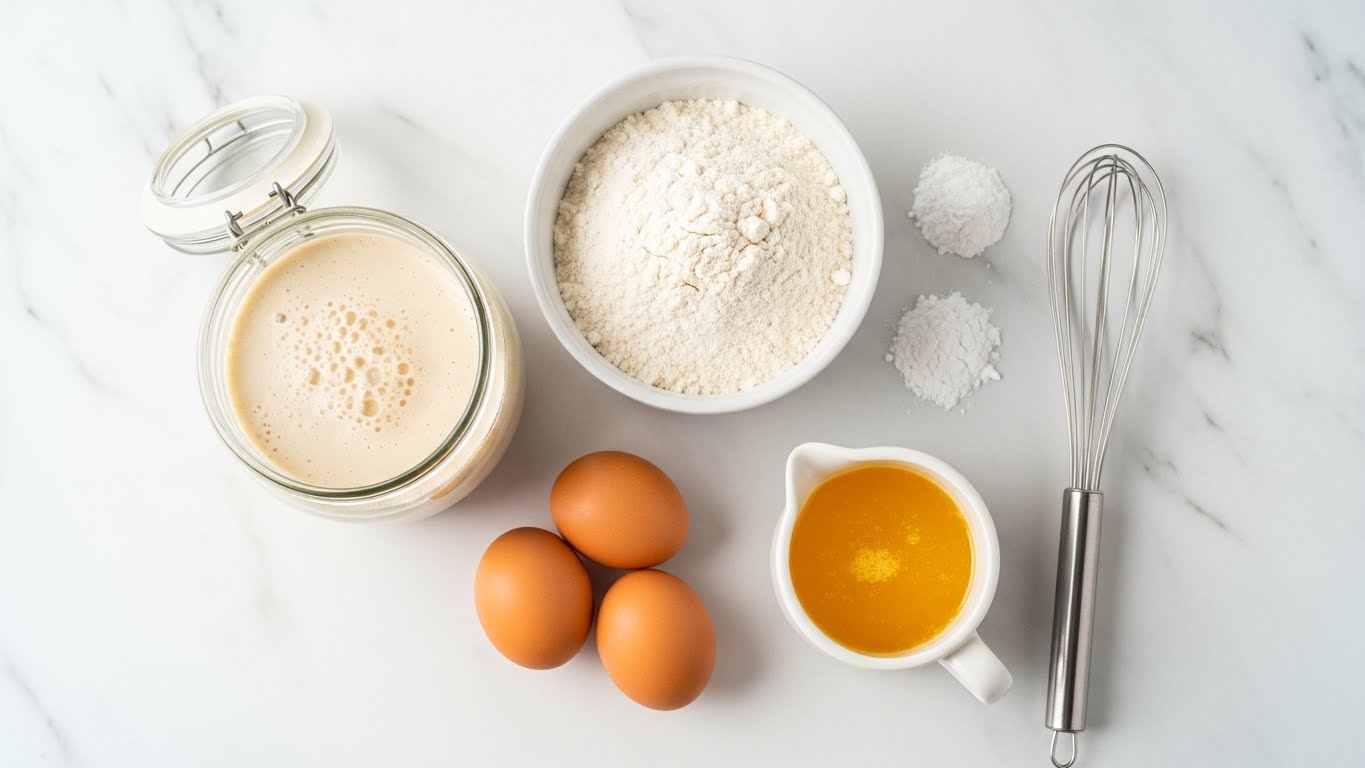
Step-by-Step Method for the Best Sourdough Discard Muffins
Here is the master technique. This method works for any flavor profile you want to build.
Step 1: Whisk the Wet Ingredients
In a large bowl, whisk together the melted butter, oil, sugar, eggs, vanilla, and sourdough discard.
- Tip: Whisk vigorously here. You want to emulsify the eggs and fat. This is the only time you can be aggressive.
Step 2: The Dry Mix
In a separate bowl, whisk the flour, baking powder, baking soda, and salt.
- Why Separate? This ensures the leavening agents are evenly distributed so you don’t get one muffin that rises and one that stays flat.
Step 3: The Gentle Fold
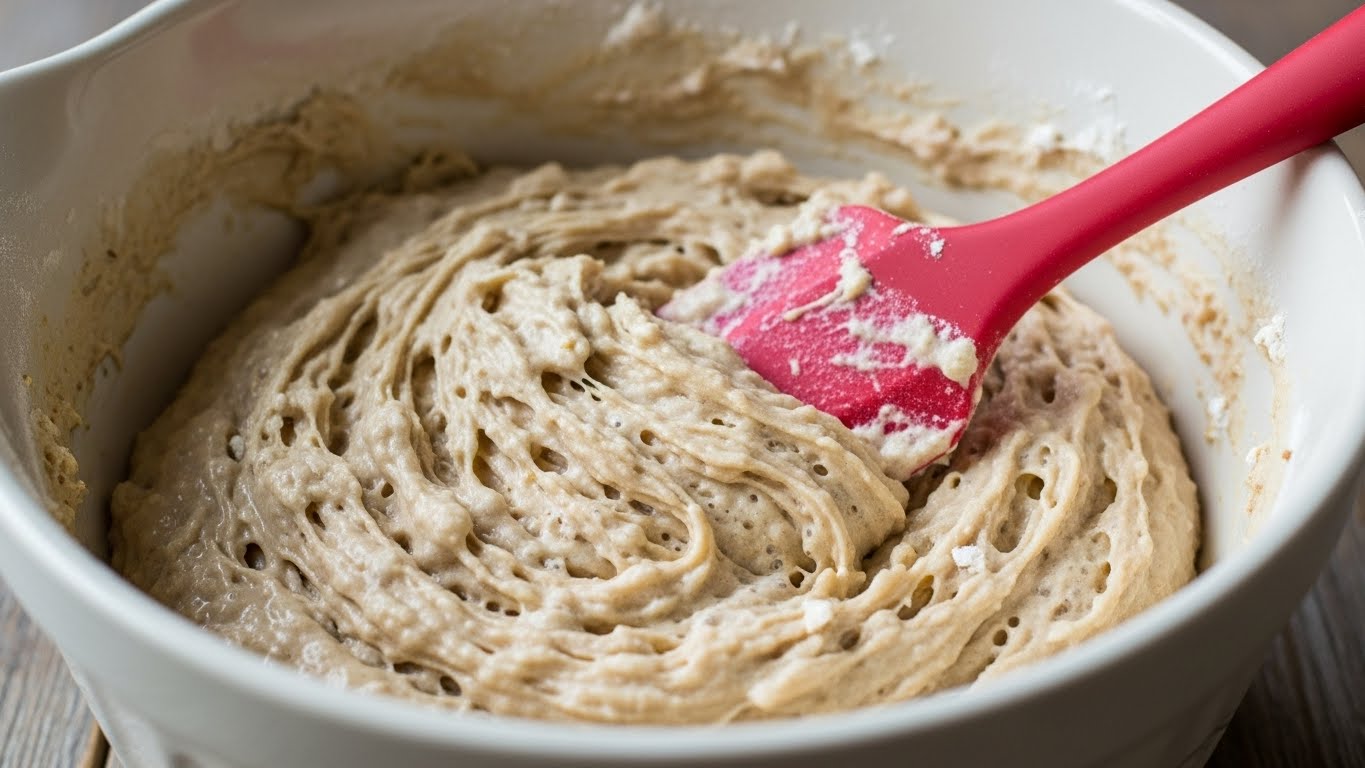
Pour the dry ingredients into the wet. Switch to a rubber spatula. Fold gently.
- The Secret: Stop mixing when there are still a few streaks of flour visible. If you overmix, you develop gluten, and your muffins will be tough.
Step 4: The Rest Period (Crucial!)
This is the secret to the best sourdough discard muffins. Let the batter sit on the counter for 30 to 60 minutes (or overnight in the fridge).
- Why? This allows the flour to hydrate fully and the baking powder to get a “head start.” It results in a dramatically taller rise.
Tricks for tall muffin tops
You have the perfect batter. Now, how do you get that sky-high dome? It comes down to thermal shock and mechanics.
-
The Temperature Blast
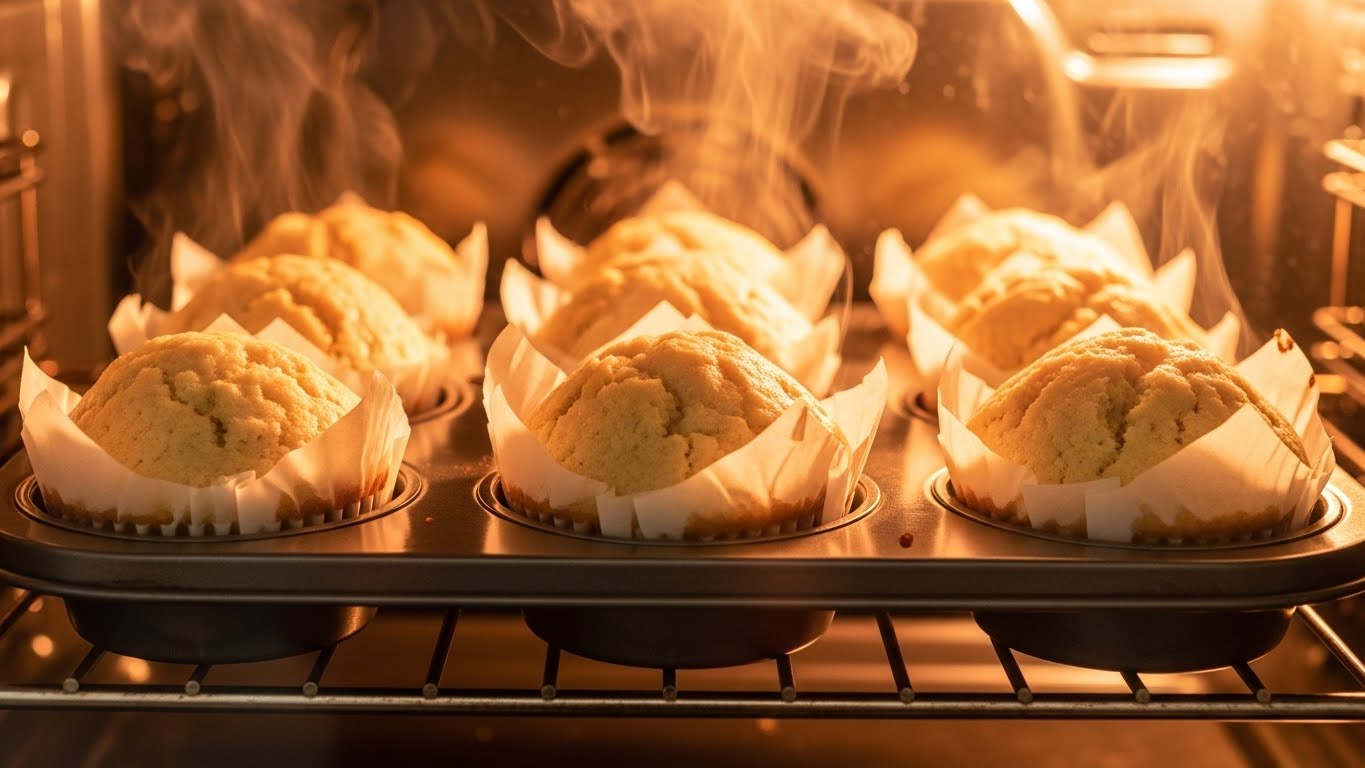
Preheat your oven to 425°F (220°C). Bake the muffins at this high temperature for the first 5-6 minutes. This intense heat hits the baking powder and creates a rapid burst of steam, forcing the muffin top up before the crust sets. After 5 minutes, keeping the door closed, lower the temperature to 350°F (175°C) and finish baking.
-
Fill to the Brim
Ignore the “fill 2/3 full” rule. For bakery-style muffins, fill your liners all the way to the top. Because the batter is thick (thanks to the rest period), it won’t spill over; it will grow up.
-
Space Them Out
If you want maximum heat circulation (which equals better rise), bake your muffins in every other hole of the muffin tin. This allows hot air to hit every side of the muffin cup evenly. It takes longer to bake batches, but the result is the best sourdough discard muffins you will ever see.
Flavor Variations to Try
The base recipe is a blank canvas. Here are classic combinations that work perfectly with the sourdough tang.
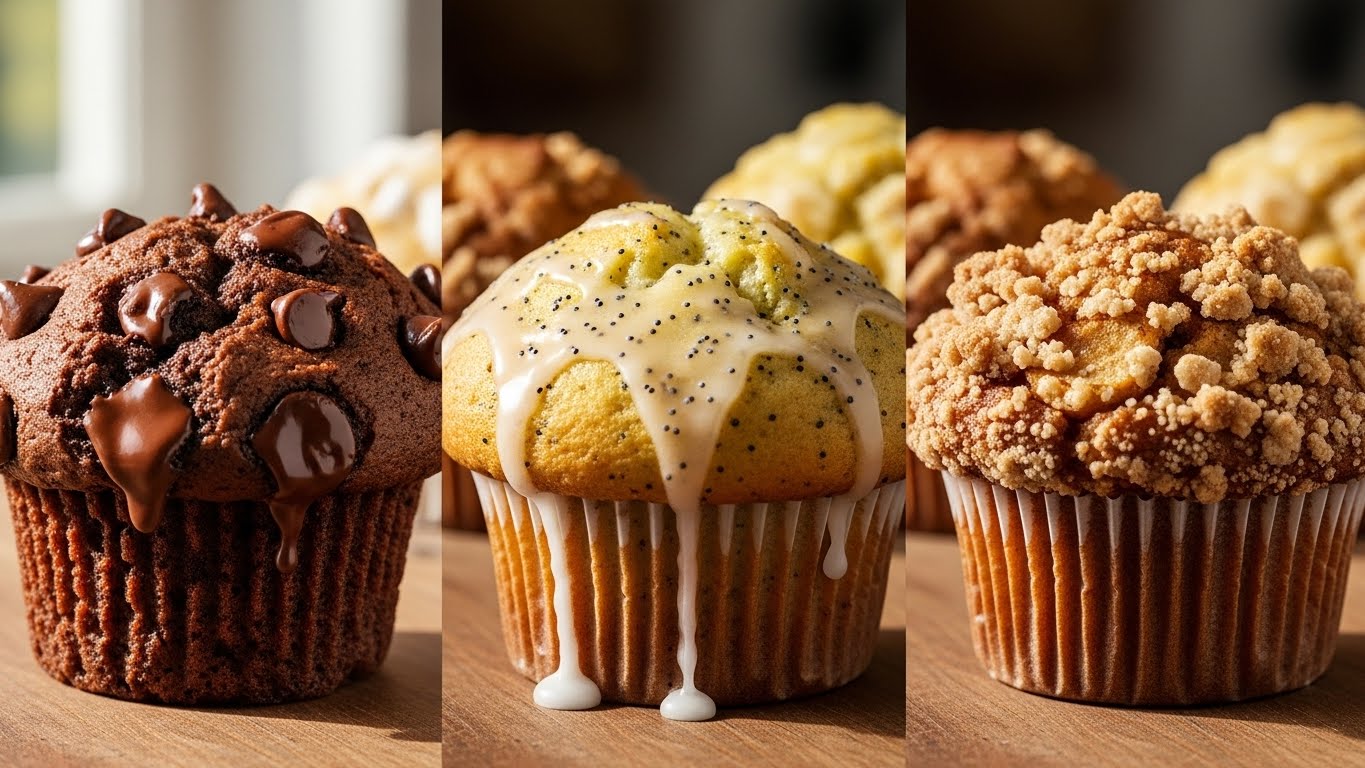
Lemon Poppy Seed
Rub lemon zest into your sugar before mixing. Add 1 tablespoon of poppy seeds. The lemon brightness highlights the sourdough flavor beautifully.
Spiced Apple Crumble
Fold in chopped Granny Smith apples and cinnamon. Top with a streusel made of butter, flour, and brown sugar.
Double Chocolate Chunk
Replace 1/4 cup of flour with Dutch-process cocoa powder. Fold in semi-sweet chocolate chunks (not chips—chunks melt better).
Savory Cheddar and Chive
Reduce the sugar to 2 tablespoons. Fold in sharp cheddar cheese and fresh chives. Great for breakfast or serving with soup.
More Inspiration: For a massive list of flavor ideas, browse our curated collection of sourdough discard muffins. You will never run out of ideas!
Troubleshooting Common Failures
Even with the best sourdough discard muffins, things can go wrong.
“My muffins are flat.”
- Cause: Your baking powder was expired, or you overmixed the batter (which deflates air), or you didn’t use the high-heat starting method.
- Fix: Buy fresh leavening agents and be gentle when folding.
“The texture is gummy.”
- Cause: Too much moisture (discard was too runny) or you cut into them while hot.
- Fix: If your starter is very thin, add an extra tablespoon of flour. And always let muffins cool for 10 minutes before eating.
“They are sour.”
- Cause: Your discard was very old (months in the fridge without feeding).
- Fix: Use newer discard (1-2 weeks old) or increase the sugar slightly to mask the tang.
Storage and Freezing
Because these muffins contain sourdough discard (fermented flour), they stay fresh longer than yeast muffins.
- Room Temp: Store in an airtight container lined with a paper towel (to absorb moisture) for up to 3-4 days.
- Freezing: Wrap individually in plastic wrap and freeze for up to 3 months. To eat, unwrap and microwave for 30 seconds. They taste freshly baked!
Frequently Asked Questions (FAQ)
-
Can I use active bubbly starter instead of discard?
Yes, absolutely. Active starter will make the muffins even lighter and fluffier. However, because active starter is filled with gas, measuring by volume (cups) can be inaccurate. It is highly recommended to weigh your starter (grams) when using active culture to ensure you don’t under-measure the flour content.
-
Why do sourdough discard muffins taste better the next day?
This is a phenomenon known as flavor maturation. As the muffins sit, the moisture redistributes, and the complex flavor compounds from the fermentation process deepen. The crust softens slightly, and the crumb becomes even more tender.
-
Is this recipe vegan-friendly?
The base recipe uses eggs and butter, so it is not vegan. However, you can make the best sourdough discard muffins vegan by substituting flax eggs (1 tbsp flax meal + 3 tbsp water per egg) and using vegan butter or oil and plant-based milk. The sourdough discard itself is vegan (flour + water).
-
How do I know if my discard is safe to use?
Sourdough discard is very resilient. It can sit in the fridge for weeks. However, if you see pink or orange streaks, or if it smells like mold or rot (rather than just alcohol/vinegar), throw it out. The clear/grey liquid on top (hooch) is safe; just pour it off or stir it in.
Conclusion
Baking the best sourdough discard muffins is about more than just following a recipe; it is about respecting the ingredients. By understanding how to balance the hydration of your starter, using the high-heat oven trick, and having the patience to let your batter rest, you elevate a humble breakfast treat into a bakery-worthy masterpiece.
No longer will your sourdough discard be a burden. It is now the secret weapon in your baking arsenal, ready to produce muffins with towering domes and unforgettable flavor.
So, go check your fridge. If you have a jar of starter staring back at you, you are already halfway to a delicious breakfast. Preheat that oven to 425°F and get baking!
What is your favorite mix-in? Are you a blueberry traditionalist or a chocolate adventurer? Let us know in the comments below!
