

Low Carb Sourdough Bread
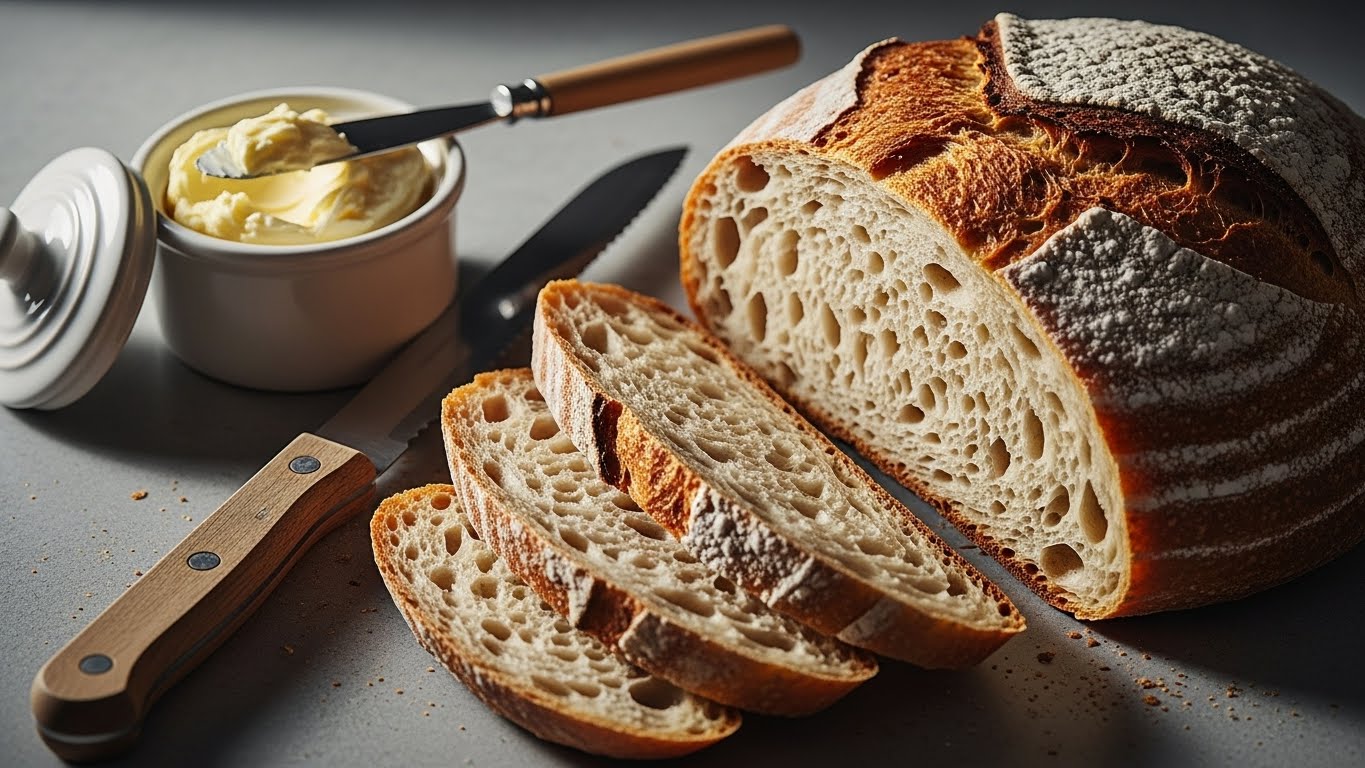
If there is one thing that haunts the dreams of everyone on a ketogenic or low-carb diet, it is bread. Not the dense, egg-heavy substitutes that taste like savory sponges, but real bread. We crave the crackle of a crust, the chew of the crumb, and, most importantly, that distinct, complex, tangy flavor that only comes from wild fermentation. We miss sourdough.
For years, we were told that low carb sourdough bread was an oxymoron. Sourdough requires flour, flour equals carbs, end of story. Or so we thought.
As the culinary world evolves, so does the science of healthy baking. I am here to tell you that you can bake a loaf of low carb sourdough bread that rivals your favorite bakery’s artisan loaf. It is gluten-free, keto-friendly, and yes, it actually tastes like sourdough because it is sourdough.
In this comprehensive masterclass, we are going to break down the barriers of traditional baking. We will explore how to cultivate a wild yeast starter without wheat, how to mimic the gluten network using fiber, and how to bake a loaf that will revolutionize your sandwich game. Put on your apron; we are about to make magic happen.
What makes sourdough “low carb”?
This is the most common question I receive. “Isn’t sourdough made from grain?” Traditionally, yes. But to understand low carb sourdough bread, we need to separate the method from the ingredients.
The Science of Fermentation vs. Ingredients
Traditional sourdough relies on wheat flour to feed the wild yeast and bacteria. The bacteria produce lactic acid (the sour taste) and the yeast produces carbon dioxide (the rise).
In our low carb sourdough bread, we replicate this process but swap the fuel source.
- The Base: Instead of high-carb wheat flour, we use low-carb flours like almond flour and coconut flour. These provide the bulk without the glucose spike.
- The Fermentation: We still use a fermentation process. Some bakers use a tiny amount of traditional starter (the bacteria consume most of the sugars during fermentation, leaving minimal carbs), while strict keto bakers use a gluten-free starter made from brown rice flour or sorghum (used sparingly).
- The Flavor Profile: By allowing the dough (or a pre-ferment) to sit and culture, we develop those complex organic acids—acetic and lactic acid—that give low carb sourdough bread its signature tang.
The “Gluten” Mimic
The biggest challenge isn’t the flavor; it’s the texture. Wheat sourdough has gluten, which traps air. Low carb flours do not. To fix this, we use Psyllium Husk. This miracle fiber acts as the structural scaffolding, allowing the bread to hold gas bubbles and giving it that authentic “chew” rather than a crumbly, cake-like texture.
Ingredients and tools you’ll need
Baking low carb sourdough bread is closer to a science experiment than making cookies. Precision is everything. You cannot eyeball these ingredients.
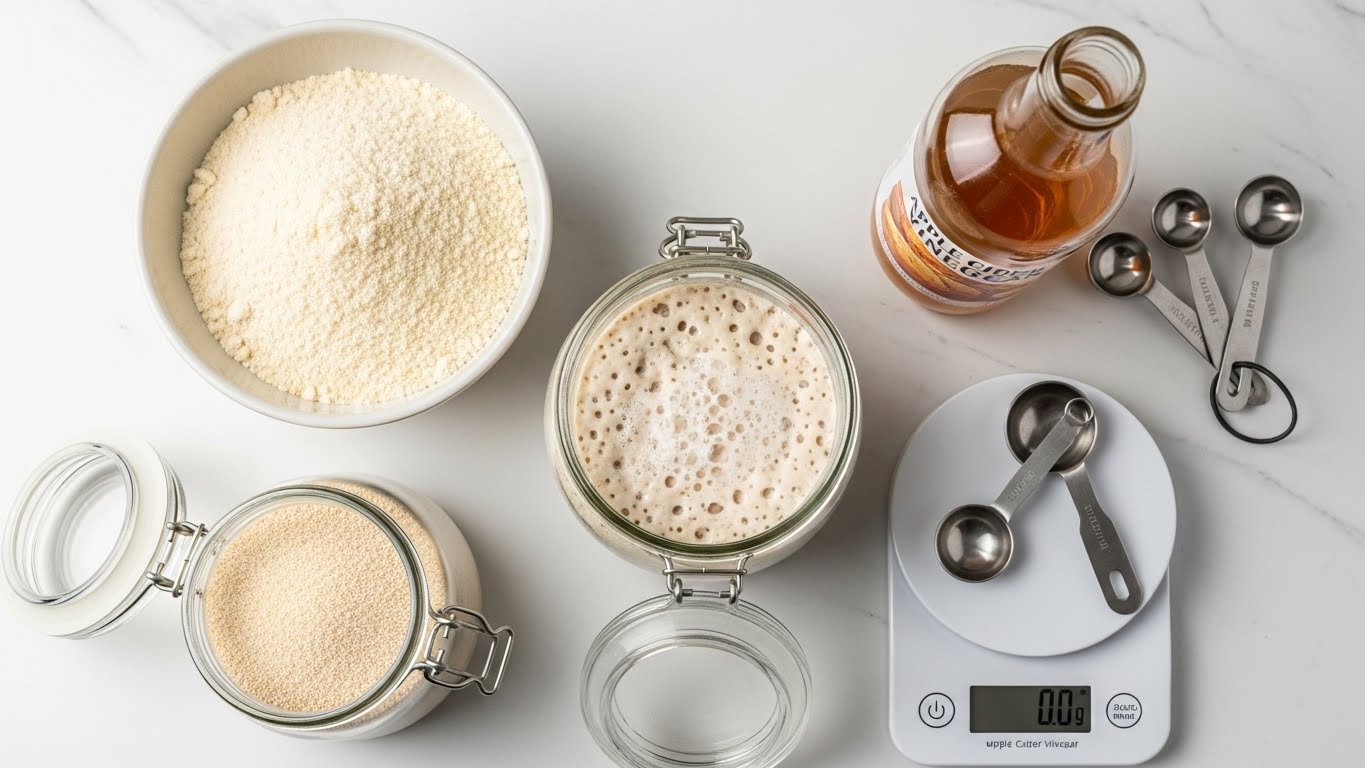
The Dry Ingredients (The Body)
- Superfine Almond Flour: This is the bulk of your loaf. Ensure it is blanched (skinless) and finely ground for the best texture.
- Coconut Flour: Used in small amounts to absorb moisture.
- Psyllium Husk Powder: Crucial. You need the powder, not whole husks. If you have whole husks, grind them in a coffee blender. This is the “glue” of your bread.
- Note: Some brands turn purple when baked! It’s safe to eat, but for a bread-like color, look for brands that specify “no purple color” or use the blond variety.
- Whey Protein Isolate: This helps with browning (Maillard reaction) and gives the bread a lighter, airier structure.
The Fermentation Agents
- Active Sourdough Starter: You can use a gluten-free starter (brown rice flour based) or a very small amount of traditional starter.
- Apple Cider Vinegar: Enhances the sour profile and strengthens the dough.
Essential Equipment Checklist
If you are setting up your kitchen, you might want to review our Baking 101 guide for a full list of basics, but for this bread, you specifically need:
- Digital Kitchen Scale: Measuring cups are too inaccurate for psyllium and almond flour. Weighing in grams is non-negotiable.
- Stand Mixer: While you can mix by hand, a mixer helps incorporate the psyllium gel thoroughly.
- Dutch Oven or Pizza Stone: To replicate a steam-oven environment for a crispy crust.
- Parchment Paper: This dough is sticky!
Creating (or Faking) Your Keto Starter
You have two paths here. The “Purist” path and the “Hack” path.
Path A: The Gluten-Free Starter (The Real Deal)
You can make a starter using brown rice flour and water.
- Day 1-5: Mix equal parts water and brown rice flour. Discard half and feed daily. Once it bubbles and doubles in size, it’s active.
- Carb Count: While rice flour has carbs, the yeast eats the sugars. You use a small amount in the whole loaf, making the net carbs per slice negligible.
Path B: The “Sour” Hack (The Quick Way)
If you don’t want to maintain a pet starter, you can mimic the flavor:
- Use a combination of Yogurt, Vinegar, and Instant Yeast.
- Let the dough rise overnight in the fridge (cold retard). This develops flavor similar to sourdough without the actual starter maintenance.
For this guide, we will focus on using an active starter for the most authentic result.
Step-by-step low carb sourdough method
This is not a 1-hour recipe. Good bread takes time.
Phase 1: Mixing the Dough
- Whisk Dry Ingredients: In a large bowl, combine the almond flour, coconut flour, whey protein, psyllium husk powder, and salt. Whisk well to remove clumps.
- Activate Wet Ingredients: In your mixer bowl, combine the warm water (105°F), active sourdough starter, and vinegar. Stir to dissolve the starter.
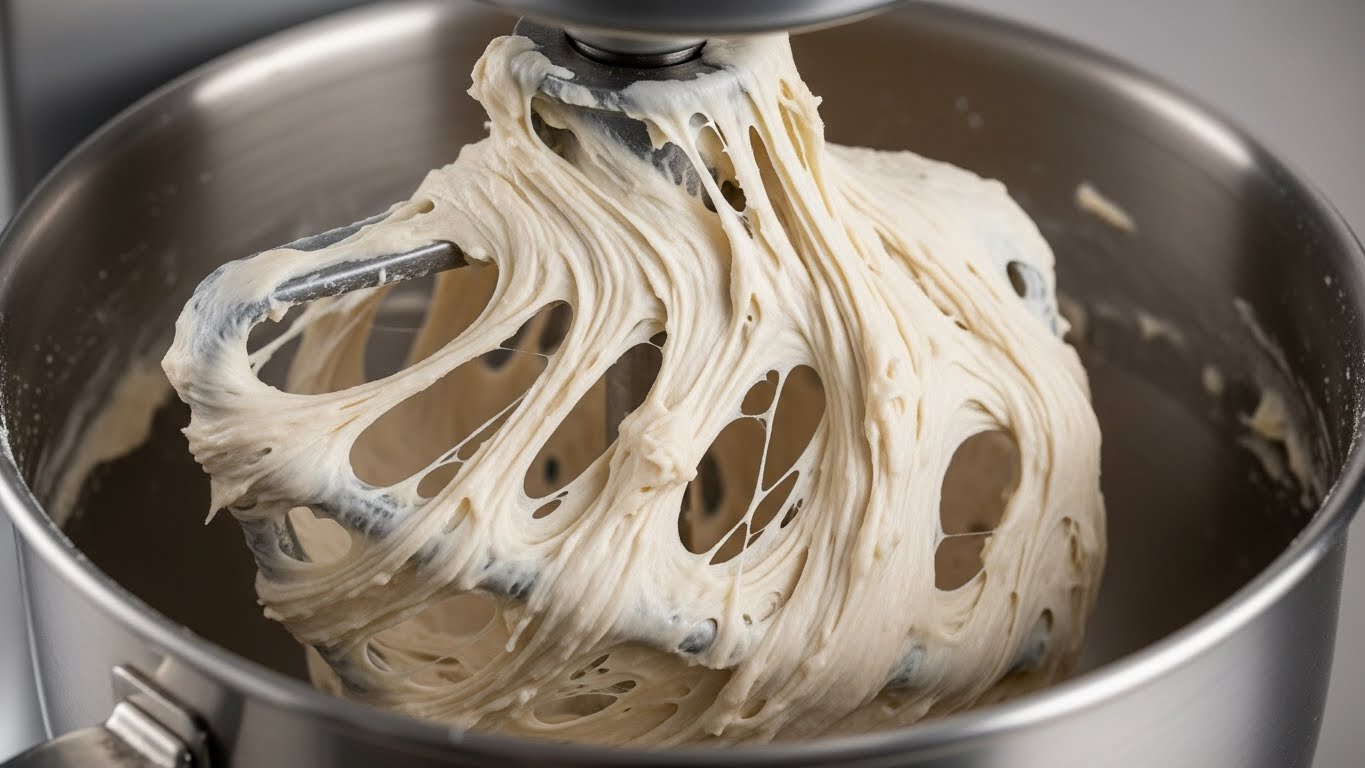
- The Gel Phase: Add the dry ingredients to the wet. Turn the mixer on low.
- The Transformation: As you mix, the psyllium will begin to absorb the water. The batter will turn into a thick, sticky, cohesive dough mass. Increase speed to medium and mix for 2-3 minutes. This aerates the dough.
Phase 2: Shaping and Proofing
- Rest: Let the dough sit for 10 minutes to fully hydrate.
- Shape: Wet your hands (to prevent sticking). Scoop the dough out and shape it into a boule (round ball) or a batard (oval). Smooth the surface with wet hands.
- The Rise (Proofing): Unlike wheat bread, this dough won’t double in size because there is no gluten to stretch. However, it needs to sit to ferment flavor.
- Place on a parchment-lined baking sheet. Cover with a large overturned bowl.
- Let it sit at room temperature for 4-6 hours (depending on starter strength) or overnight in the fridge for a deeper sour flavor.
Phase 3: The Baking Process
- Preheat: Place your Dutch Oven inside the oven and preheat to 425°F (220°C) for at least 30 minutes. We want it scorching hot.
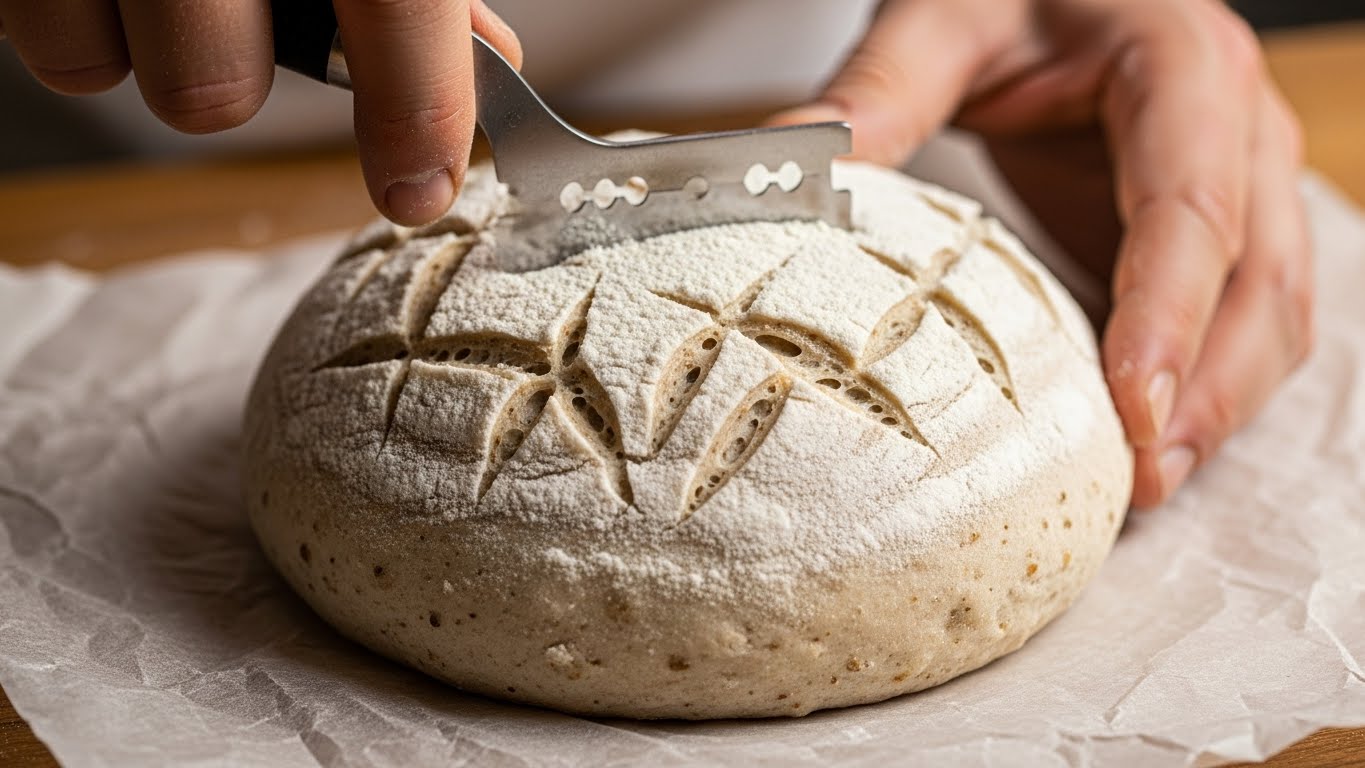
- Score: Just before baking, use a sharp lame or razor blade to score the top of the loaf. This allows steam to escape and prevents the loaf from cracking at the bottom.
- Bake:
- Carefully lift the dough (using parchment) and drop it into the hot Dutch Oven. Cover with the lid.
- Bake covered for 30 minutes. (The steam creates the crust).
- Remove lid. Reduce heat to 375°F (190°C).
- Bake uncovered for 40-50 minutes. We need a long bake time to dry out the moisture from the almond flour/psyllium.
- Cool: Turn the oven off, crack the door open, and let the bread sit for 10 minutes. Then remove to a wire rack.
The Golden Rule: Cooling is Cooking
If there is one mistake that ruins low carb sourdough bread, it is slicing it too soon.
When you pull the loaf out of the oven, it is still cooking inside. The psyllium gel is setting. If you slice it hot, the steam escapes, the structure collapses, and you are left with a gummy, wet, sticky texture that sticks to your knife.
You must wait at least 3 to 4 hours before slicing. Ideally, wait until it is completely room temperature. Trust me, the wait is worth it for that perfect slice.
Tips for the Perfect Crust and Crumb
Getting that artisan look isn’t easy with keto ingredients. Here are my top secrets.
How to get a Crispy Crust
Low carb flours don’t caramelize like wheat because they lack starch and sugar.
- The Egg White Wash: Brush the top of your loaf with egg white before baking. This promotes browning and shine.
- Steam is Key: If you don’t have a Dutch Oven, place a pan of boiling water on the bottom rack of your oven to generate steam.
How to get an Open Crumb (Air Pockets)
- Don’t Over-compress: When shaping, handle the dough gently. If you pack it too tight, it will be dense.
- High Heat Start: That initial 425°F blast helps the expansion agents work quickly before the crust sets.
Troubleshooting Your Loaf
Did your low carb sourdough bread fail? Let’s diagnose the issue.
| Problem | Likely Cause | The Fix |
| Loaf turned purple | Psyllium husk brand contains anthocyanins. | It’s safe! But switch to a “blond” psyllium powder next time. |
| Gummy/Wet Inside | Sliced too hot or underbaked. | Bake longer at lower temp; wait 4 hours to slice. |
| Hollow Shell (Gap at top) | Dough was too wet or rose too fast. | Reduce water by 10g; check oven temperature. |
| Did not rise at all | Dead starter or baking powder. | Refresh your starter; check expiration dates. |
Nutritional Benefits & Macros
Why go through all this trouble? Because the nutritional profile is unbeatable.
Standard Sourdough (1 slice): ~120 calories, 24g Carbs, 0g Fiber.
Low Carb Sourdough Bread (1 slice): ~160 calories, 12g Carbs, 9g Fiber, 3g Net Carbs.
- Gut Health: The psyllium husk provides massive prebiotic fiber for gut health.
- Satiety: The high fat (almond flour) and high fiber keep you full for hours.
Serving Suggestions
Now that you have your beautiful loaf of low carb sourdough bread, how should you eat it?
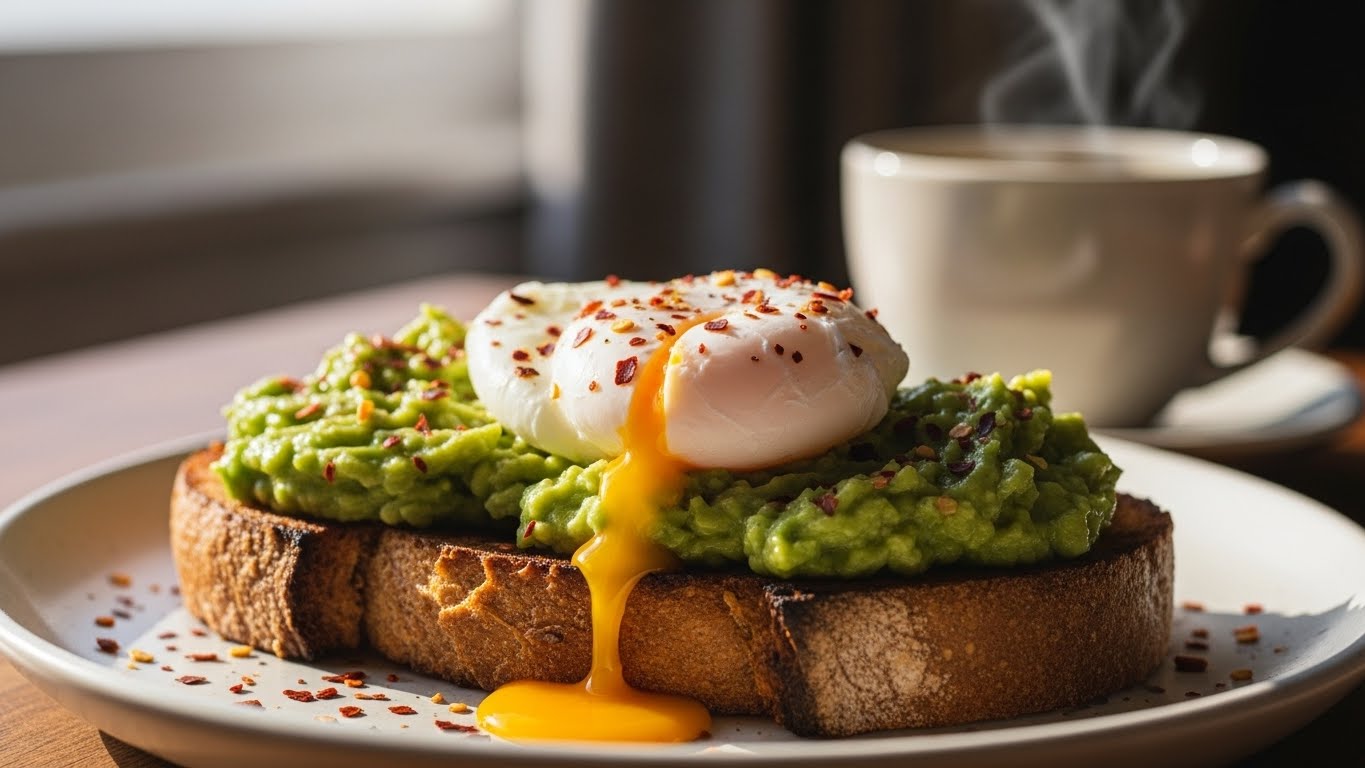
- Avocado Toast: The sturdy texture holds up perfectly to mashed avocado and poached eggs.
- Grilled Cheese: The crust crisps up beautifully in butter.
- Soup Dipper: Perfect for dunking in tomato soup.
- Dessert Toast: If you have a sweet tooth, toast a slice and top with almond butter and sugar-free jam. Or, if you prefer cookies, you might want to bake a batch of our Dairy-Free Vegan Cookies to go alongside your coffee.
Storage and Freezing Instructions
Because this bread has no preservatives and high moisture content:
- Countertop: Store in a paper bag or bread box for 2-3 days. Plastic bags will make the crust soft and potentially moldy.
- Fridge: Wrap in parchment and plastic. Lasts 1 week.
- Freezer: Slice the whole loaf. Place parchment between slices. Freeze for up to 3 months. Toast directly from frozen.
Frequently Asked Questions (FAQ)
Here are the most common questions regarding low carb sourdough bread.
- Can I make this without psyllium husk?
No. In gluten-free low-carb baking, psyllium is the structural substitute for gluten. Without it, your bread will crumble into sand. Flaxseed meal can be a partial substitute, but you won’t get the chewy sourdough texture.
- Is sourdough starter keto-friendly?
This is a debated topic. The fermentation process consumes the sugars in the flour. If you use a small amount of starter spread across an entire loaf, the residual carbs per slice are minimal (usually <1g from the starter itself). For strict keto, this is generally accepted as long as it fits your daily macros.
- Why does my bread taste like mushrooms?
This is usually due to the psyllium husk. Some brands have an earthy flavor. To mask it, ensure you are using a high-quality, refined powder, and don’t skip the apple cider vinegar or salt, which help balance the flavor.
- Can I bake this in a bread machine?
I do not recommend it. Bread machines are programmed for wheat gluten development (kneading). This dough needs mixing, not kneading. The long knead cycles of a machine will break down the psyllium gel structure.
Conclusion: The Wait is Over
Baking low carb sourdough bread is a labor of love. It requires patience, precision, and a bit of faith. But the moment you slice into that crusty, golden loaf and smell that familiar tangy aroma, you will know it was worth it.
You no longer have to choose between your health goals and your love for bread. You can have both.
So, feed your starter, weigh your flour, and get ready to bring the bakery into your own kitchen.
Ready to bake? Let us know in the comments how your first loaf turned out!

Pingback: 20 Best Gluten Free Bread Recipes – From Sandwich to Artisan Loaves - Daily Baker Hub