

Baking Ingredients – A Complete Guide
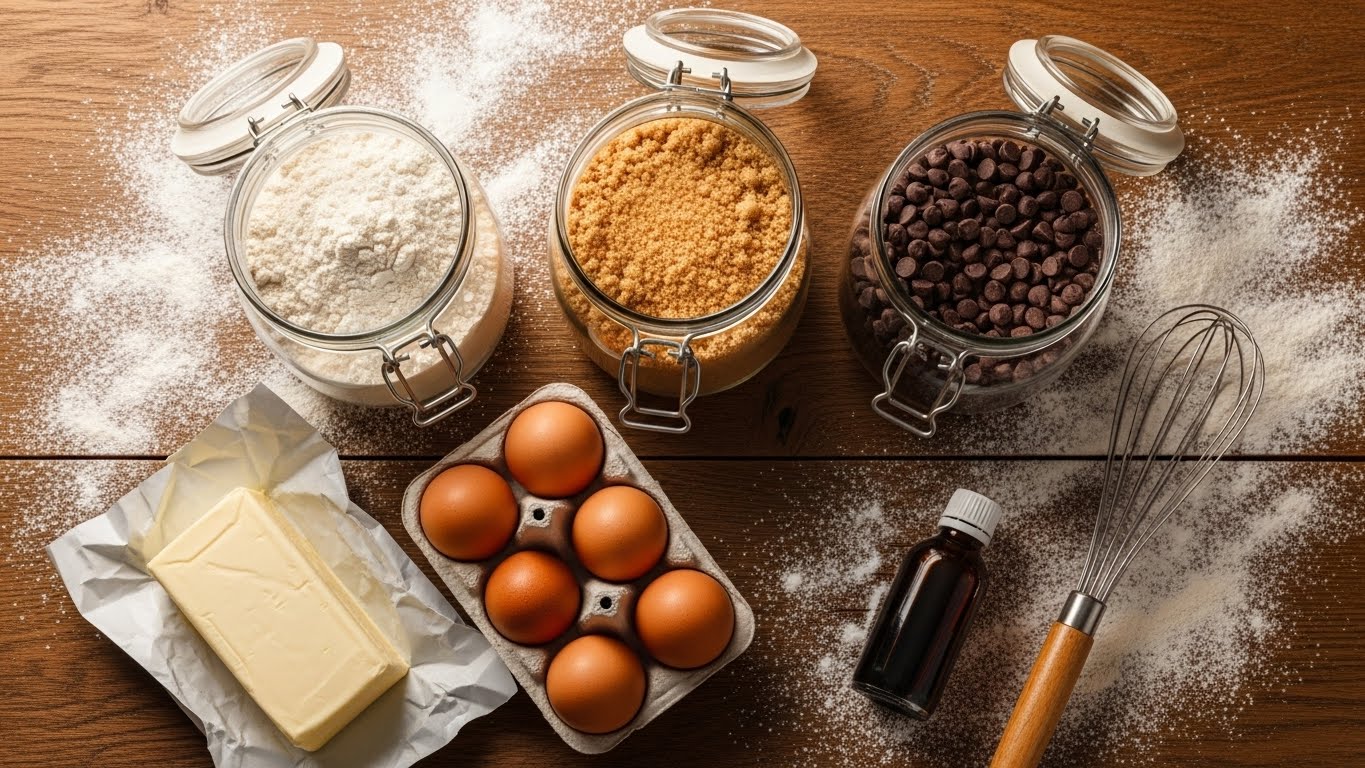
Walking down the baking aisle of a grocery store can be overwhelming. You are faced with five different types of flour, three kinds of yeast, and an endless array of sugars. To the untrained eye, they are just bags and boxes. But to a baker, they are the building blocks of magic.
Understanding baking ingredients is the single most important step you can take to move from “following a recipe” to “mastering the craft.” Baking is often called a science, and for good reason. Unlike cooking, where you can add a pinch of this or a splash of that on a whim, baking relies on precise chemical reactions. Every ingredient in your bowl has a specific job. If you change one variable, you change the entire outcome.
In this extensive guide, we are going to demystify your pantry. We will explore the “why” and “how” behind essential baking ingredients, ensuring that the next time you fire up the oven, you do so with total confidence. Whether you are just starting your journey and reading our guide on baking for beginners, or you are a seasoned pro looking to refine your technique, this article is your ultimate resource.
What baking ingredients actually do
At its core, a cake or a loaf of bread is simply a result of chemistry. When you mix baking ingredients together and apply heat, you are triggering a series of events: proteins bond, starches gelatinize, fats melt, and sugars caramelize.
Most novice bakers view ingredients as just “flavor deliverers.” While flavor is crucial, the primary role of most ingredients is structural. For example, you might think sugar is just there for sweetness. In reality, sugar is a tenderizer that attracts moisture (hygroscopy) and aids in browning. Without it, your cake would be pale, dry, and tough.
By understanding the function of each component, you gain the power to troubleshoot. Cake too dry? You might have used too much flour (structure) and not enough butter (tenderizer). Cookies spread too much? Your butter might have been too warm, or your leavening agent too active.
Core categories: structure, tenderizers, flavor
To simplify the complex world of baking chemistry, we can categorize almost all baking ingredients into three main teams. A successful recipe is a delicate balance between these forces.
-
Structure Builders (The Skeleton)
These ingredients hold the baked good together. They provide the “walls” of the house.
- Flour: The primary builder. It contains starch and protein (gluten).
- Eggs: The whites provide protein structure, while the yolks add richness.
- Starches: Cornstarch or tapioca starch reinforce the structure.
-
Tenderizers (The Softeners)
These ingredients fight against the structure. They prevent the gluten from getting too tough, resulting in a soft crumb.
- Fats: Butter, oil, shortening, and lard coat the flour proteins, preventing them from bonding too strongly.
- Sugars: As mentioned, sugar creates tenderness by absorbing water and delaying gluten formation.
- Liquids: While water activates gluten (structure), liquids with fat (like milk or buttermilk) act as tenderizers.
-
Flavor Agents and Leaveners (The Character)
These give the baked good its personality and lift.
- Leavening Agents: Baking soda, baking powder, and yeast create gas bubbles that expand the structure.
- Salt: The unsung hero that enhances all other flavors.
- Extracts and Spices: Vanilla, cinnamon, cocoa powder.
The Seesaw Analogy: Imagine a seesaw. On one side, you have Structure (Flour/Eggs). On the other, you have Tenderizers (Fat/Sugar). If the structure side is too heavy, you get a brick. If the tenderizer side is too heavy, the cake collapses because it’s too soft to hold its own weight. The perfect recipe balances the seesaw.
The World of Flours: More Than Just All-Purpose
When discussing baking ingredients, flour is the undisputed king. But not all flours are created equal. The main difference lies in the protein content.
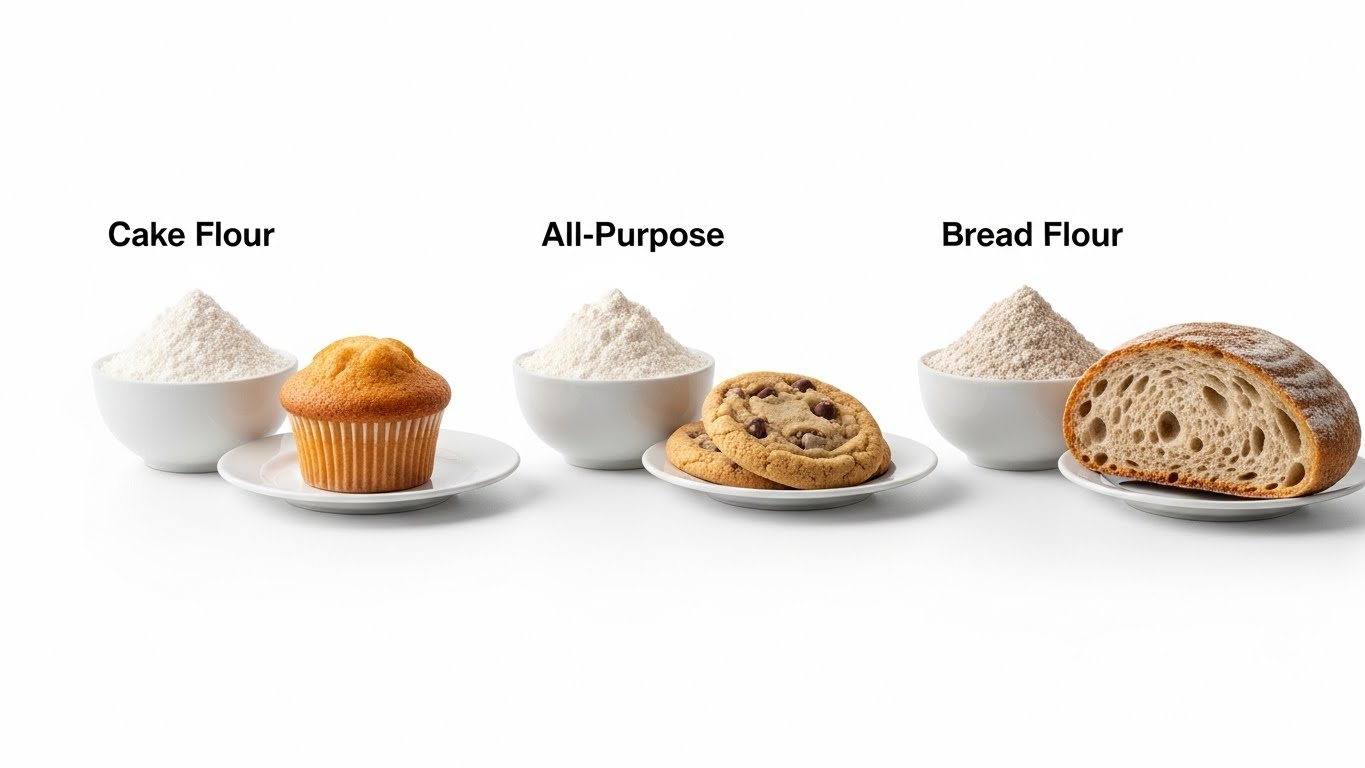
All-Purpose Flour (The MVP)
- Protein: 10-12%
- Best For: Cookies, muffins, quick breads, and pie crusts.
- Why: It is the middle ground. It has enough protein to hold a shape but not so much that it makes cakes tough.
Bread Flour (The Muscle)
- Protein: 12-14%
- Best For: Yeast breads, bagels, pretzels, pizza dough.
- Why: The high protein generates lots of gluten, creating that signature “chew” and elasticity required for bread to rise high.
Cake Flour (The Delicate One)
- Protein: 6-8%
- Best For: Sponge cakes, angel food cake, cupcakes.
- Why: Low protein means very little gluten formation. This results in a super-fine, tender crumb that melts in your mouth.
Whole Wheat Flour
- Profile: Contains the bran and germ of the wheat kernel.
- Note: It absorbs more liquid than white flour and cuts through gluten strands (due to the sharp edges of the bran), leading to denser baked goods.
Leavening Agents: The Rise to Glory
Leavening agents are the baking ingredients responsible for the “puff.” Without them, everything would be a flat cracker.
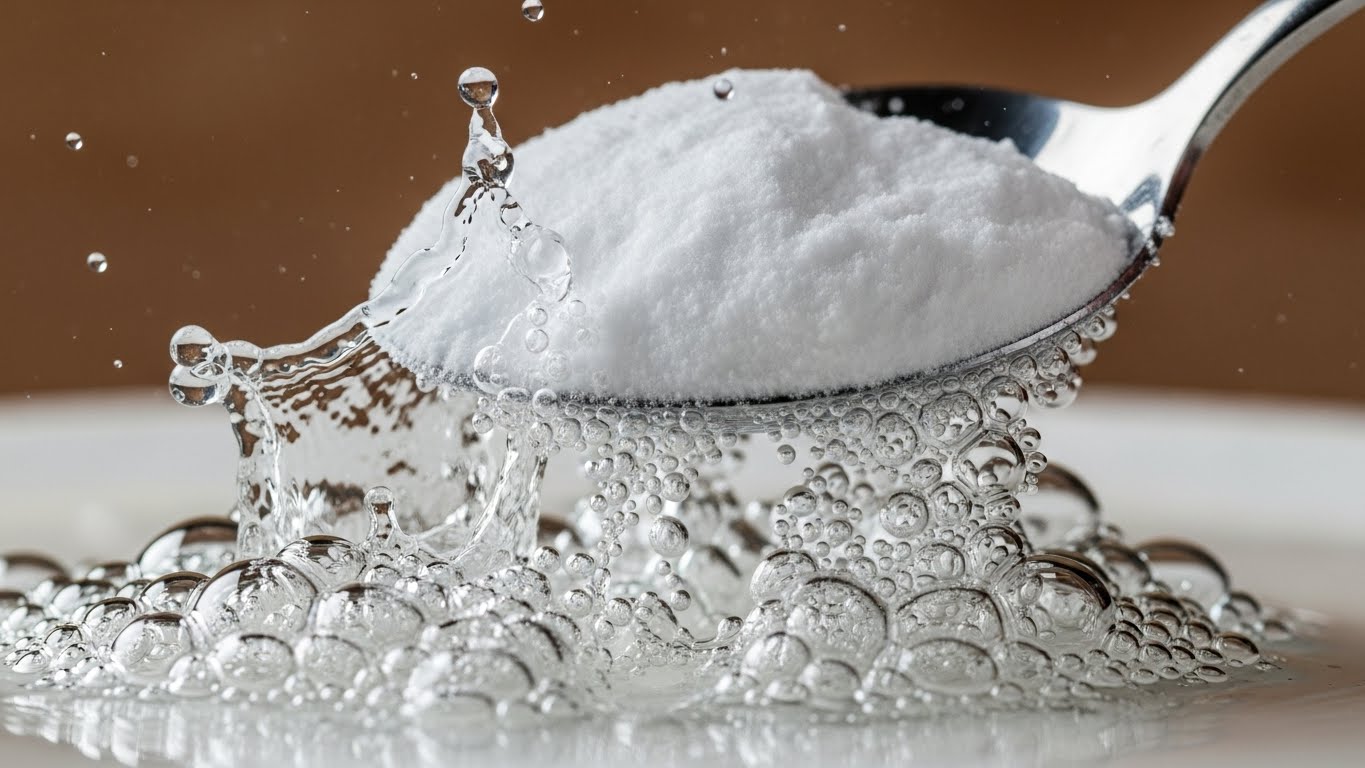
Baking Soda (Sodium Bicarbonate)
This is a base mineral. To work, it needs an acid and liquid. When combined, it produces carbon dioxide bubbles immediately.
- Acid partners: Buttermilk, yogurt, brown sugar (molasses), cocoa powder, lemon juice.
- Characteristics: It promotes spreading and browning.
Baking Powder
This is baking soda plus a dry acid (usually cream of tartar) mixed with cornstarch.
- How it works: It is “double-acting.” It reacts once when it hits moisture (in the bowl) and again when it hits heat (in the oven).
- Use: Perfect for recipes that don’t have enough natural acid to activate plain baking soda.
Yeast
Unlike soda and powder, yeast is a living organism (fungus). It eats sugar and burps out carbon dioxide and alcohol.
- Timeline: It is slow-acting. It requires time to proof and rise, developing complex flavors in the process.
Fats: Butter, Oil, and Shortening
Fats are arguably the most flavorful of the baking ingredients. But the type of fat you choose changes the texture entirely.
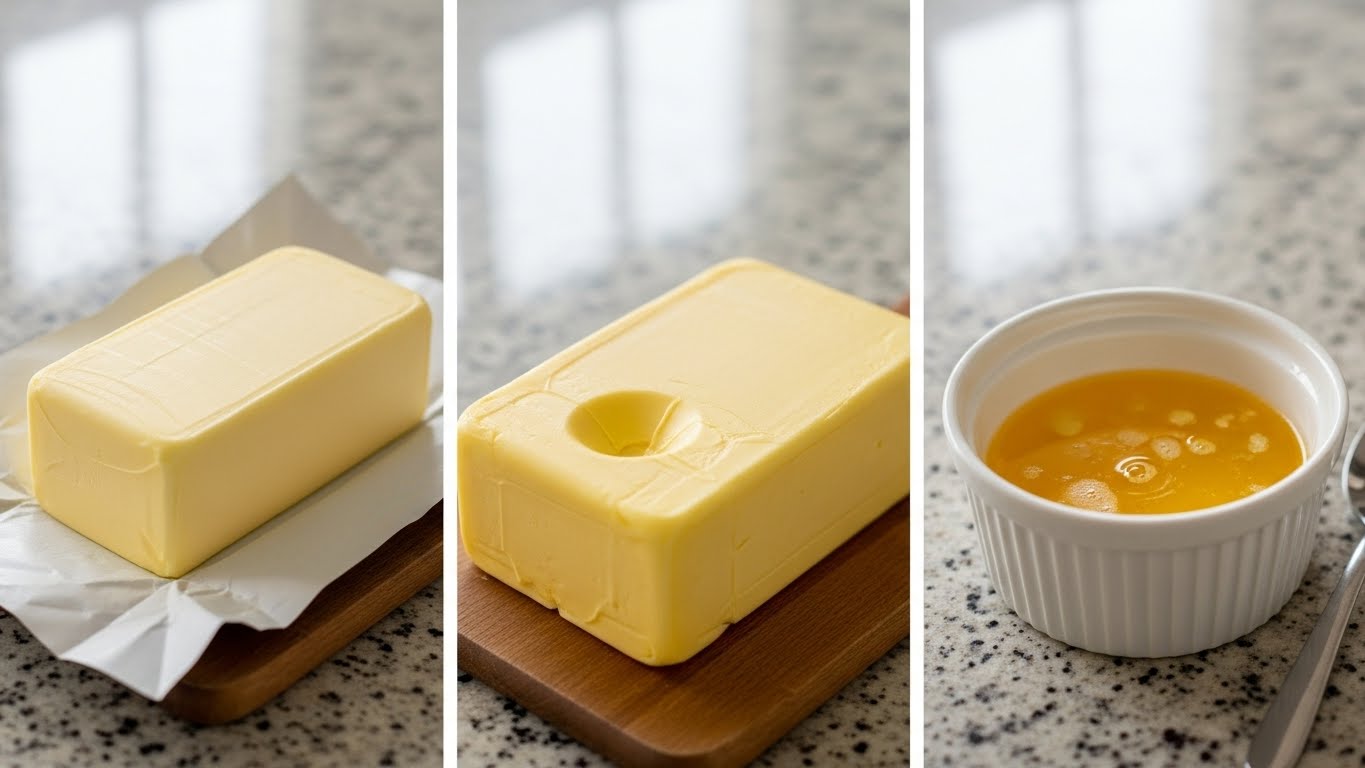
Butter
- Role: Flavor and crispness.
- Composition: It is roughly 80% fat and 20% water.
- Effect: The water evaporates as steam, helping create flaky layers (like in croissants). It melts at body temperature, giving a pleasant mouthfeel.
Vegetable Oil
- Role: Moisture.
- Composition: 100% fat.
- Effect: Oil remains liquid at room temperature. Cakes made with oil (like carrot cake or chiffon cake) stay moister longer than butter cakes, but they lack the rich buttery flavor.
Shortening
- Role: Structure and flakiness.
- Composition: 100% solid fat, high melting point.
- Effect: Because it doesn’t melt quickly, cookies made with shortening hold their shape better and are softer/thicker, though flavorless on their own.
Sugars and Sweeteners
Sugar is more than just “sweet.” In the realm of baking ingredients, it is a structural necessity.
Granulated White Sugar
The standard. Its sharp crystals help cut into butter during the “creaming method,” creating air pockets that help the cake rise.
Brown Sugar (Light and Dark)
This is white sugar with molasses added back in.
- Effect: It is acidic (activates baking soda) and hygroscopic (attracts water), leading to softer, chewier cookies compared to the crispness of white sugar.
Liquid Sweeteners (Honey, Maple Syrup)
These add distinct flavors and keep baked goods incredibly moist. However, because they are liquids, you often have to adjust the other liquids in your recipe when using them as substitutes.
Dairy and Liquids
Hydration is key. Liquids dissolve the sugar and salt and activate the gluten in the flour.
- Whole Milk: The gold standard. The fat and sugar (lactose) add color and richness.
- Buttermilk: A baker’s secret weapon. Its acidity tenderizes gluten, resulting in incredibly soft pancakes and biscuits.
- Heavy Cream: Used for richness in scones or whipped for toppings.
- Cheese: While we usually think of sweet baking, dairy plays a huge role in savory baking too. If you are learning how long to bake lasagna, you know that the moisture content in ricotta and mozzarella is a critical “baking ingredient” that determines if your dish is saucy or runny.
How to build a well-stocked baking pantry
You don’t need to own every exotic spice to be a great baker. However, having a core set of baking ingredients ensures you are ready to bake at a moment’s notice. Here is your checklist.
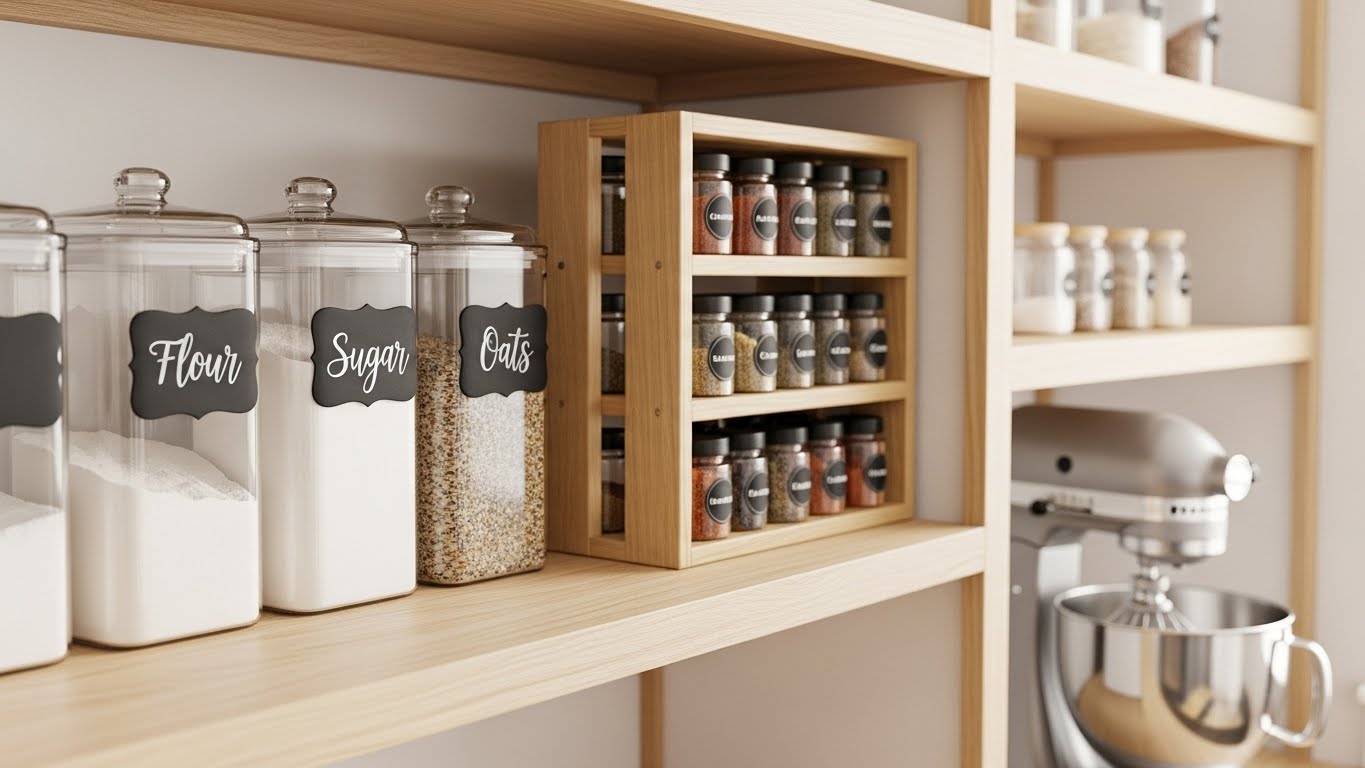
The Essentials (Must-Haves)
- Flour: All-purpose flour is non-negotiable.
- Leaveners: Baking soda and Baking powder (replace every 6 months).
- Sugar: Granulated sugar and Light brown sugar.
- Fat: Unsalted butter (keep some in the freezer) and Neutral oil (canola or vegetable).
- Flavor: Fine sea salt and pure vanilla extract.
- Eggs: Large eggs are the industry standard for recipes.
The “Next Level” Pantry (Nice-to-Haves)
- Specialty Flours: Bread flour, cake flour, and almond flour.
- Mix-ins: Semi-sweet chocolate chips, rolled oats, raisins, walnuts/pecans.
- Spices: Cinnamon, nutmeg, ginger, and cardamom.
- Other: Powdered sugar (for frosting) and Cocoa powder (Dutch-processed or natural).
Storage Tips for Freshness
- Flour: Keep in airtight containers. Whole grain flours should go in the freezer to prevent oils from going rancid.
- Baking Powder: Moisture is the enemy. Keep the lid tight.
- Spices: Keep away from heat and light (don’t store them right above the stove!).
Weighing vs. Measuring: The Golden Rule
If there is one piece of advice I can give you about baking ingredients, it is this: Buy a kitchen scale.
In the US, we use cups. But cups are notoriously inaccurate.
- A loose scoop of flour might weigh 120 grams.
- A packed scoop might weigh 150 grams.
That 30-gram difference is enough to turn a moist cake into a dry one. Professional bakers weigh ingredients in grams. It is faster (less cleanup) and perfectly accurate every single time. When you see a recipe with gram measurements, trust it.
Common Baking Ingredient Substitutions
Running out of an ingredient mid-recipe is a rite of passage. Here are some safe swaps to save your day.
- Out of Buttermilk?
- Swap: 1 cup milk + 1 tablespoon vinegar or lemon juice. Let sit for 5 minutes.
- Out of Brown Sugar?
- Swap: 1 cup white sugar + 1 tablespoon molasses. Mix with a fork.
- Out of Cake Flour?
- Swap: 1 cup all-purpose flour minus 2 tablespoons, replaced with 2 tablespoons cornstarch. Sift well.
- Out of Unsalted Butter?
- Swap: Use salted butter, but reduce the added salt in the recipe by 1/4 teaspoon per stick of butter.
Frequently Asked Questions (FAQ)
-
Why do recipes call for unsalted butter?
Recipes call for unsalted butter because different brands add different amounts of salt to their salted butter. By using unsalted, you (the baker) control exactly how much salt goes into the recipe. It gives you complete control over the flavor profile of your baking ingredients.
-
Can I use baking soda and baking powder interchangeably?
No, you cannot. Baking soda is 3-4 times stronger than baking powder and requires an acid to activate. If you swap them, your cake might not rise, or it might taste soapy and metallic. Stick to what the recipe specifies.
-
Do my ingredients really need to be at room temperature?
Yes! Room temperature ingredients (butter, eggs, milk) emulsify (blend) much better than cold ones. Cold eggs can shock soft butter, causing the batter to curdle/break. This leads to an uneven bake. Take your baking ingredients out of the fridge 1 hour before you start.
-
How do I know if my baking powder is still good?
Baking powder loses potency over time. To test it, mix 1 teaspoon of baking powder into 1/3 cup of hot water. If it fizzes and bubbles aggressively immediately, it is good. If it does nothing, throw it away and buy fresh.
Conclusion
Baking is a beautiful blend of art and science. By understanding the role of your baking ingredients, you stop guessing and start creating. You understand that flour is your structure, sugar is your moisture, and leaveners are your lift.
When you respect the ingredients and measure them with care, you are rewarded with textures and flavors that store-bought treats simply cannot match. So, take a look at your pantry today. Toss out that expired baking powder, organize your flours, and get ready to bake your best batch yet.
Ready to put this knowledge to the test? Why not start by organizing your pantry this weekend using the checklist above? A clean, stocked pantry is the first step to baking success!

Pingback: Basic Baking Ingredients – What You Really Need to Start - Daily Baker Hub